
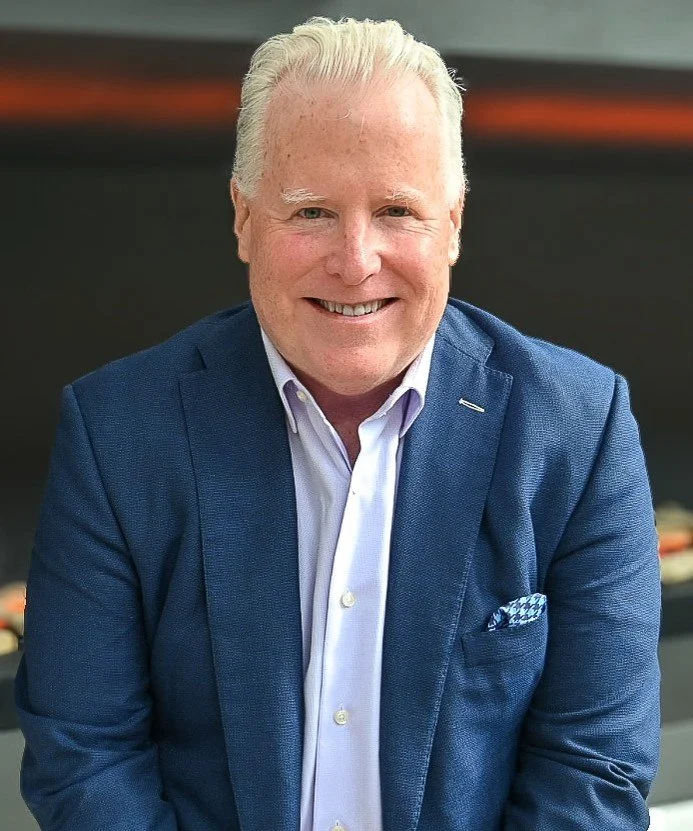
Mike Sullivan has spent more than four decades at the intersection of business strategy, mergers & acquisitions and all facets of an evolving American workplace and has seen firsthand what separates companies that thrive from those that stall. As Co-Founder and Chief Growth Officer of OneDigital, he has helped build one of the most dynamic insurance and financial services firms in the country, guiding its expansion through acquisition, partnership, and entry into new markets.
Outside OneDigital, he is an active investor and board member across a broad set of firms and industry verticals. Mike holds a bachelor's degree in history from Amherst College and an MBA from George Mason University, with international coursework at Oxford University. He lives in Virginia with his wife, Patti, and has three grown children.
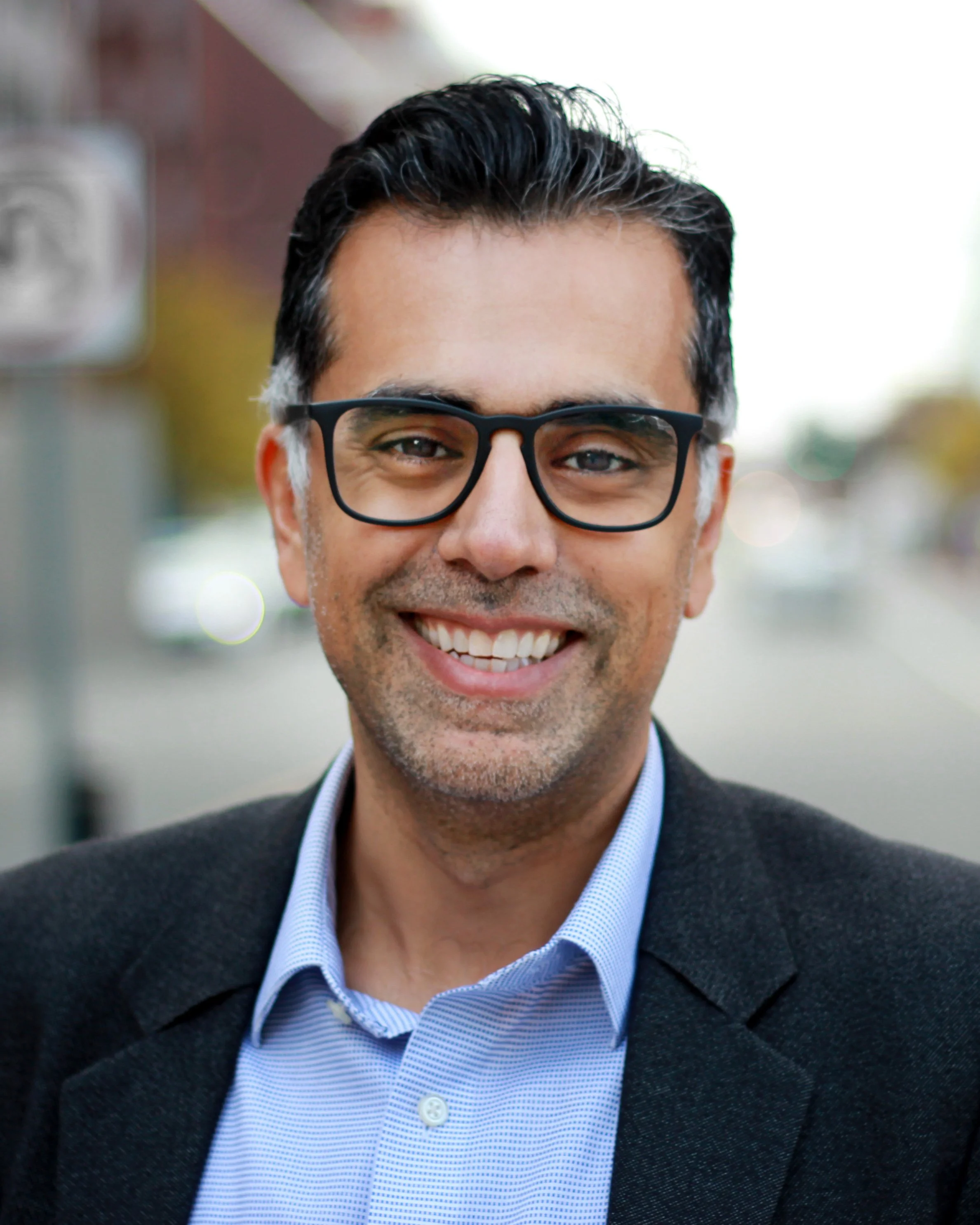
As Chief Product Officer (CPO), Vinay Gidwaney is passionate about applying AI and emerging technologies to help employees and families make better decisions around their finances and benefits through OneDigital's integrated offerings. He leads a strong team of technology experts, AI engineers, and product developers building the next generation of intelligent solutions for OneDigital's customer base.
A seasoned technologist and entrepreneur working at the intersection of AI, insurance, and product innovation, Vinay began his career as co-founder of Control-F1, a pioneer in remote IT management software, which was acquired by Computer Associates (CA). During this period, he was named to MIT Technology Review's TR35, recognizing him as one of the world's top innovators under the age of 35, an honor he received at age 20, making him one of the youngest recipients in the program's history. He later served as a Visiting Researcher with the Synthetic Neurobiology group at the MIT Media Lab, where he explored the frontiers of intelligence and brain-computer interfaces.
Vinay went on to found Maxwell Health, where he pioneered a new model for employee benefits and grew the company to serve thousands of customers before its acquisition by Sun Life Financial. In response to the global COVID-19 pandemic, he served as Head of Technology at Boston-based CIC Health, leveraging innovative technology to help stand up and scale one of the largest mass vaccination efforts in the country across Massachusetts. In addition to his role at OneDigital, Vinay is a Board Member at the education and social justice non-profit Design for Change USA and sits on the advisory boards of several startups across the AI, insurtech, life sciences, and healthcare industries. He lives in Brookline, MA with his wife and four children.
In this special episode, we are joined by Mike Sullivan, Co-Founder and Chief Growth Officer at OneDigital, and Vinay Gidwaney, OneDigital’s Chief Product Officer, to discuss their new book, Workforce Intelligence: The People-First Playbook for Leading Your Company Through AI Transformation. Together, they offer a practical, pro-human framework for navigating a future where artificial intelligence becomes deeply embedded in how organizations operate.
We explore why leaders should focus on tasks rather than headcount, how AI can amplify uniquely human capabilities, and why companies may need to rethink how they manage their workforce. Mike and Vinay explain their concepts of reducible and irreducible skills, AI coworkers, workforce intelligence, collaborative AI use, and the importance of building an organizational intelligence layer. They also share practical lessons from OneDigital’s own AI transformation—including why leadership activation, trust, reskilling, and a partnership between technical and non-technical leaders are essential.
This conversation offers an alternative to the prevailing narrative of AI-driven job elimination. Instead, it asks a bigger question: if AI can take on more of the work we currently do, what might humans become capable of doing next?
Key Points From This Episode:
(0:01:02) Why AI adoption affects employers, employees, and financial markets—and why the conversation is relevant far beyond technology.
(0:02:06) Two possible paths for companies: replacing people with AI or using AI to amplify human capabilities.
(0:03:32) How PWL is already using AI to help financial planners and portfolio managers work more strategically and serve clients better.
(0:06:01) Mike and Vinay’s five-year partnership around deploying AI inside OneDigital.
(0:08:46) The “radiating red dot”: Why Mike’s analysis suggested that up to 25% of OneDigital’s workforce could be disrupted by AI.
(0:10:48) “See faces, not headcount”: The decision to pursue transformation by amplifying people rather than simply reducing jobs.
(0:11:58) Why Mike and Vinay felt a responsibility to offer a more practical, human-first narrative about AI and work.
(0:13:19) Vinay’s realization that widespread access to AI makes human differentiation even more important.
(0:17:01) Mike’s first experience with an AI coworker—and the endless possibilities it unlocked for curiosity and exploration.
(0:18:01) Human intelligence versus artificial intelligence: Why AI’s greatest value may be its ability to help people think differently.
(0:21:58) Why the future of work should be analyzed at the task level rather than through predictions about jobs disappearing.
(0:23:37) The coming reskilling challenge—and why the allocation of work between AI and humans needs to be more deliberate.
(0:24:51) Why Vinay believes companies that discard their human talent could lose their most important competitive differentiation.
(0:26:09) Why AI transformation should be viewed as a “movie, not a snapshot,” with work continually being reshaped.
(0:27:49) What “workforce intelligence” means: Managing the combined intelligence of human talent and AI talent.
(0:29:46) Why Mike and Vinay believe HR—not just IT—must play a central role in leading the transition to a blended workforce.
(0:31:33) Reducible versus irreducible skills: Letting AI handle work that can be broken into processes while humans spend more time on judgment, experience, and other “squishy” capabilities.
(0:33:49) Applying the framework to financial planning: AI for modeling and information processing, humans for judgment, relationships, and helping clients navigate life decisions.
(0:36:39) How AI can reduce meeting preparation from hours to minutes while generating insights that would otherwise be missed.
(0:37:27) The importance of trust and communication as employees try to understand what AI means for their future.
(0:39:32) The Workforce Intelligence score: Treating AI as talent and measuring the evolving mix of human and AI work.
(0:41:48) Transactional versus collaborative AI use—and why collaboration can be more amplifying for both people and organizations.
(0:45:19) Why companies need agency over their AI systems and should think carefully about intelligence lock-in.
(0:48:26) Codifying organizational intelligence: Building systems where human expertise improves AI, which in turn helps humans become more capable.
(0:50:03) What it means to become “activated” by AI—and how using AI as a coach and teacher can expand human potential.
(0:52:23) Ambient AI: Systems that continuously observe information and surface patterns when human judgment is needed.
(0:53:50) The Charlotte-Denver redundancy and the challenge of making the best organizational intelligence available to everyone.
(0:57:05) OneDigital’s five-tier fluency model for developing AI capabilities across employees, advanced users, managers, and builders.
(0:59:52) Why democratized software development creates a new governance challenge—and how AI may help manage it.
(1:00:33) Why OneDigital gives AI coworkers names, faces, profiles, skill sets, and human managers.
(1:03:40) Mike’s belief in the dignity of work—and why employers need to approach the AI transition with humanity and care.
(1:06:32) Vinay’s belief in human potential and why the goal should be to expand what people are capable of doing.
(1:08:35) Why organizations should avoid measuring AI success solely through cost cutting and instead consider human amplification.
(1:12:20) The four questions for Monday morning: Turning big ideas about AI transformation into practical actions leaders can take immediately.
(1:13:34) Why AI transformation needs leadership from the top and a partnership between someone who understands technology and someone who deeply understands the business.
(1:15:19) Leadership activation: Why organizations are unlikely to change until their leaders personally experience how AI can transform their own work.
(1:17:23) What we still don’t know about AI—and why the guests believe we are still in the very early innings of this transformation.
(1:18:34) The three-minute-mile analogy: AI may optimize human minds in ways we cannot yet imagine.
(1:19:39) A final call for a pro-humanity, blended workforce—and the need to move faster in adapting to what AI makes possible.
Read The Transcript:
Ben Felix: This is the Rational Reminder Podcast, a weekly reality check on sensible investing and financial decision-making from two Canadians. We're hosted by me, Benjamin Felix, Chief Investment Officer and Cameron Passmore, Chief Executive Officer at PWL Capital.
Cameron Passmore: Welcome to a special episode of the pod and this week we welcome two members of the executive leadership team of OneDigital. We welcome Mike Sullivan, who's co-founder and Chief Growth Officer here at OneDigital and also a very dear friend of you, Ben, and myself, and also Vinay Gidwaney, who is the Chief Product Officer at OneDigital and a fellow Canadian. So they joined us to talk about a book that was just released that they wrote called Workforce Intelligence: The People-First Playbook for Leading Your Company Through AI Transformation. I know this isn't a normal topic for this podcast.
Ben Felix: I don't know, man. I was worried about this. I was worried about this is not a fit for sensible investing and financial decision-making, but then we have this conversation with Mike and Vinay. It's like this stuff affects everyone. It affects employers, it affects employees, it affects financial markets.
Cameron Passmore: Absolutely.
Ben Felix: The book is about what is the best way for businesses to use AI, to adopt AI. It's like the world is changing because AI is a new technology that has become ubiquitous very quickly. Everyone's using it.
We're using it every day. Stuff is moving way faster. I mean, from a technology perspective and a technology product perspective within PWL, stuff is moving faster now. We couldn't have even conceived of this five years ago.
Cameron Passmore: Two years ago. It's incredible.
Ben Felix: Right. Two years ago.
Cameron Passmore: But it's such an expansive view of what's possible. That's what's so amazing about it. We are better because of this. Our service is better. The clients are better served. Our advisors are better trained. There's a better feedback loop.
Ben Felix: And this is the question. This is what they're talking about in the book is AI is a big deal. That's the premise. I don't think anyone will disagree with that. With that premise. What should companies do?
There are a couple of things that you can do. You can cut headcount and let AI replace people, which I think is a lot of the narrative out there in tech land. Or you can figure out how to make your people better with AI as a resource and how to create a positive feedback loop between AI and your employees and your people.
So they give a playbook. Keeping in mind that these are two executives managing a 6,000 employee company that is largely in the employee benefits business. So their clients are also employers.
The idea of how do employers best use humans is very important to them both for their own company, but also for how all of their clients are going to fare going forward from an employment perspective.
Cameron Passmore: It's such a nice pro-human view of the world, which I find frankly refreshing. And as Vinay said, do you really think we're going to run out of problems that need to be solved? There will be dislocation.
But every technological revolution has some sort of dislocation. But if this can help us do a better job of solving problems, and I agree, I don't necessarily think there'll be an end to all problems. We need people to help solve this.
Ben Felix: I get excited throughout the conversation a few times. I mean, quite a few times because the stuff that they're talking about with respect to how companies should be using AI is stuff that we are doing right now. We are finding ways to make our human financial planners and portfolio managers be able to work better, more strategically, work on better things, better use of their time while giving better service to our clients.
And some of that's retraining. Some of that has been retraining, figuring out how to use these tools. Some of it has been creating tools that our team can use.
I have historically been, and relative to maybe the idea that AI is going to replace everybody, I'm still a little bit of a skeptic, but I'm less and less skeptical the more that I use AI and the more that I see the way that our team has been able to use it to create tools and systems and processes that are just going to make us and are making us so much better.
Cameron Passmore: Mike co-founded OneDigital 26 years ago. He's currently the Chief Growth Officer here. He holds a bachelor's degree in history from Amherst College and an MBA from George Mason University.
As we said off the top, he and Vinay co-authored the book, Workforce Intelligence: The People-First Playbook for Leading a Company Through AI Transformation.
Ben Felix: Vinay is a technologist. He's Chief Product Officer, but he's got a long history in tech as an entrepreneur, in various technology startups. He's got deep knowledge of the technology portion of the AI stuff.
He's also got a great business mind. As Mike and Vinay talk about, they've worked really, really well together to push OneDigital in the direction that it's going and to write this book that they talked to us about. I will say to your point, Cameron, it's not a typical episode.
I think that it is relevant to anybody who's thinking about how they fit into the future and how employment is going to look in the future, but we are releasing it on a non-standard day to align with the release of the book. It is a little different from usual, but we still hope people enjoy it. If you don't, you don't have to listen.
Cameron Passmore: All right. Let's go to our conversation with Mike and Vinay.
Ben Felix: Mike Sullivan and Vinay Gidwaney, welcome to the Rational Reminder Podcast.
Vinay Gidwaney: Hey, Ben.
Mike Sullivan: Hey, Ben. Nice to see you.
Ben Felix: Good to have you guys on. Can you talk a little bit about how your working relationship has evolved over time?
Mike Sullivan: Yeah, I would say that in some ways, Vinay and I have been partners in the business for almost, I think, five years now. I would say since we started this journey of figuring out how we're going to deploy AI inside of OneDigital. Honestly, Ben, it reminds me of when we started the company 25 plus years ago.
There is a sense of urgency and a sense of a need to figure out what comes next that doesn't feel that different than the relationship Adam and I had 25 years ago. It is all day, every day, full on figure this out, and there's an energy and an excitement about it, but it's probably been about 25 years since I felt this way.
Ben Felix: Wow.
Vinay Gidwaney: I think Mike and I bring a certain mix to the table that is interesting and would result in a lot of the great work that we're doing here because we both bring different perspectives. I come from a technology background and breathe technology all day long.
Mike comes from a people background, and honestly, at the end of the day, AI and its transformation on us is a combination of both those things, and that's what I think has been some of our secret sauce.
Cameron Passmore: Can you just dig into that a bit, talk more about the strengths that each of you bring to our, at OneDigital's, AI landscape?
Vinay Gidwaney: Maybe I should answer it for Mike, and then you can answer it for me, and it'll be more fun and interesting. I think Mike is a great visionary. I think he brings this, what we sometimes refer to as the founder mode thinking into this, which is that we're a big company.
We're 6,000 people. We're all over the United States and Canada. Sometimes you can get stuck in the inertia of thinking about the business and what it can do and what it can't do, and when you realize it's just people, and it's people that you need to convince, it's people that you need to inspire to go for the hills and achieve a big vision, and Mike's got that awesome skill set to get people really excited about something.
Mike Sullivan: I appreciate the kind words. I think that Vinay very much is a strategist as well, and the thing that has been so interesting for me is that it wasn't until we really went deep on our AI deployment that I started to understand what AI was going to be able to do. I started understanding more about the technology.
Literally, there were days I would call Vinay five times going, I don't understand how this works, and the more I was brought up to speed on the potential, my role's always been let's look towards the horizon and see where we should be one, three, five years out. Having that technology overlay and being able to go back and forth with this every single day, I think has been really interesting and opportunistic for us.
Ben Felix: Mike, can you talk about the radiating red dot that sent you down this path?
Mike Sullivan: This was one of those moments, Ben, where I would say right at the beginning of 2026, there was this drumbeat, this narrative in the marketplace that was basically saying employment was going to get crushed by AI, and it was a handful of companies and what I affectionately refer to as the tech bros controlling this narrative that was very, very disconcerting to me. I had been talking to Vinay, and he had set me up with everything I needed to research this issue. He had also set me up on this technology called Replit, so I had the ability to build software now as well. I finally got to the point where one evening I sat down and from probably eight o'clock at night till eight o'clock in the morning, I explored this build of a software that was basically a disruption tool that took in all of the current thinking on employment from probably 15 of the leading think tanks and research facilities around the world. The software built, I asked for it in four quadrants from least likely to be disrupted to most likely to be disrupted and asked for a dot to show me where OneDigital, the only company I wanted to know about coming out of the blocks was OneDigital, and in the quadrant most susceptible to disruption was OneDigital, a blinking red dot or radiating red dot that said that potentially 25% of our workforce could be disrupted by AI, and it was honestly my worst fears in terms of that.
Any company that is in the information business will find themselves in that upper right quadrant of this software, so that was my radiating moment.
Cameron Passmore: So what decisions or goals emerged from that exercise Mike?
Mike Sullivan: It was really when the time Vinay logged in on his computer that morning where there was an entirely new sense of urgency on this issue. What are we going to do? How are we going to do it?
And we had been talking for months really about a formulation or a plan. You're fully engaged in AI deployment. You're trying to understand this issue of what do people do best?
What should AI do because it does it better? And that formulation was very important, but what we kept coming back to is that the software came up with a head count and it basically said head count is going to be impacted in this way, and what we kept coming back to is we don't see head count when it comes to our people. We see faces, and when you see the faces, you basically say there has to be a means by which we can evolve as a company so that that does not happen, and it started us on this journey of transformation.
We've come to the conclusion that if we amplify our people, we will amplify our firm, and that started the journey that morning. I'm not sure when it will stop or if it will ever stop, but it started in earnest that morning.
Vinay Gidwaney: I think one of the other things that we felt a real sense of purpose and urgency around was making sure that other corporate leaders, other people put in a position to either see the head count or see the faces, had a different way of thinking about this. Because if we just listened to the drumbeat that was coming out of Silicon Valley or even out of the mainstream press, it's always about jobs are going to go away, people are not going to have anything to do anymore, AI is coming for everything, and then the pendulum swings. Companies aren't seeing the value of all that token spend. We don't know. This is a big bubble. It's going to burst.
There is some middle ground here that's more practical and more realistic about what's going to happen. We felt that the message and voice that needed to be out there was one that put humans first and gave corporate leaders a way to understand how to elevate their humans through the use of AI, not replacing them. When we started to discover this for ourselves, there was a really strong sense of like, hey, we've got to get out there and make sure more and more people are talking about it in this way.
Ben Felix: Vinay, I'm curious how you experienced Mike's revelation. Mike stays up all night coding this app and he sends you a message saying like, OneDigital is in trouble, what are we going to do? Describe your experience with that and where that conversation led to.
Vinay Gidwaney: Probably had three thoughts that came to mind. One was, Mike, I've been telling you this for a little while. Thank you for finally realizing this.
Second was, oh damn, I've given Mike the most powerful tool that he can have and it's like crack cocaine. He's going to be sending me crap every single day, which has definitely been the case since that morning. Then I think the third thing is that we've got to do something about this.
I think it was a continued realization. Look, you take a big step back and you realize that every company is going through this transformation. What you realize is that AI is going to be ubiquitous.
It already mostly is. Everybody's going to have access to models. They're going to be doing amazing things.
If everybody has access to all the information and intelligence in the world, it's great because it levels the playing field. It raises the playing field. Lots of organizations can do amazing things.
But then where's our competitive differentiation? Where's what we do is special? What makes us unique to our clients?
Those are the humans. That was our thinking from the beginning that was like, okay, this is not about technology. This is about elevating, amplifying our own people.
So let's look at it through the lens of that. Then it will make a lot more sense. And again, put people at the center of this, which is sorely needed in this conversation right now.
Mike Sullivan: The thing I would say also is we're already years into this AI deployment. So we're starting from a point where we think we're ahead of most. It is this partnership that we formed that basically said, in some ways I always kid, like Vinay knew what to do and I was the hammer to get it done inside the company.
And that combination sometimes you need to get things done. But in the middle of this deployment that was going extremely well, we're in the middle of writing this book that's kind of like a how-to of here's everything we've learned over the past handful of years and what we think are best practices. And then all of a sudden this radiating red dot shows up and we're like, all of our businesses are tied to employment.
We need to move faster than we're moving. It was just an amazing sense of urgency that this is needed. And more than anything, Ben, it's this alternative narrative that it just doesn't have to play out the way a handful of people are saying it's going to. And we feel responsibility for that other narrative and getting more people on board with it.
Vinay Gidwaney: Let me draw the contrast there that Mike said something very important is that our business is predicated on the number of humans that are employed in our society. And a lot of businesses are predicated on the number of humans that are employed in our society. There are a very small number of businesses that are predicated on the token spend that happens in AI.
And the predominant value has been going to the token spend people and not to the people that actually depend on other people working. And we just got to shift the conversation to what really matters here, which is not token spend and funding more data centers. Very important.
We should be doing those, but we should be prioritizing giving people the support to live successful lives and careers while using AI and amplifying through AI.
Ben Felix: I think that's the most realistic perspective too. I think AI is doing incredible things. I think the idea that AI will fully replace humans in the workforce, my opinion, and I can't predict the future any better than anybody else.
I don't think that's realistic. I think the way that you guys have described how things should go is far more realistic than the doom scenario of AI replacing everybody. I think you guys nailed that aspect of it big time. Mike, what did your first experience with an AI coworker teach you?
Mike Sullivan: When I think back on that, I realized that it created endless possibilities. When you're wired the way I am, and I would just say I've always been intellectually curious. Can we do this?
Is that possible? Can we do this? And when all of a sudden you have at your fingertips the ability to research, my problem is these days, I can't turn it off.
I can't turn my brain off. Vinay's heard me kid. Since I've got dialed in on this, I don't think I've had a good night's sleep.
And part of it's worry and part of it is I can't turn my mind off on the possibilities. Hopefully, it'll turn out to be a good thing for OneDigital in the long run because there is a lot we're figuring out right now. But I think it was the endless ability to explore, Ben, that for a guy like me, I love it.
And it has tapped into a level of interest, curiosity, and exploration that I've never experienced before.
Cameron Passmore: Vinay, how do you think about the key differences between human and artificial intelligence?
Vinay Gidwaney: The way I look at it is artificial intelligence, although we are very quickly realizing that it can do more things, sometimes scary things, dangerous things, but we're realizing the power of AI is continuing to expand. But at the end of the day, it is the human intellect that is boundless. It's the human intellect that doesn't have a ceiling.
It doesn't have a compute limit to it. It doesn't have a power consumption problem. What human brains are capable of, you know, I used to work in a neuroscience lab at MIT, and the most shocking moment I've ever had was opening up the skull of a mouse and looking at a brain firsthand and realizing it's pretty complex and it's just a little mouse.
The ability for humans to do things that we don't even know yet is actually the more powerful part. What's really interesting is how AI can support that, not replace that. What I try to remind people all the time is that it's not the answer that AI gives you.
If you treat AI that way, give me the answer to this question. It's like a better Google, or do this task for me. It's just like throwing the task to somebody to go do for you.
Instead, if the AI is causing you to think differently, that's the power. It's the power to cause you to express your own unique qualities in a more amplified way. That's really the beauty of AI and the difference between something that's finite in AI and something that's infinite in human brain power.
Mike Sullivan: Ben, do you want me to add to that with the liberal arts educated history major?
Ben Felix: Yep. Keep going, Mike.
Mike Sullivan: I kind of think about it like human intelligence is always tied to our sensory experience. Everything we think about, create, our entire intellect is tied to our sensory experience. That is very different than AI, which is much more, I don't know how you would describe it, but formulaic and algorithmic and that kind of thing.
That difference, I think, is part of why humans will stay at the top of the stack in terms of orchestrating what is to come because of that sensory piece of it.
Vinay Gidwaney: It's kind of an interesting thought experiment because a lot of people, especially educators, they think about kids using AI. We think we're all getting dumber using AI because the AI is doing all the smart work for us. Well, another way to think about it is that isn't it interesting that mathematical models behind large language models, amazing amount of compute and technology that goes into that, but basically can fool us into thinking that we're talking to another human?
How dumb are we to be able to be fooled by this mathematical representation of language that fools us into thinking that we're conversing with a human being? If you turn that thought experiment on its head, what we can do as humans is now boundless because we have the AI doing stuff that we thought we were really good at, but now we have more time to explore other things, to explore the boundaries of what we can do each individually. I think that's the exciting view of this.
It's a choice to view it that way. It's not to ignore the pitfalls and the dangerous elements of AI and what it means to our society. In reality, while we try to get to that utopia of human intellect and knowledge, it's going to be a really rocky road.
In that rocky road, we need to make sure we're making decisions that put humans first and not just accelerating the technology alone.
Ben Felix: Mike, you had that moment of panic about the 25% workforce reduction, and you guys have thought about this a lot since then. We didn't tell you we were going to ask you this question, but I'm just curious. I know you're not labor economists. Do you guys still worry about massive workforce decline because of AI?
Mike Sullivan: My concern, Ben, is that the issue that Vinay and I are literally immersed in right now is that everyone's looking at this with a lens of jobs. The issue is it's really about the tasks that make up each job. You really have to deconstruct work and reconstruct work.
If you think about it, every single person that's listening to your podcast today, if they're employed with an employer, they have a job description. They have a pre-AI job description. I can almost guarantee you their post-AI job description, there are tasks in that job that would better be done by AI.
So there's this pre-AI to post-AI mapping. Vinay and I have kind of called it this work genome. We've got to map this genome that says it rotates over here with a different set of tasks.
There is a bunch of work. We're just starting a pilot right now where we have four teams that we're looking at this pre and post and deconstructing and reconstructing. We actually have brought in three different academic institutions to really put some academic rigor around what we're doing.
But you know what? It is hard. And if we didn't start out by saying we are a pro-employment, see the faces, not headcount firm, it's easier to cut.
It's just easier to say, let's just cut those jobs and then we'll figure out downstream what this looks like. And I think and I worry that many, many firms will take the easy task and that's going to challenge us and it's going to challenge society, I think.
Vinay Gidwaney: In reality, I think it puts a greater emphasis on all of us to choose to believe that humans are capable of doing many different things, even if they didn't have the initial training or education to do that. Because what this is going to come down to at a societal level is a reskilling exercise. There will be more than enough value in the world or problems to solve in the world that we can apply human labor to.
I don't think that there's going to be no need for human labor at some point, but we are going to have a very, very uneven way of doing that. And it's going to be very uneven in how we apply it. And that's the key thing that we got to start to work on is where can we apply AI to make a difference?
Where can we apply humans to make a difference? And let's actually be surgical about that instead of these blunt instruments that many companies are undergoing right now.
Ben Felix: So interesting. So you're saying, don't focus on headcount and looking at, can we reduce headcount? Look at the tasks that people are actually doing, see where AI can add value and where humans are most valuable.
So falling from that, do you think companies cutting headcount to save costs are putting themselves at a disadvantage long-term as opposed to upskilling their employees?
Vinay Gidwaney: A hundred percent. Because again, realize what's going on with these AI companies. It's just two things to keep in mind.
One is they're very open about the fact that they want to make intelligence a utility, a utility that you have a tap and you just turn it on and off and you pay for the consumption of intelligence and it's available to everybody like power and water is. If that's going to happen, then everybody's going to have access to the same intelligence. And I go back to the same question.
What is your competitive differentiation? What is it that you are doing that's unique? Well, if you look at an established company like ours been around for 26 years, we spent 26 years handpicking 6,000 people to work in our organization.
And we spent a lot of time and effort making sure that those people live our values, believe in what we're trying to do, are knowledgeable and have the expertise to serve our clients very well. That's a lot of value. That is the actual competitive differentiation.
That is the thing that you need to hold onto. It's the last thing that you want to jettison is your humans, because that's what you spent all this time recruiting and managing and being successful with. You have to retrain them.
Those human brains are so much more important and valuable to your organization than those tokens that you're consuming with AI.
Mike Sullivan: I would add to that, Ben, we're not naive enough to say that the challenge that I think AI is going to accelerate is everybody knows there's A and B and C-level talent out there. There just is. And we're not sitting there saying C-level talent that's in your company right now doing a C-level job is somehow going to get re-skilled into being an A player doing A things.
There are going to be challenges and there's going to be friction in sort of the next 5 to 10 years as work evolves. But the thing we keep coming back to, and we are living it again today as a company, is that I think at times people are sort of thinking about this like, I'm going to take a snapshot of my company right now. Here's the work that's being done.
And we sort of figure out how tasks get realigned. And our view is it's a movie. It's not a snapshot.
It's a movie. And we're sitting there saying 2 years from now, as we redeploy people and as we redefine and leverage AI in ways we never thought possible, we're going to look back and go, I can't believe that's all we could do for our company, for the people we serve 2, 3, 5 years ago. It's amazing what we can do.
And it will be that reconfiguration of what people are doing and what AI is doing that's going to transform the way we add value for our clients. So you got to think about it like a never-ending movie where that reshaping and reformulating is going on all the time. And we're only dealing with the models that are out there today.
What is this going to look like downstream? So you just have to understand that it's going to be a jagged edge for a long time, but just move. Move in a direction and figure it out.
Cameron Passmore: Mike, what's human capital management to you?
Mike Sullivan: What's really interesting about this, we wrote a book about workforce intelligence. The genesis of that was that Vinay and I were participants to kind of a squabble that was going on inside our four walls with 2 different teams saying, who owns human capital management?
And effectively, it is that organizational structure that every employer has out there that says, this is how we pay people. This is how we organize ourselves. These are the job descriptions.
This is how we career path, everything to do with managing human capital. And Vinay and I are watching this email exchange. I sent him a note and I'm going, am I missing something?
We are fully engaged with deploying AI into our organization. We're on our 14th coworker that is a fully AI deployed coworker. And we're arguing exclusively about human capital management.
Literally, it sort of helped us frame this concept of, yeah, there's human capital management. There are all the things you need to do to have a great culture and a thriving workplace and pay people and take care of people the way so that they take care of your clients. But in addition to that, there is this intelligence layer that is growing inside your company.
And you need a way, you need a discipline to manage and measure that intelligence layer that is the combined intelligence of your human talent and your AI talent. And we have been involved in that exploration and the framing of that concept. But Cam, it came out of this kind of squabble about human capital management.
And there needs to be a layer above that, that is probably the most important part of what is going to define success for companies in the future. And you need to measure it, you need to manage it, and you need to treat it like one of the most, if not the most important asset inside your four walls is this growing workforce intelligence.
Vinay Gidwaney: And let me be clear on something that we have experienced very empirically within our organization and are doing our best to get other people to realize it as well, is that the people that need to lead that effort in your organization is not the IT department. It's the HR team. Because if you look at the evolution of HR over the last 100 years, it started off as people just doing administrative things like we got to pay people on time.
And then in the 80s and 90s, HR got elevated to the C-suite because we started to realize that human talent was a big asset for an organization. It's where intellectual property came from, and you had to hire the right talent, all that kind of stuff. So it elevated human talent into a strategy, not just a labor force.
We got to take the next step of elevation where it's not just about human talent, it's about artificial talent in your organization. But, and the but's really important, we don't care about the AI. The AI has no feelings.
The AI doesn't need to put food on the table or live a happy life. Your humans do. And the people that need to make sure that we make that transition and that elevation from a human-only workforce to a human and AI workforce are the people in your company that are tasked to care about humans.
And that, whether you believe it or not, are the people in HR. They have the sole job beyond the administrative things they do to make sure that everybody in that company is having a successful career that matters to them and adds value to the company and whatever they're doing for their clients. Those human resources people are so critical to be the ones who transform us through this.
Ben Felix: I think you guys both touched on this a little bit in what each of you were just speaking about, but can you talk about why you need a framework for managing that relationship between humans and AI?
Vinay Gidwaney: What it comes down to, and Mike mentioned this, is that you have to sort of double-click on what it means to have AI and humans work together and figure out what that actually means. And the structure and framework that we came up with is this concept of irreducible and reducible skills. And what we found is that you can break down everything that people do.
In fact, I would encourage your listeners to do this for themselves personally. If you just simply take inventory of, here are the things that make up what I do in my job. Frankly, also in your personal life, you can do the same thing.
These are the things that are reducible, meaning that they can be broken down to a process. They have clear, defined steps. They may have some magic logic going on or judgment and intuition.
That's certainly possible, but I can break it down. Let AI do those things, and it'll only get better at doing those things. Elevate yourself to do more of the irreducible skills.
The irreducible things are the squishy things. They're the things that you can't break down. They're the things that you don't know exactly how it works.
It just kind of works, and you do it. It comes from your experience and your life and those signals that you're getting, like Mike talked about. We are signal machines bringing in so much information from our environment and the magic that happens in our brain when we assess something or make judgment.
That's the irreducible skills. Find more time to do those. The key thing is to recognize that if you were to take equal parts, the irreducible skills up here, the reducible skills down here, that the irreducible skills don't have a bound to it.
They can have an unlimited ceiling, so you can find more things to do that are irreducible because you have more time in your life and in your job to explore that. That is how we want people to think about this. Like Mike said, we are actively analyzing every single job in the company and breaking down the irreducible and reducible skills and helping people transition to having more time in their day for their irreducible skills.
Ben Felix: I don't know if you guys have looked at our business yet, but to make it more tangible for our listeners, if we think about a wealth manager or financial planner job, what would be some examples of irreducible and reducible skills?
Vinay Gidwaney: The wealth manager is a great starting point, and we certainly have. If you think about what a wealth manager does, they're really doing things in two camps from our point of view. One camp is helping you understand where to invest your money, modeling it out, ensuring that the decisions that you make around investments are sound and result in your goals.
AI can do that really, really well. It can do all the modeling. It's got access to all the information.
It can do all of those things really well. And frankly, in the world of investments, machines have been doing that really well for a long time, quants and so on. They augment human judgment.
That's where you get to the irreducible side. It's human judgment that connects the dots between the information and the true desires of your client. What is that person really trying to achieve?
How do I help them understand what's possible and not possible? How do I put myself in their shoes and really deeply connect with them as another human being and helping them achieve their mission? Every wealth advisor I've spoken to knows that they have a part of their job that is investments.
And then the other part of the job is life coach. And that life coaching part of it is where the human relationships come from. And it's frankly where the value comes from in many cases.
And so what we would encourage is let the AI help you on the investment side more and more. Spend more time with your clients on the life coaching on the relationship side. That's the irreducible stuff.
And it's by design hard to describe. It's hard to describe you connecting with somebody on where you went to college. That's hard to describe, but that's actually where the value is.
Mike Sullivan: Almost everything that requires preparing to engage with your client can be better done by AI and should be done by AI, which means your capacity to take care of more clients should dramatically expand. In addition to that, if you set everything up the right way, there will be insight that is garnered that you simply did not pick up on your own. But the combination of probably doubling your capacity or tripling your capacity in terms of work and hours in the day that you have more time to be client facing coupled with there should be insight created that you would not have picked up on your own.
Those two things, I think, end up to a dramatically better client experience and a more expansive operation for any financial planner that is so inclined.
Ben Felix: We're living this. One of the reasons I'm excited to be talking to you guys is that we are doing it. Braden from our team was out there visiting you guys as part of this AI transformation program within OneDigital.
He's come back and he's building things that are doing exactly what you just described, Mike, making it where what used to take hours to prepare for a client meeting can now be done in minutes and can generate new insights that we could not have generated before.
Cameron Passmore: That's the key.
Ben Felix: Using a combination of basically proprietary database of financial planning strategy descriptions that we've created paired with transcripts from client meeting notes that can now spit out suggestions about what we should be doing for our client.
This is stuff that we were doing before, but now it can be done in minutes or seconds as opposed to hours. Exactly as you just described, it lets us focus on the stuff that matters. This is what's so interesting.
Focus on the stuff that matters to the client. Even pre-AI, we've been surveying clients, asking them about what they find to be valuable about their relationship with PWL. There's some reducible stuff.
It does save them time. They do get good advice. The biggest thing that always comes up is trust and peace of mind, that it's boiled down to. Those are irreducible. You can't replace it easily. We're living it. I'm seeing exactly what you guys are talking about in practice.
Mike Sullivan: I spent yesterday at a all-day client event. What keeps getting reinforced to me that is so interesting is the psychology of AI and understanding AI and the deployment of AI. You just mentioned one thing, Ben, that is so interestingly important, trust, particularly in the workplace.
Employees are trying to understand what are their employers thinking and can they trust that there is an effort being made to keep me in the game. I met with our teams beforehand and then met with clients afterwards. There's almost a generational thing.
You have older folks that are just like, yeah, that's not my thing. You have younger folks that have a complete distrust of AI and they're almost anti-AI. The conversation was coming up, it had to do with the environment, it had to do with all kinds of things.
I was simply trying to basically say that, look, if you are an AI skeptic, I would basically say you need to read more about what is going on. There's nothing that is going to change how AI is going to impact the way the world exists, the way work gets done, whatever the case may be. But I think understanding where does trust exist at every employer out there is going to be a really interesting dynamic.
When I listened to some of this stuff going on where Square comes out and says we're eliminating 4,000 jobs at a time or Facebook comes out and it's 8,000 employees at a time, I always find myself thinking, well, what did the 100,000 people left there think and is it simply a matter of time before this gets to me? There is such an interesting dynamic and so we spend so much time inside our four walls just trying to basically over-communicate about what's going on, over-communicate about what we're trying to do and basically get people on board with this whole thing, but it's not without its challenges.
Cameron Passmore: Vinay, can you talk about the WI score?
Vinay Gidwaney: So WI referring to Workforce Intelligence. In deploying AI at OneDigital, as we sort of alluded to a little bit there, we treat AI as if it were talent. So we actually hire the AI into the organization.
They have job titles, they have job descriptions, they even have resumes. All of our AI co-workers are managed by human supervisors. There's a whole HR process on how we actually support AI within the organization and it mimics a lot of how we do that for humans.
We even have some co-workers on PIPs, performance improvement plans. They're not quite doing what they're meant to do. And the reason I say all that is that when you take AI and you deploy it like that, and I use the word deploy lightly because it's not a piece of technology.
So really what I say is when you hire AI into your organization like that, then the challenge is, I have a lot of my AI doing things and I have a lot of my humans doing things. How do I understand what the best mix between human and AI talent is for the job at hand? And how do I measure whether I'm getting better at that?
While I'm realizing that what AI is capable of doing is constantly changing and what humans are capable of doing is constantly changing too. So we sort of sat back and said, okay, well being numbers driven, goal-orientated people, let's figure out how to measure this and how to iterate this and get this better. So that's where the workforce intelligence score came from, which is a little bit of a simplification on how to think about this.
And we're deploying the use of that score throughout our organization. As Mike said, we've got some academic partners that are helping us understand it more deeply and the methodology behind it. But we think it's just the beginning of a whole new way of measuring performance, measuring the output of an organization.
I think that in the long run, you're going to have things like NPS scores and predictive intelligence or all these other things that you use to measure how well your company is doing and how well your people are doing. I think workforce intelligence is going to be another way to measure that.
Ben Felix: Can you talk a little bit more about what it's actually measuring and how you interpret the score?
Vinay Gidwaney: The first thing that it's measuring is what we sort of think of as the amplification score. And really this stems from a basic insight that we had very early on. And I think this actually will resonate a lot for your listeners is that there's really two different types of usage of AI. One type of usage is where it's transactional. It's an answer engine. It's a gopher.
It's like, go do this for me and I'm going to move on with my day. Write me that email that I don't want to write to my kid's teacher. Read this document that I don't want to read because it's too long.
That's transactional. And what you're doing in that case is really undervaluing what AI can be doing for you. And you're also undervaluing what you can be doing.
So as a human. And what we try to move people to is the collaborative relationship with AI. A collaborative relationship with AI is where you are conversing with it.
You are brainstorming with it. You have a shared goal and you're both working towards that shared goal. And you know it when you see it, where that relationship is there.
And I think you can look at individuals in your own personal usage. If you use ChatGPT or Gemini or whatever, you can see whether you're transactional or collaborative. We can actually see it in the data.
So we know all of the chat logs that our folks are doing with our AI co-workers. There are hundreds of thousands of them at this point. So we don't look at them by hand anymore.
We have another set of AI co-workers that analyze all of this. But they can identify when somebody moves from transactional to collaborative. And that amplification score, we call that, is what drives the calculation.
So when you look at your workforce intelligence score, what you're trying to do is to define a work center. So this could be like your client service team or your sales team or whatever it may be. And every work center has output, the number of tickets closed, revenue generated, whatever your measurement is, and the cost of human labor to do that.
And what the workforce intelligence score is, it incorporates that amplification score and it incorporates your token spend. And what it's trying to do is look at a blended view of both how much money you're spending on human labor and the output that you get out of your team versus how much you're spending in the collaborative value of human and AI and how much you're spending on both of those. And to be clear, all of our AI co-workers have a comp plan.
They have a salary. I know exactly how much we spend to support any one of our co-workers month to month. And so we can map that out very similarly to how we think about human labor.
Ben Felix: Is that just a token spend, the salary?
Vinay Gidwaney: It is a combination of the token spend plus a few other salient points like workflows and other things that we're doing. Yeah. And vectoring of RAG and like all the technical stuff in the background.
It's sort of like your benefits plan for your employee. They have a base compensation, but they have health plan, they have insurance, they have other things. It's the same sort of nature.
Mike Sullivan: Wait, so it does include the vectoring of RAG? It does include that?
Vinay Gidwaney: Yes, Michael. It does include the vectoring of RAG documents. So Michael trying to be smart here.
Mike Sullivan: I'm going to have to ask Claude what that means.
Vinay Gidwaney: Don't worry. Don't worry. This language, although it's very technical, it's a little bit of what we all need to get versed in a little bit.
And mind you, it's changing very fast. So I wouldn't imagine anybody to get like, oh, I'm going to go learn about RAG because who knows what's going to come out afterwards. But again, if you think about this as a type of labor and a type of talent, there's cost behind it.
And you're going to have to understand the components of that cost. Just like you understand the components of what it takes to pay a human being to be successful.
Mike Sullivan: Vinay, let me ask you a question about that because you and I have been talking about this lately and I really haven't gotten a refresh from this week and there's been a lot going on. But there's been so much talked about over the past several months about token spend. And you read a headline every once in a while where a company has like an incredible spend in tokens because people were going wild with using AI.
But I've kind of come to the conclusion that if you read the tea leaves, token spend based upon the potential introduction of these open source models, is it not everyone's thought that token spend is going to come down in unit costs dramatically over the next year or two? Or am I not reading that right?
Vinay Gidwaney: That's a really hard question to answer because if you look at some of the news that came out, even I think it was this morning or yesterday that some of these models that are being provided by the Chinese labs, they're going to start charging more for. So if it's open source, you can run it on your own hardware and maybe it's cheaper. I don't think it's really a question of like open source, closed source.
There's different dynamics to that. The thing that we try to get organizations to realize is that you have to have a lot of agency and control over how you use large language models or any AI and you have to own the intelligence. In other words, the last thing that you want to do is sign a deal with Anthropic or OpenAI and say, OK, well, everybody in my company has Claude or ChatGPT.
Because not only are you saying in that case, well, remember what they've talked about. They want to rent intelligence to you. What if they turn up the price in that rental of intelligence to you like a landlord would raise your rents?
What if they say, unless you give me X, Y and Z, I won't give you access to the smartest intelligence? Fast forward a couple of years from now where your humans are working with AI every day and the shared intelligence of your organization is between humans and AI. And that company is now holding that over you.
We talk a lot about vendor lock-in with data, like all my data is in a CRM and I'm now locked into that vendor. Intelligence lock-in is going to be a whole other problem. So you're going to need to own that intelligence.
And part of owning your intelligence is saying, I get to choose which model I want to use for the task at hand, which is also going to help you optimize your spend. Because there's a lot of things that smaller models or cheaper models can do very, very well that you don't need to throw the big models at. So being able to hand select that and control that and orchestrate that is really important, which leads to this issue that if you're going to own your intelligence, you have to work at codifying your intelligence.
What does it mean to write down your intelligence? This is actually what's going on in our organization today, where we are building an intelligence layer, which is being fueled by our humans. Now don't think of this in the matrix mode, like all of our humans are just dumping their brain cells into.
It's actually a loop. Those humans get smarter at using AI, which makes the intelligence better. Now we're in this amazing increasing of intelligence loop that makes our entire organization smarter.
Ben Felix: We started this project three years ago. I was like, we need to write down every financial planning strategy that we might implement for a client at some point, so we can make sure that we're aware of all those strategies. So we did that.
But then more recently, what we've done now, because AI made this so much more interesting, is we wrote down the planning item, what specifically that means the advisor is reviewing. Then we wrote a paragraph explaining why it's important, how we review it, what it means for the clients and all that stuff. So now we have that for well over a hundred financial planning strategies or items.
We're using that now in conjunction with AI to help synthesize client meeting information and give people advice. Is that kind of what you're talking about?
Vinay Gidwaney: That is exactly what we're talking about. The key point there is to make that not a thing that you do point in time, but a thing that you're doing always. The other value that comes from this is when you coalesce the intelligence that you've generated there with the data and intelligence about the client.
Then the magic happens, because now you're applying what you know about your client to that massive amount of intelligence that you've built internally to really personalize and make effective the advice that you're giving and the strategy that you're helping your clients achieve.
Ben Felix: The thing that we've most recently created is a thing that takes meeting transcripts and it pairs up those defined strategies with what was discussed in the meeting. It asks the advisor to confirm whether that is the thing that was discussed and it assigns a probability. So it's like there's a 96% chance this is what you talked about.
And the advisor can click yes, goes through everything that was discussed in the meeting. And now we have exactly what you just talked about, the generic explanation and the client specific explanation, which can now be synthesized into financial planning advice.
Vinay Gidwaney: This is exactly what you're just going back to what your listeners will hopefully take away from this is that is exactly what you should be doing for yourself personally. So when you're sitting in front of Claude or Chat and you're saying, okay, well, what do I tell Claude about what I'm trying to do? Those are the instructions.
You're giving it some intelligence. When Claude does that thing for you or does that thing with you, you're now freeing up time and space for you to expand your own intelligence. Now, the crazy thing is, is that you have the best possible tool known to human beings to expand your intelligence.
It's AI. So with that extra time that you have, that you now say, okay, well, AI was doing that for me. I'm going to go learn something deeper or different.
That's going to expand my career and my potential. AI is a wonderful coach and teacher as well to do that. That's what we call you're activated.
And you know it when you see it. Somebody is truly activated is when they think that way. And it's kind of funny.
I have four children from a large age group of one to 15. The 15 year old is kind of activated, but she sort of grew up when she was still Googling and Wikipedia-ing things. The 11 and eight year old, especially the 11 year old fully activated, doesn't even know what Google is.
Just everything goes straight into AI every single time because he is constantly talking and collaborating with AI to expand his own mind. That's the new kind of workforce we're looking at. The one year old doesn't know what he's doing yet.
Ben Felix: Give him a couple of months.
Vinay Gidwaney: That's a longer curve. What's his problem? Can't even walk yet.
Ben Felix: To speak again to the human element of this, the other thing that we've been doing that's been really interesting is that because we have this database of financial planning strategies that we're using to build this AI system, we also have it in plain text form. And as we've been doing acquisitions, having new people join our teams, we're saying, hey, like, who do you think is your top financial planning thinker? And we're getting them to go through as a human, everything that we have there. And it just, it keeps getting better and stronger. Like you can see it's really cool.
Vinay Gidwaney: Absolutely. So when you're hiring somebody, you're not just hiring labor, you're hiring centers of intelligence. Fast forward a little bit.
When you get a new job, you're going to bring your intelligence center with you. You're going to bring your AI with you. I don't know how we're going to deal with that with privacy and intellectual property and all the other things you have to worry about, but that's coming.
Frankly, it's already here in the software development industry.
Mike Sullivan: Just think about as this continues to evolve, there will come a time when you set up different agents, AI agents, and all they do is read. They read everything that you digest, all your client transcripts, all this interaction, and it will in aggregate be able to come to you and say, you know, there's an interesting trend. Children of your clients under the age of this, we see a pattern where this is emerging, where credit card debt or whatever the case may be.
But this is where we get into insight that you would not pick up. But AI is simply consuming data for you, both individually at the client and family level, and then in aggregate across the entire block of business, and you pick up patterns and trends that you probably wouldn't have otherwise. That's where I think this is all going, that it's going to get really interesting in terms of taking care of clients.
Vinay Gidwaney: We call that internally ambient AI. It's just there, always observing, keeping track of things, and then popping up when it needs a human to do something valuable and irreducible.
Ben Felix: We're not at the ambient stage, but we have built the database connectors where we do have a chatbot right now where you can ask it, what are the main concerns of our doctor clients in Ontario over the age of 42? It'll pull from meeting transcripts and tell us what's coming up for them. The ambient idea makes that even more interesting. What did the Charlotte-Denver redundancy teach you guys?
Vinay Gidwaney: That ultimately taught us that there's this issue of like shared intelligence throughout an organization. What we observed in that case between two different field offices is that there was something going on in one office that easily could be shared with another office, and AI was the great way to build that consistency and intelligence. It goes back to what I was saying earlier, where you have that intelligence layer and you have humans feeding that intelligence layer.
When I say that, it feels a little sci-fi-ish, and it feels like it doesn't elevate the human. What I always want to remind people is that that's a loop. Then the AI is making the human smarter, doing more interesting, more irreducible things, which fuels the intelligence center.
What you're trying to do is to ensure that whether it's in Denver or in Charlotte or San Antonio or in Edmonton, every single person in your organization has access to the best intelligence possible, when combined with their unique lived experience results in something really special and valuable for your client. It's setting up an organization in that capacity that we are trying to tap into. By the way, we've been trying to do that.
Every company has been trying to do that for decades. It's called learning and development. We've institutionalized this idea of we need to train people on best practices.
The problem with learning and development is not its intention or the people, it's the tools kind of suck. Watching a video or a mandatory training that we all have to go through to learn something, nobody does that. Learning from a playbook that's a static PDF, nobody does that.
AI is just an amazing learning and development tool, which allows you to amplify the entire organization all at once.
Ben Felix: The more I hear you guys talk about this and where you see it going, the more it's like, wow, that same financial planning strategy database, we're seeing advisors use that already to train new advisors on what we should be doing. The way that I've described how it affects the financial planning process is that it puts the whole thing on rails where we know the level of quality that any client is going to get from one of our financial planners is going to be at a bare minimum as good as this intelligence that we've built that everybody has access to.
Vinay Gidwaney: Absolutely.
Mike Sullivan: We get asked all the time and I got it asked a bunch of times yesterday where I put myself in the shoes of your listeners basically saying, OneDigital is a bigger company. They've got somebody like Vinay that has really allowed us to shape this, but I'm a sole proprietor or I'm a 20 person company or an 80 person company.
And I think what I keep coming back to is this, whether it is inside your four walls today or not, somewhere along the way, someone who understands technology and someone who understands the business needs to start having a conversation. I can remember at the very beginning, I didn't know how to do anything. I didn't know how to do prompts in Claude or whatever I'd call it.
All of a sudden you get a tech person, a non-tech person having a conversation, figuring things out and anything can begin to cascade from there with only one or the other. I think it's challenging to sort of come so far so fast, but I would challenge everyone that some version of this partnership can cascade a long way on companies of any size if you put that pairing together.
Cameron Passmore: I'll let you guys decide who answers this one, but what is the five-tier fluency model?
Vinay Gidwaney: This is again, sort of looking at that issue of transactional to collaborative and how we think about the different levels of AI fluency that we expect within our organization. One level, the bottom, like think of it like a pyramid. So the bottom level of that is every single person in our organization needs to be trained on how to use AI coworkers effectively.
And really what you're trying to deal with there is sort of the deer in the headlights problem where people are faced with a blank prompt screen and they're like, what can I ask AI? I get that question. What can I ask AI?
Anything you want. Just type and it will tell you something. It's sort of getting people over that initial hump.
There's a lot of things we do. There's training. There's every coworker has a list of icebreakers or like break the ice with the coworker and start chatting with it.
Each of them have resumes. It's very clear what their background is, what they're trained to do and the knowledge that they have and so on. They all have like little personal Facebook type pages on our corporate intranet.
You can go in there and see what they do and start chatting with them. So that's at the bottom layer of that fluency grid. Once you go up, there are more layers behind this.
I'm not going to go through each one, but really what you're trying to do is to capture the folks that are what we sort of think of as AI fellows. They're the ones who are the advanced users. They're the ones fueling that intelligence layer.
They're the ones who are constantly saying, here's something new for the AI coworker to know. Let's put it in there. And then you have the managers who have to think about this very differently.
You're training managers on how to think about their workforce as human and AI talent. That's where the workforce intelligence scoring and the methodologies behind that come into play. There are other layers.
We have builders too. We haven't gotten into this conversation, but we really believe in the democratization of technology development. Engineering is no longer the longest pole in the tent.
It's not that precious, high skilled. I come from a software engineering background, so I say this with all love and respect, but it's not that special thing that you have a bunch of prima donnas doing that you need to protect and pay a lot of money. AI can write the software.
So if AI can write the software, how do you build a governance framework within your organization that allows for a proliferation of technology? And how do you capture the innovation that's happening amongst your people and give them the tool to write the software? Writing software will be like using spreadsheets.
There's some people that are really good at Excel. Some people are not so good at Excel, but we all kind of know how to use a spreadsheet. And somebody says, I need to come up with a table.
You go into a spreadsheet and do that. Building software will be that ubiquitous. And we're embracing that in a big way and a lot of technology to figure out there, to do that really scalably and securely.
But we think there's so much potential to come from that.
Ben Felix: You got to have the governance though. We've been in spreadsheet hell before where people did that and it's like, wow, does a family trust make sense? And we ended up with six different Excel spreadsheets to determine whether a family trust makes sense for a client.
And it took us years to get back to simple single tools for everybody.
Vinay Gidwaney: The good thing is that we have AI helping us do the governance. It can read all that software code and say, wait a second, two people are working on the same thing. Let's just combine that.
Ben Felix: Yeah. That's cool.
Vinay Gidwaney: It just shifts the problem set from one area to another. Now it's not an engineering challenge. It's a governance challenge.
Ben Felix: Interesting. Yeah.
Vinay Gidwaney: Pick what problem you want to solve. But we think there's a lot of value in solving that problem.
Ben Felix: I want to drill down on something you mentioned earlier. Why do the AI coworkers have faces and profiles?
Mike Sullivan: I love this conversation, Ben, because honestly, I remember this moment visibly where we went pencils down on the book. We were done writing it. We sent it to the publisher.
And I think 30 seconds after we did that, Bain came out with a study that basically said you should not do that to your AI coworkers. You should not anthropomorphize. I can't even say it.
I still have PTSD from that coming out. But they came out and said you should not do that. And when I say I could not disagree with that more, our people talk about our coworkers like they are literally part of the team.
Ben, Dex, it goes on and on. It works for us. The one thing I would say is I can't speak for every other company and every other culture and every other vertical.
But what I can say in an organization where teams drive what goes out to the clients you serve, I think it's perfectly logical to have names and faces and personas and things like that. I can't speak to it otherwise, but it works amazingly well for us.
Vinay Gidwaney: In reality, there's some paradoxes here, because on one hand, we say we want to elevate humans and make sure that we protect humans and what they can do. On the other hand, we're saying, let's have the AI show up in your company like they're humans and you forget that you're working with a computer. There's a few realities here.
One is that we all have to accept that we're well past the Turing test. We're well past the idea of knowing whether you're talking with a human or with AI. With AI video now and all those real-time avatars, the lines are being blurred very, very much.
Do we have to disclose, yeah, you were talking to an AI? Of course. There's a new legislation in California that got passed that requires companies to disclose that.
But at the same time, though, the best way that AI can be incorporated into your organization is to make it so that the humans don't really need to change a lot. We all needed to change our behavior to use a CRM really well. Put that information there. Put that information there. Click there. Click, click, click.
What did it end up with? Everybody hates their CRM because we had to adapt our behavior to match the software. Let's go the other way around.
Why not just let the humans keep doing what they're doing and let the AI adapt? And the great thing is the AI is very human-like, so it's actually kind of easy to adapt it to it. And we get this question all the time, like, why do you have different co-workers?
Why don't you just have one co-worker that knows everything? Well, that's a human behavior thing. We all have that person in your office, Bob, who knows everything. You go to Bob, he pretends he knows the answer, but you're like, eh, Bob, cannot be it.
Mike Sullivan: No, no, no. Come on. That's Cam.
Vinay Gidwaney: Cam always says, you go to Susie because Susie knows. Susie's been doing that thing for 30 years. If I go to Susie, she's always right because she knows her s**t.
That's the way that we think about our co-workers. Like, we need to adapt them to how an organization actually works. And that's why we name them, give them skill sets.
That's why we even give them managers who are human, because that's how people expect to work.
Cameron Passmore: How does each of your belief systems guide your decision-making?
Mike Sullivan: I believe that there is a dignity in work and everything about that experience should be as elevated as it can be. I believe that people that bring the right attitude, energy, and intelligence to work every single day deserve a right to navigate in this new environment where there's so much uncertainty and so much reconfiguration about how work gets done. I think employers need to approach this with a level of humanity.
I think employers need to see faces, not headcounts. And I think employers need to put in the work to help with this transitional period. Because unlike in times past, this, I think, ends badly for all of us if everyone doesn't put in the work to help.
It's a very hands-on transition we're going to go through. And I know there's been things before like outsourcing to other parts of the world and manufacturing went away or things like that. But there is a universal component of this, of all things, all industries, where things are going to transition.
And I think this needs to be handled with a significant amount of care and dignity. That's the way I'm approaching it.
Vinay Gidwaney: I feel very similarly. There's a core belief that I personally have, and I think many people have as well. But unfortunately, another belief is predominating the zeitgeist.
And I think the difference is that whether you believe in the reductive nature of labor, or whether you believe in the potential of humans. And if you look at the, I heard this term the other day, the brologarchy, the tech brologarchy out there in Silicon Valley doing their thing, obviously in more places than just California. There's a predominant point of view, and this is a blanket statement, so I apologize for the generalism.
There's a predominant point of view that human labor needs to be reduced and replaced. And if we can move that labor from biology to tokens, then that is very good. There's an entire trillions of dollars being pushed in that direction.
The direction that I believe in is certainly we're going to move biology to tokens and replace labor in some way like that. I have to be realistic about it. But I believe in the power of human potential.
And the exercise that we need to go through is not prioritizing moving the labor to tokens, but rather prioritizing expanding the potential of people. And I believe that that's a choice. And I believe that that's a belief that you have to put into action every single day.
It's easy to say it, but every corporate leader is going to be faced with that humanity test every single day, whether they choose, all right, this can be done with AI. I'm going to get rid of those people. This can be done with AI. I'm going to find a way to amplify those people. And I think that's a simple choice.
Mike Sullivan: Yeah. And particularly in a financial construct, I've had people throw back at me like, look, it's your job to drive shareholder value. And I'm like, but that's calculated in a particular snapshot point of time.
Just project this out. If, in fact, we think margin expansion, short-term, absolutely, you can head in that direction. Longer-term, I'm not exactly sure how that plays out.
And I don't think anyone has visibility into that. There's more ambiguity about that, I think. And I can tell you one funny story.
I got into this discussion with one of our investors. And after it, he sent me two books. One was Marc Andreessen's Technology Manifesto.
Like I needed to read more about technology. But here's the interesting thing. It was written five years ago.
I literally was probably halfway through the book. And one of the exact quotes was, "you need to let technology run unchecked." Written five years ago.
I don't think there's anyone in the world that would suggest you should let AI technology run unchecked. I suggested he reread the book. But the other book he sent me was Economics 101.
I said to my wife, I go, he could have sent me Economics for Dummies, so at least I got the 101 version. But he was making his point. And I understand it.
We're not sitting here with some altruistic hat on. But we're basically saying, there's a mapping exercise that can be done here that I think is actually better for the client. But it's harder to do than simply cut.
Ben Felix: It's really interesting to think about because the history of labor economics is, I think, more in line with what you guys are talking about. Technology has progressed tremendously over the last, whatever, a couple hundred years. And there have been short-term periods of unemployment, but people find new jobs and they upskill and things get better.
That is how the world has gone. Why would this be any different? But I think the interesting part and how you guys are thinking about this differently is that historically, some companies do get obliterated because of new technologies.
But if you can pivot within a company to take advantage of new technology, you don't have to get left behind.
Vinay Gidwaney: There's this constant debate like, is AI different than every other technology revolution? It is in some ways, but we're going to go through the same human behavior exercise that you just described, which is that we're going to upskill and a whole bunch of other jobs are going to go away and a bunch of new things that we can't even predict are going to emerge. And that's the whole irreducible/reducible thing.
The difference with AI is the scope and pace. The scope is every industry. We tend to think of AI just affecting knowledge, information industry.
It's going to affect robotics and the physical world equally as fast soon. It's every industry. And the pace is super fast, meaning that what you thought you were doing just three months ago is totally different now.
When the pace and the scope are so extreme, we have to not put pause and get ourselves organized. We just got to make sure that we're making good decisions along the way. It won't naturally end up good for everybody.
When the Industrial Revolution happened, it took time for that change to happen, to move people from agriculture to the factory and all those things. That took a few decades. This is all going to happen really quickly.
And so what we're saying is that while that's happening very quickly, have some principles about how you think it should be done and invest in the things that help people survive through this and thrive through this. Because yes, in the long run, will it all get sorted out and we'll all be better for it? Sure.
But in the meantime, we're all living here and we've all got things to do, families to raise and dreams to live, that it's going to be very hard to do that unless we all get help doing it. And that's where I think it matters a lot, how we spend our time talking about this and what we focus on. I think at the end of the day, Mike and I really connect on a lot is we just need more voices at the table that actually care about people.
And we can't get this crowded out by the polar opposites of the people who don't want to use AI because it's environmentally bad, I get it. And the other opposite of like AI is going to do everything, let's just make money. Let's all have AI stock and that will be your universal basic income.
Like, come on, let's just think that out a little bit. It's not going to work. So there's some middle ground here that is more reasonable that we're hoping more people accept.
Ben Felix: Makes a lot of sense. What's the word that you guys now use every day?
Mike Sullivan: We've used it a lot now. It's this irreducibility issue that comes up all the time now. And it is such an interestingly nuanced word that honestly, until 2026, I've never used it my entire life.
Vinay Gidwaney: I still have trouble spelling it.
Mike Sullivan: I don't know. Is that what it is for you, Vinay?
Vinay Gidwaney: I think so. Yeah. Like certainly irreducible, reducible. I think that matters. I think the humanity test matters. What I reflect on sometimes is that we're all people and language matters to people.
And the words that you use to describe things really does matter a lot because it frames it and it conveys meaning. And we ought to be really, really thoughtful about the words that we use. And I think that thinking of things as irreducible and protectable and more human.
I don't know if they're the perfect words, what we're using right now. But what it comes down to in the end is we need a way to value the things that are uniquely human. We tend to only value the things that we can replace with AI.
We can put a number on it and say, well, that can go away. We can get that for cheaper. Well, let's find a way to measure and value the things that are uniquely AI because those are the things that are actually protectable and actually interesting and actually valuable.
So let's find a way to measure that. That's a lot of the language that we're trying to verse ourselves in.
Cameron Passmore: What are the four questions for Monday morning?
Vinay Gidwaney: We framed that in the book a little bit because we understand that when you sit around and talk about all this stuff, it all sounds great. But what you deal with is like, all right, I still have to go to work on Monday and figure out how to cut costs or grow my company. What do I do?
So those are some of the questions in the book that really break down into what is your amplification score? How do you even measure that? Do you even have any ability to look at that? If you don't, let's start there. What is workforce intelligence? What are those work centers?
So there's these series of questions that I think it's really important for leaders to go through. It doesn't need to be those four questions, but we have to do our job. Mike and I's job through the book and through the work that we're doing at OneDigital is to break this down into something that people can actually consume.
Because it's easy to read a book about how the world is changing and blah, blah, blah. But actionable stuff that I can wake up on Monday and put in place is the hard thing. And mind you, actionable stuff that, frankly, I can implement with off-the-shelf technology.
Because none of us need to be AI companies to do this. We don't need to spend millions of dollars in tokens or data centers or whatever. There's other companies doing that.
The layer that most of us are working at is at the human layer. And those are things you can do right away.
Mike Sullivan: I would add to that, and I've said it a little bit earlier, that every company needs to understand who's going to go on point for this task. I would suggest it is C-suite level people. And it is a tech and a non-tech person.
If you simply start there and say, there are folks with authority that are going to help navigate this. What really, I think, got us going on writing this book was that while we were deploying, we were talking to hundreds and probably thousands of clients around the country. And we were realizing most were going to the IT department because they viewed it as a technology issue.
And they were saying, pick a vendor, sign a contract, and then help us understand how we're going to roll it out to our people. Our view is that the technology is almost secondary to the strategy of where and how is it going to fit? Who's going to lead it?
How are you going to understand the organizational change that needs to take place? It is a different set of questions. But I think for me, the number one thing is that if you can get a tech and a non-tech person that truly understands your business, there is so much that can cascade.
But invariably, I think it has come to a bottom up. It's got to be a top-down set of decisions that get this going. Leadership needs to be activated.
They need to have their moment where it's like, oh, my God, this stuff is going to change our business. With activation and with a partnership of tech and non-tech, I think most companies can go through their version of a transformation because there are going to be more and more playbooks that are created to tell you and show you what best practices are. But someone's got to lead it.
Vinay Gidwaney: I just want to highlight something Mike said there. In our data we saw this and we have a lot of data about this. If a manager is activated, if their amplification by AI score is high, their team immediately gets there.
What I would tell your listeners is that if you have a CEO or your boss who has not had their oh shit moment with AI yet, your organization is not going to change. It's got to happen with your CEO. It's got to happen with folks like Mike, who is the founder of the organization.
It's got to happen with the people who are in that position because then they will start to think about work very differently because they themselves have realized that their own personal work has changed. It starts at a very personal level. That's why I say you've got to be able to do this for yourself because that's the only way that you'll get over that hump into a post-AI, AI native way.
What we found in organizations, unless leaders... It's not just about like, oh, I believe in AI. We deployed AI and I pat myself on the back.
I put it in a shareholder letter and it's great. I get rewarded for it, but then I'm going to go back and do my job as a CEO in the same way I did it for the last 30 years. No, you actually have to change your job.
If you change your job, it flows down the organization. Why? Because it gives people permission.
It takes the fear away. It makes it something that's acceptable and not a stigma. People are still stigmatized by using AI.
Oh, I used AI for writing this and I don't know if it's a good thing or I better hide it or whatever. No, it's just another way to think and we should be free to do that.
Ben Felix: I keep coming back to that financial planning project that we did. One of the reasons we're able to go and flesh out all of the text for all the different financial planning strategies is that we used AI to write them and then we had professional financial planners to make sure there were no errors, review them, but that's a massive amount of work to write all that text. Anyway, it's a positive feedback loop.
What do we still not know? You've obviously thought a ton about this. You've formalized your thinking into a book.
You've got a vision for how it's going to affect OneDigital and how you think other companies and executives should be adopting AI. What do we still not know about how AI is going to change the future?
Vinay Gidwaney: 99.9% of what there is to know. Everything.
Mike Sullivan: I know. I was going to say, I'm not sure we know. It's very early innings, I think, Ben, in terms of how this plays out. That's why I think as much as I'm amazed and so bullish about where we're going as a company and what we've done, it's all that I don't know, that I still worry about.
When I see these interviews with somebody like Elon Musk, who says by 2035, most employment will have gone away. AI will do better than humans, almost everything. I don't know how to process that because I would sit here and go, most of what he has said in the past, people have scoffed at, and yet I think the track record would show I wouldn't bet against the guy with coming up with unbelievably innovative things.
We as a society need to keep pace with what AI is going to be able to do. That probably is more than anything. The way I think about it now is we're not moving fast enough to evolve with the way in which AI is going to evolve.
That may be our problem, unless we get going faster towards what this blended workforce needs to be.
Vinay Gidwaney: I want to give the analogy, and I'll lean in to what we don't know, is look, think about people running a mile. When technology was at a certain state of development, the fastest that a human can run a mile was like 12 minutes or something. Now it's three and a half minutes. What's changed? Our biology hasn't changed. The technology to train our biology has changed.
The technology has gotten better. It's optimized us as people. We are going through the same transformation with our minds.
That AI is optimizing our minds to achieve greater things. I don't know what the next step is, what our minds are going to be capable of. We're right now at the 12 minute mile.
What does a three minute mile actually look like? It is that belief in the potential of humans that we don't know yet and is very exciting about this that we have to start to put a lot of energy towards. I think that the Elon Musks of the world or whatever have a different point of view.
Unfortunately, they get to control a lot of what we talk about in this society and how we spend our time and money. I think that there's an expansive view of human potential that has to be talked about more. That's the exciting part.
Ben Felix: Really interesting insights, guys. This has been great. The book was a great read.
As I've already mentioned, it really aligns with the way that I think is the right way to think about all this stuff. I really think you guys nailed it. I'm glad that you're leading the company that I work for.
Vinay Gidwaney: Thanks, Ben.
Mike Sullivan: Thank you, Ben. You guys are doing amazing things as well. There's a whole bunch of people directly involved in this other than Vinay and myself.
I am confident that we're going to continue to figure this out. We started this first step in a journey of just saying, let's get an alternative narrative out there that more people understand what we can do and get moving faster in a pro-humanity blended workforce, irreducible/reducible way because we can figure this out. We just, I think, need to move faster.
Cameron Passmore: Great to see you guys. Thanks for the energy on this subject. Everyone's talking about it.
Vinay Gidwaney: Thanks, Cam.
Mike Sullivan: Pleasure, guys. Thank you very much.
Disclaimer:
Portfolio management and brokerage services in Canada are offered exclusively by PWL Capital, Inc. (“PWL Capital”) which is regulated by the Canadian Investment Regulatory Organization (CIRO) and is a member of the Canadian Investor Protection Fund (CIPF). Investment advisory services in the United States of America are offered exclusively by OneDigital Investment Advisors LLC (“OneDigital”). OneDigital and PWL Capital are affiliated entities, and they mostly get on really well with each other. However, each company has financial responsibility for only its own products and services.
Nothing herein constitutes an offer or solicitation to buy or sell any security. Occasionally we tell you not to buy crappy investments in the first place, but that’s not the same thing as telling you to sell them.
This communication is distributed for informational purposes only; the information contained herein has been derived from sources believed to be “truthy,” but not necessarily accurate. We really do try, but we can’t make any guarantees. Even if nothing we say is fundamentally wrong, it might not be the whole story.
Furthermore, nothing herein should be construed as investment, tax or legal advice. Even though we call the podcast “your weekly reality check on sensible investing and financial decision making,” you should not rely on us when making actual decisions, only hypothetical ones.
Different types of investments and investment strategies have varying degrees of risk and are not suitable for all investors. You should consult with a professional adviser to see how the information contained herein may apply to your individual circumstances. It might not apply at all. Honestly, you can probably ignore most of it.
All market indices discussed are unmanaged, do not incur management fees, and cannot be invested in directly. Which is a shame, because it would be awesome if you could.
All investing involves risk of loss: including loss of money, loss of sleep, loss of hair, and loss of reputation. Nothing herein should be construed as a guarantee of any specific outcome or profit.
Past performance is not indicative of or a guarantee of future results. If it were, it would be much easier to be a Leafs fan.
All statements and opinions presented herein are those of the individual hosts and/or guests, are current only as of this communication’s original publication date. No one should be surprised if they have all since recanted. Neither OneDigital nor PWL Capital has any obligation to provide revised statements and/or opinions in the event of changed circumstances.
Is there an error in the transcript? Let us know! Email us at info@rationalreminder.ca.
Be sure to add the episode number for reference.
Participate in our Community Discussion about this Episode:
Books From Today’s Episode:
Workforce Intelligence By Mike Sullivan & Vinay Gidwaney — https://www.onedigital.com/en-US/workforce-intelligence/?utm_source=PWL&utm_medium=Podcast&utm_campaign=WI
Papers From Today’s Episode:
https://zbib.org/0e321c04fa9745fbb4adc20008744c5d
Links From Today’s Episode:
Stay Safe From Scams — https://pwlcapital.com/stay-safe-online/
Rational Reminder on Apple Podcasts — https://itunes.apple.com/ca/podcast/the-rational-reminder-podcast/id1426530582.
Rational Reminder on Spotify —https://open.spotify.com/show/6RHWTH9iW7hdnA7eAg7ukO?si=fe7f60349b584026
Rational Reminder on Instagram — https://www.instagram.com/rationalreminder/
Rational Reminder on YouTube — https://www.youtube.com/channel/
Benjamin Felix — https://pwlcapital.com/our-team/
Benjamin on X — https://x.com/benjaminfelix
Benjamin on LinkedIn — https://www.linkedin.com/in/benjaminwfelix/
Mike on LinkedIn — https://www.linkedin.com/in/mikesullivanatdigital/
Vinay on LinkedIn — https://www.linkedin.com/in/gidwaney/