
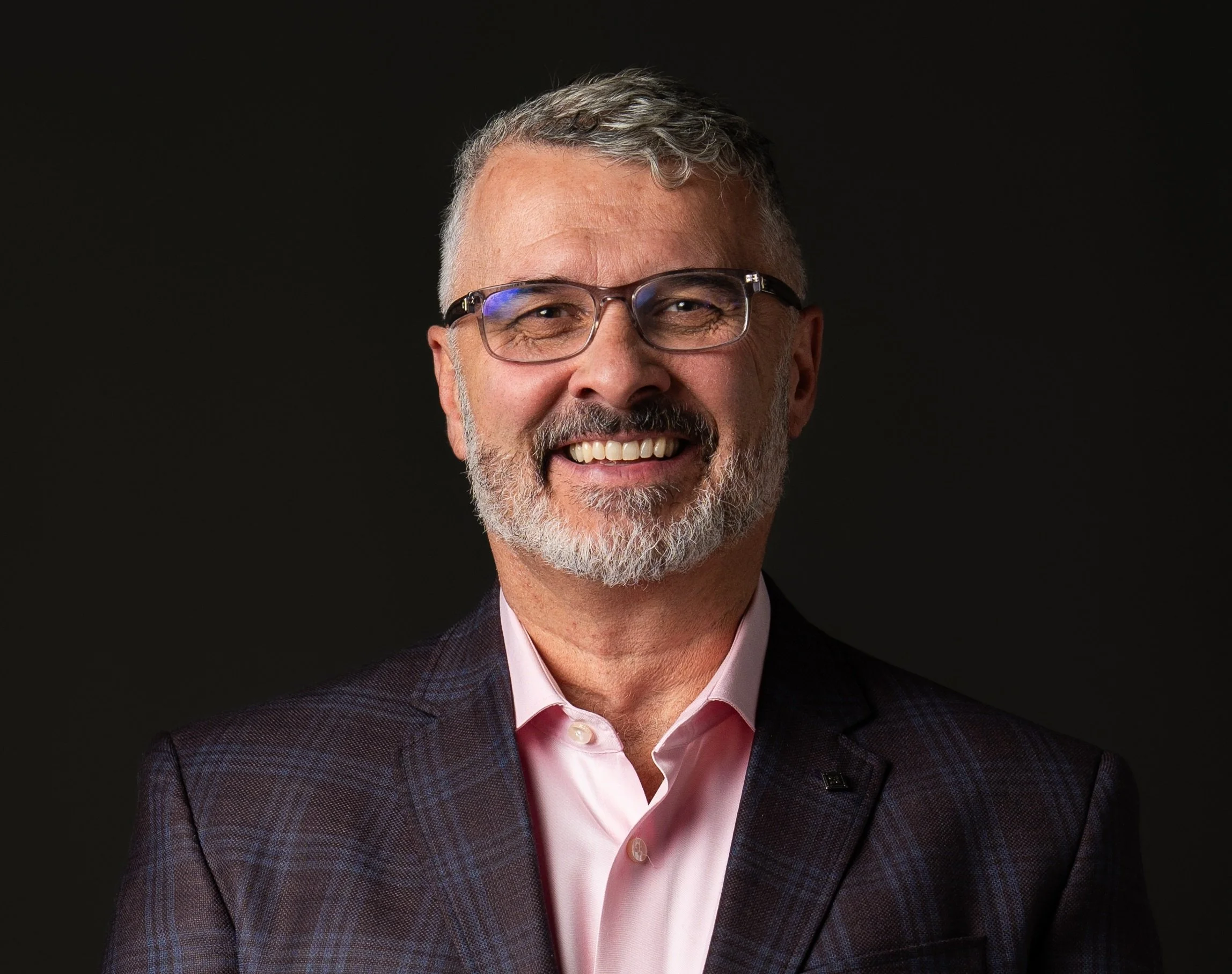
Joe Nunes
Joe Nunes, co-founder and Executive Chairman of Actuarial Solutions Inc., has practiced in the areas of defined benefit pensions, defined contribution programs and retiree health plans for over 35 years. He is an actuary and holds the ICD.D designation from the Institute of Corporate Directors. Joe received an undergraduate degree in mathematics from the University of Waterloo, completed the Directors Education Program at UofT’s Rotman School of Business, and recently completed the Life License Qualification Program.

Adam Chapman

Aaron Thelaide
Adam likes to joke he's the financial planner who helps people spend money, not save it. As the Founder of YESmoney, he’s spent nearly two decades helping retirees overcome the beliefs, behaviours, and emotions that prevent them from enjoying their wealth. Now, he’s on a mission to help every retiree turn their money into memories.
Aaron Theilade (thee-lade) is Director of Continuing Education (CE) at FP Canada, where Aaron oversees the organization’s growing CE strategy. A CFP® with over 20 years in the financial services industry—spanning leadership and sophisticated planning—Aaron has seen firsthand how learning can transform careers and client outcomes.
Aaron’s philosophy is rooted in a growth mindset: continuing education isn’t just about meeting requirements—it’s about challenging assumptions,
leaning into change, and committing to continuous improvement. When planners bring their best selves to clients, it elevates not only their own practice but the entire profession—ultimately benefiting all Canadians.
Financial planning is built on assumptions — about markets, inflation, longevity, human behaviour, and even the questions clients bring into the room. In this episode, Ben and Braden welcome a diverse panel that originally came together at the FP Canada Conference to explore how those assumptions influence planning outcomes in practice. Joining them are Adam Chapman, a retirement-focused planner who helps clients turn their money into memories; Joe Nunes, an actuary with decades of pension and longevity experience; and Aaron Theilade, Director of Continuing Education at FP Canada. Together, the panel unpacks how to make assumptions credible, how to stress-test them, how to navigate client bias, and how planners can blend math with humanity to create better client outcomes.
Key Points From This Episode:
(0:00:04) Why this episode: recreating a conference panel on planning assumptions.
(0:01:03) Braden on the panel’s value for planners and DIY investors.
(0:02:32) Meet the guests: Adam, Joe, Aaron, and Braden.
(0:06:04) Assumptions matter: directional accuracy > prediction.
(0:07:47) Actuarial view: start with inflation, bond yields, and risk capacity.
(0:09:38) Engineering mindset: plan for expected and unexpected outcomes.
(0:13:21) Client pushback: longevity surprises and hidden assumptions.
(0:16:59) Asset allocation: strategic, goal-based, informed by behaviour.
(0:20:57) Software limits: life is too variable for perfect modeling.
(0:22:01) Behaviour gap: retirees spend less over time despite inflation.
(0:25:18) Software guides; planners interpret and humanize outputs.
(0:28:48) Use assumptions based on the specific question (e.g., withdrawals).
(0:30:31) Always ask: “Why are we modeling this?”
(0:34:15) Handling bias: reframe assumptions to reveal inconsistencies.
(0:38:19) Assumptions evolve: returns, spending, and research all change.
(0:42:38) Longevity beliefs: explore “why,” not just the data.
(0:50:38) Core truth: every plan is wrong — planning is iterative.
(0:52:20) When to update: depends on age, goals, and material changes.
(0:57:23) PWL approach: twice-yearly updates + adjustments during extremes.
(1:00:03) Tips: focus on behaviour, communication, goals, and integration.
(1:10:02) Success: relationships, impact, freedom, and sharing knowledge.
Read The Transcript:
Ben Felix: This is the Rational Reminder Podcast, a weekly reality check on sensible investing and financial decision-making from two Canadians. We are hosted by me, Benjamin Felix, Chief Investment Officer and Braden Warwick, Financial Planning Product Architect at PWL Capital. Welcome to episode 391, kicking off early on in 2026 here.
So Braden, this episode really came from a panel that you were invited to speak on and you kind of came back from the panel, you got great feedback, which was awesome. But you came back from the panel and said that it was a great discussion, good enough that you thought it might be a good topic for the podcast. And so what we ended up doing is just asking all of the other panel members, including the moderator, Aaron, if they would be willing to come on the podcast and do, not necessarily a recreation, but kind of go through a similar progression of the discussion that you guys had in the panel.
So, why don't you talk about the panel and the genesis of this episode?
Braden Warwick: I have to give credit to Alexandera Macqueen who thought of this idea originally, which is to have someone like me with my unique background and technical expertise and financial planning expertise alongside an actuary and alongside a financial planner to talk at a panel at the FP Canada conference, talking about how plan assumptions shape planning outcomes. So I thought it was a really cool topic that I could bring my unique perspective on, but it was also really interesting to hear the perspective of the co-panelists at the conference because everybody brought something unique to the table. In terms of the audience for today's episode, I think if you're a planner, it's pretty cool because you get to get content that's effectively behind a paywall at a planning conference and you're getting that for free.
Needless to say, if you enjoy the episode today, you should attend the conference next year because there's a lot of great speakers there that are a lot better than I am. So feel free to sign up. But also if you're just a general audience member, I think it's a pretty cool opportunity to get a bit of a peek behind the curtain in terms of what content is being presented at a planning conference.
And it also helps you shape and get a little bit more information on the types of planning work that's being done by good planners. And it gives you a bit of insight into the planners that are really taking their role seriously and trying to prove the financial well-being of Canadians versus the planners that may view planning as a secondary byproduct of a fund sale.
Ben Felix: I agree with all of that. I think the only thing that I would add is that, while this does highlight the practice of financial planning, it's also a very practical discussion about what goes into and what people should be thinking about when they're doing financial planning projections. Everything you said is absolutely true, but someone who's listening who is a DIY investor, who may be thinking about their own financial plan, either on their own or maybe working with the only financial planner, I think all of this stuff is still super, super relevant.
It's all things that people absolutely need to be thinking about through the full life cycle of their financial planning process as we talk about during the conversation. The panelists we have or the guests we have for this episode are obviously you, Braden, which by the way, welcome to the podcast for the first time ever. Happy to be here.
People know your name because I talk about you and your research all the time and people know you from the Raft and Miner community too, where you comment pretty frequently. It's cool to be here for sure. Pretty cool to have you here.
You're joined by Adam Chapman. Adam likes to joke that he's the financial planner who helps people spend money, not save it. He primarily works with retirees.
My understanding of his beliefs is that he doesn't think retirees spend enough of their money and that financial planning in general is too conservative. His practice focuses on helping people spend their money more aggressively in retirement than maybe a typical financial planner would. He says he's on a mission to help every retiree turn their money into memories.
He definitely brings unique perspectives. Then we've got Joe Nunes, who's a co-founder and executive chairman of Actuarial Solutions Incorporated. Joe has practiced in the areas of defined benefit pensions, defined contribution programs and retiree health plans for over 35 years.
As an actuary, he's one of those scary smart people. Actuarial science, as I think I mentioned in the episode, is a bit of a dark art. Actuaries are kind of scary, but Joe is great.
Then we've got Aaron Theilade, who is the director of continuing education at FP Canada. He oversees the organization's growing continuing education strategy. Aaron is himself a CFP with over 20 years in the financial services industry.
He's been in leadership, sophisticated planning roles, so he's seen firsthand how learning and education for financial planners can transform both careers and client outcomes. You can see a pretty diverse group of folks here that we asked all these questions about assumptions and how they relate to planning outcomes. I think we had a great conversation.
I do want to mention, you mentioned Alexandera Macqueen, Braden. She was one of our early guests on this podcast back in episode 59, if you can believe it. If people want to go and check out that conversation, I think it was also fantastic.
I do mention at the end of this episode, Aaron brings up a book called Wealth 3.0. We had the co-author of that book, Jim Grubman, on this podcast in episode 282, if people want to go and refer back to that conversation based on some of the comments that Aaron makes here. Anything else to add, Braden, before we go to the episode? No, let's go.
All right. Let's go to our episode on how planning assumptions affect planning outcomes. Aaron, Joe, Adam, and Braden, welcome to the Rational Reminder Podcast.
Aaron Theilade: Thanks so much, Ben.
Braden Warwick: Thanks, Ben.
Joe Nunes: Thank you.
Ben Felix: Let's get this started here. Aaron, can you talk about what makes financial planning assumptions so important to the practice of financial planning?
Aaron Theilade: For sure. No, thanks for the question, Ben. I'm going to pull a few threads that we talked about in our FP Canada conference session.
But one of the core concepts was really this idea that assumptions are the bridge that brings tomorrow into today so that a client can make good decisions now. So I would really argue that assumptions and goals are the foundation of the plan. But I wanted to add a little reality check to that, which is this.
Your plan is going to be wrong tomorrow. And it probably already is today. But that's not really the point.
I mean, I would suggest financial planning is not about recreating reality, especially not some future reality. That's not possible. What really matters most is that assumptions are backed by credible data.
Your plans pass the stress testing. And your plan is directionally and materially accurate, enough to guide sound decisions now and into the future. And this concept of materiality, before joining FP Canada, I led a high net worth planning team.
And we actually did a fair bit of work on that and validated it with FP Canada. But it's this idea that we borrowed from the USCFP board. Information is material when a reasonable client would consider that important in making a decision.
So, assumptions aren't neutral. They shape the story that we tell and the decisions that the clients make. And every assumption becomes part of that bridge that I was talking about earlier.
They're absolutely foundational to the plan.
Ben Felix: That was a great answer. The map is not the territory, but the map is still really useful.
Aaron Theilade: That's exactly it.
Ben Felix: Joe, from an actuarial perspective, where do you start with planning assumptions?
Joe Nunes: So, I'm an actuary. So by definition, I'm conservative. What I'll say is that the investment return assumption and the inflation assumption matter an awful lot.
I tend to start there. Inflation is actually the easier of the two. The Bank of Canada doesn't quite promise, but certainly hopes to deliver 2% inflation over the long term.
So, I think that's just a good starting assumption, give or take. Investment returns, anyone's guess what markets are going to do over the next five years, let alone the next 50 years. So I think you've got to be a bit more careful with that assumption.
What I do is I always start with what are long-term bond rates, because that's a relatively secure investment return, doesn't factor in inflation, but gives you an angle on what's the reasonable starting point. And then I layer on top of that more return depending on how much more risk someone's going to take. And I think that's one of the keys for planners and clients to understand is that more risk is more expected return over the long term.
I know we talked about in that FP conference volatility and unpredictability, but I think the key thing is lining up the risk that the client can withstand or stomach and the type of return that they can expect to generate. So for example, if you have a client that wants to be 100% GICs, assuming some long-term average, like 7% or 8% probably isn't the right number. So it's really tying back what's our investment strategy to what is our expected investment return.
Ben Felix: Yeah, it makes sense. Braden, with your different background, obviously Joe's speaking from an actuarial perspective. You've got a background in aerospace engineering, Braden.
How do you approach making planning assumptions with that engineering mindset?
Braden Warwick: I think first we need to understand what the engineering mindset actually is. I've been in the industry for five years now, the wealth industry that is. I think there's a bit of a misconception about what engineers actually do.
So, let me break it down. What makes engineers different than mathematicians or scientists is that with engineering, it all starts with a real-world problem. From there, there's a lot of math involved.
I think there's a big stereotype that engineers are math nerds, and I'm not denying that. I think Ben and I are both nerds. But I think the key difference is that with engineering, it starts with a problem, and we're trying to solve a real-world problem.
And we need to dig as deep as we need to go with the math to solve that thoroughly. When you think about engineering from that perspective, there's a lot of parallels between the engineering approach and a thorough financial planning approach. Planners could probably learn a lot from engineers.
And coming back to your question, assumptions, engineers approach assumptions with the fact that there is an expected outcome, but also an unexpected outcome. So when you're designing a car and your goal is to make the car as fast as possible, we can try to do that with the expected conditions that we're anticipating happening on a regular basis. But we also need to make sure that that design of the car can withstand unexpected events and make sure that passengers remain safe or as safe as possible in the event of a car crash or something else.
So I think planners can take that same approach and making sure that they're making sound financial decisions based on the expected outcome, but also keeping in mind and making sure that the plan is rigorous and can withstand the unexpected outcomes of market declines. The last point I want to make is I think, in general, planners do a good job and thinking of that with market volatility. I think that's pretty ubiquitous in the industry.
People understand volatility. It's everywhere you look. People are talking about risk and return.
But the key difference that I've noticed in engineering versus planning is that engineers understand that there's uncertainty in all of those assumptions. And planners can kind of easily wipe their hands of different assumptions if they want to. So, for example, future tax rates is an assumption of a financial projection, and there's obviously a lot of uncertainty in that.
We don't know what the tax regime in the future is going to look like. A lot of planners I've talked to have kind of wiped their hands and say, oh, well, we know the plan is wrong, kind of like what Aaron alluded to earlier. But I think the plan can still be very good and very correct, understanding that we're planning for the expected outcome and we're testing to make sure that the plan can still withstand the unexpected.
Because we don't know what that expected outcome is going to look like with any sort of uncertainty. But I think as planners, it's important to embrace that rather than to try and not talk about it.
Ben Felix: I like thinking about from an engineering perspective, you have stuff like turbulent flow in fluid dynamics. You can have an expected outcome, but stuff is not going to move exactly like you expect, especially when it's in that situation. You probably know way more about that than I do.
Braden Warwick: I was going to say, if you take a course in quantum mechanics, you realize that the entire universe is based around uncertainty and there's no escaping it. You might as well embrace it.
Ben Felix: Yeah, not just a financial planning problem. We've established that assumptions are super important. Talked a little bit about how to arrive at assumptions.
Adam, how do you navigate client conversations when the clients challenge the assumptions that you're saying we should use in a financial plan?
Adam (LNU): I think that's always where the bit of nervousness as you're presenting a plan can creep in. Because you really don't know before you start talking about assumptions how someone's going to react. And I tend to find you either get complete crickets, a bit of laughter or an outright objection.
It's somewhere in between. And I find all of them are in some way, shape or form a bit of an objection. Someone just even laughing at something just because they don't believe that that's going to be possible.
Just a subtle way of expressing a challenge. It's not always this, we think it needs to be drastically different. It's a discomfort.
Something in the data there is just not sitting well. One of the interesting things that we did is because I tend to at least the ones that I share are longevity, inflation, and rate of return. That's typically what I try to discuss with clients.
So, when we were actually doing this for financial planning week, I actually posed the question to the audience of financial planners, which one do they encounter as being the risk or assumption that clients typically challenge the most? Surprisingly enough, 58% of the planners in the room said longevity. Which for someone who works specifically with retirees, it was no surprise to me with inflation and all the different conversations that are out there right now.
I was actually quite surprised that longevity was the most common for the people in the room. I tend to see this as a bit of an opportunity for a conversation, or at least a chance to understand what's actually happening when you get that objection or you get that laughter. I think if you look at longevity as the thing to look at, I found a fascinating study a handful of years ago from Limra that actually showed how early retirees view their life expectancy relative to the data.
It says in our 60s, we believe we're going to die way sooner than the actuarial tables tell us we will. But then somewhere around 75 or 80, we actually start to believe in our own immortality that we actually think we'll live a lot longer than the data actually says we will. So, I've always talked to clients about how basically once we exceed the goalposts we set for ourselves when it comes to longevity, we do actually start to think that that trend is going to continue.
We're going to continue to beat the odds. So, I think when people are coming in and they're objecting to one of these assumptions, what we actually have to realize is that they're just coming in with a different assumption. It's not necessarily saying, I think this is wrong.
What they're saying is, there's actually another assumption I'm making for a totally different reason. When you look at that one in particular, even when you frame why retirees always want to take CPP early and that conversation, which is always a hot button issue, it's kind of an emotional response. But really what it is, it's a reaction to a different assumption that clients, instead of looking at longevity as being the assumption they're making, the risk they're concerned with is brevity, that they may not actually get the chance to enjoy the money that they have.
I think when we're having some of these conversations and realizing that clients are uncomfortable with some of the assumptions we make, that it's probably because they're just trying to express their own assumptions without being able to do it clearly.
Ben Felix: Interesting to think about. Aaron, how should we determine an appropriate asset allocation for a financial plan, which is going to be a big driver of the expected return?
Aaron Theilade: Thanks, Ben. I appreciate the question. I think it even ties into what Adam was saying.
Understanding your client is critical and what they might bring to the table and their level of understanding or even potentially biases. I think that's a topic we're going to talk about later. But to more directly answer that question, I think asset allocation, this is my opinion, you can make a reasoned argument the other way, should be strategic, not predictive.
I think that ties into what I was saying earlier. We're not trying to recreate future reality here. Although to Braden Neer point, we got to do a really good job of getting the range of outcomes right and the direction right.
So, directionally and materially accurate. But this idea of an optimal asset allocation, well, it should really reflect the client's long-term goals, their life stage. And a definition I landed on is, what's the risk required to meet the client's goals, pass stress testing, and allow that client to sleep at night?
Because I think that's the key piece. I mean, we've all had those moments. I was in the industry in 2007 and 2008.
And that's the real stress test to risk tolerance questionnaires. But how do we get there accurately? And I think sometimes there's an over-reliance on risk tolerance questionnaires to do it, which isn't to say those aren't important.
And obviously, if you're an advisor or planner listening to this, follow your firm's compliance policies. But it's this idea that I really think we need to take a more discovery-orientated behavioral interviewing approach to understanding your client and understanding what the risk tolerance might be. There's a real interesting study out of the US.
It was something like variance and risk tolerance measurements. It was Rice back in 2005. And they looked at 131 different risk tolerance questionnaires.
And they found about 131 different ways to measure risk for a client. In there, the same conservative investor could be something like 0% to 70% equities. And the same aggressive investor could be up to 50% cash and fixed income.
Yes, that is a tool. But I will always suggest that skills and understanding your client are always going to be more important than over-reliance on a tool. So FB Canada has got a good position on this on our professional education program when it comes to our letters of engagement, which is don't treat that like it's a compliance box-checking exercise.
It's really an opportunity to discover and rediscover your client and go that much deeper. And even some of the emerging research that's coming out would suggest that risk perception, or at least clients' current feelings towards risk could be influenced by seasonal effectiveness disorder. Did your team win last night?
Did you have a with your spouse? Is the weather bad? Is your blood sugar low?
So I think it's really important to recognize that as much as academically, risk tolerance shouldn't change, the client's perception of that absolutely can. So I think this idea of default to discovery with your client and have those holistic conversations revisited over time. If you don't have a past baseline with a client or they haven't invested before, it's posing those hypotheticals.
And I know I've heard it on this podcast before, instead of saying a 20% or 30% market decline, well, that's a million dollars. How do you feel about that? So I think all of these are really key points in validating that, and it's a pretty critical assumption overall.
Ben Felix: I like that. So it comes down to really, what does the client need to achieve their goals, which we can only know from doing projections, like that's such an important input. And then there's that constraint, which is their behavior or their ability to withstand volatility, which as you described, is a much more complex thing to figure out that likely goes beyond even a good risk tolerance questionnaire.
Aaron Theilade: Exactly.
Ben Felix: Joe, can you talk about some of the limitations of planning software and software-based modeling for financial planning?
Joe Nunes: I think the fundamental limitation is just that it's impossible to plan someone's lifetime. There's too many variables. There's too many things that may or may not happen.
And so if you take the example of a young married couple, and they think they're going to have two kids, go ahead and try and plan around that. You don't even know what travel hack is going to cost when that comes around. But the reality is you may be sitting them with the 10 years later, and they may have one child.
They may have three children. Maybe they hit the mark and ended up with two. And so the key thing is to recognize just because the software offers loads of complex inputs doesn't mean you have to use it all and doesn't mean that any of it's really going to help move the needle on a good plan.
Maybe some of that complexity is better saved for people that are much closer to retirement.
Ben Felix: Adam, your practice is a little bit unique relative to a lot of financial planners because you're trying to convince people to spend all their money while they're alive. I hope I captured that correctly. You can elaborate.
Can you talk about how the limitations of planning software, kind of what Joe was alluding to there, show up in your practice?
Adam (LNU): As Aaron was hinting at, there's an art that starts to form for planners. I think once you've been in the industry long enough, you've worked with enough clients, that you start to realize the software can only take the plan so far. And it's mostly because it's all based on technical assumptions, not behavioral assumptions.
I think the software does a really great job modeling the world with some sort of mathematical certainty. There's still a human being running the plan. And human beings act in very unpredictable ways.
So, part of what I've had to do over the 20 years of trying to help retirees use their money is trying to sit with them and actually understand what's happening. Now, fortunately, we're getting a lot more behavioral data coming out that provides new insight as to how retirees spend money in retirement. When we look at one of the other assumptions that we make, like inflation, we do have data that actually shows that retirees actually reduce spending by roughly 1% a year throughout retirement.
So even though we're assuming the cost of goods going up at a regular basis, that spending actually decreases throughout retirement. And that's even when you account for end-of-life cost of care, that cost of aging that everyone fears at the end, that there is a natural decrease that happens. When we're looking at the software, we've got this thing that says spending goes this way.
And yet we have data that actually suggests at a certain stage of life that changes. At least for me, the limitations have always been trying to figure out how to incorporate some of this behavioral data into the plan. Right now, it still feels very much like an afterthought or something the financial planners have to go find on their own and now use that as part of the conversation with clients when they're struggling to understand how the data works together.
It's almost like we've already sort of said, the plan's wrong from the moment you do it. It's also because there's just a lot of behavioral elements in there that just work different than the technical assumptions we're making. So, at least from my standpoint, working with retirees, it's getting all of that understanding about how humans actually work in retirement, how they actually spend, how they think about money, that software just doesn't help with yet.
And arguably never has. I don't know if it ever will. But at least right now, the struggle for me with my clients in particular is there's a lot of extra work that has to be done outside the plan to help clients actually spend money.
It's more of a supportive element as opposed to a technical assumption.
Ben Felix: So, it sounds like there's empirical realities about how people actually behave with their money and maybe there's normative realities about how people should behave with their money and softwares just don't do a great job capturing those realities. Exactly. Bryn, since behavioral considerations typically lay outside the scope of planning softwares, how do you think a planner should navigate that?
Braden Warwick: The first important thing to realize is that the planning software does not dictate the planning process. And actually, let me explain back in terms of the engineering parallel that I was talking about previously. So, in the engineering world, and I'll actually use my work during my PhD as an example, my world in aerospace engineering, we were trying to deliver a first-in-class flight experience.
So we were designing business jets, very high net worth customers. We wanted to have essentially the most comforting, pleasing ride possible for the jet. In order to do so, we had to minimize the noise and vibration levels of the aircraft.
Breaking that down, how did we solve that problem? We had to first identify the component of the aircraft that would have the biggest impact on solving that problem. And then we used software to come up with a new design that minimized those vibrations.
And we can do that because that's a technical problem statement. And the software is going to churn out some sort of crazy design that doesn't make a whole lot of sense. It's our job as engineers to take that mathematical solution that the software spits out, and then to use common sense, essentially, which is understanding what can be manufactured, how the manufacturing processes take place, and make sure that we can come up with a design that actually works and is actually feasible.
And that actually gets us to where we want to go, which is the quieter, more comforting ride. The key point that I want to make on that is that we're taking the mathematical solution from the software, and we're using it to inspire a real practical design that we can actually implement and get on the aircraft and solve the problem. When you think about it that way, there's a lot of parallels in terms of the financial planning process.
That first, we need to understand the client's goals and what they actually want to achieve with this relationship. We need to analyze that mathematically in the software. But then we also need to unpack that and make sure that we can actually implement a plan that the client can adhere to that takes into consideration some of those practical behavioral constraints that the software is not capturing.
So, from the planning perspective, we really need to understand the limitations of the software, what the software is solving for and what it's not solving for, and then use our expertise as planners to be able to come up with a plan that actually makes sense and is inspired by the raw data and the math that we're getting from the software. It's really the job of the planner to reconcile both of those together and come up with something that improves the client outcome and also is feasible to implement.
Ben Felix: Joe, I'd be interested to hear from you on, we're talking about the differences between spreadsheets and reality. How do you see that in your practice from an actuarial perspective, where you've got the dark art of actuarial science and then reality? Where do you see that difference affecting how people plan and live through retirement?
Joe Nunes: Let me remind you that I don't work with individuals. I work more with corporations with large pension plans. When we look at the planning process, again, I think our clients become more comfortable around uncertainty and around stress testing.
I think it's really just a conversation around, this is where we are today, but let's check in in three years and see where we are then. That's more my experience.
Ben Felix: Braden, how do you think the assumptions should change based on the question that we're trying to answer?
Braden Warwick: I'm going to cite a conversation that I had with Melissa at PWL. I know Ben's mentioned Melissa on this podcast before, so some listeners might be familiar with the name, but she brought up a really good point that illustrates this question quite well. How do we make decisions based on the optimal sequence of withdrawals in retirement, given the longevity assumption?
I'll be more specific here at PWL and following the FP Canada guidelines, we use a more conservative longevity assumption based on the 25th percentile. That assumption can have a meaningful impact on this one decision. Holding constant that the plan is viable either way with the 25th percentile longevity assumption, if we're trying to answer the question of which accounts to draw down first in retirement, from my perspective, I think we need to be using the expected outcome to answer that question, which means instead of using the 25th percentile outcome, we use the 50th percentile outcome, because that's the expected outcome. We're just trying to be more conservative with the plan to make sure that the plan is viable for longer life expectancies. But if we're making decisions based on which accounts to draw down, that can have a meaningful impact on the sequence of withdrawals.
It's a bit of a nuanced question, but I think it's important to specify what question you're trying to answer, and then make sure that you're using assumptions that are in alignment with that question.
Ben Felix: Another example, and this is an extreme one, but if you're modeling insurance needs, you would change the assumption about the expected date of death to now. Different way to think about it, but that's another case where you'd be changing the plan's assumptions to answer a totally different question. Aaron, can you talk about limitations that you've seen with financial planning softwares and what kind of workarounds you've seen?
Aaron Theilade: Just to pull the thread that you guys were just talking about, the question that comes to my mind is, why are we modeling that? Sometimes the answer to that is, why are we modeling that? But sometimes it is actually, in Braden's example, why are we modeling that?
Well, is it to stress test the plan to age 100 or 95 or whatever the case may be? Or are we modeling this right now to show what's the optimal retirement drawdown strategy? Understanding the why we're doing something, I think is critical and it feeds into this answer.
Software is getting increasingly sophisticated all of the time. We use some pretty in-depth software at my prior firm, but looking at it going, are these actually software limitations or are they human planner limitations? I think part of the answer here is, let's make sure we don't get lost and we can't see the forest for the trees.
We think about some of those more complex, high-risk tax strategies the government's disallowed recently. But I had to get these questions from my team, are we going to model all the steps in this? Why are we modeling that?
If we can get a good sense from the accountant, both good or bad, what's the good outcome here? What's the bad outcome? Let's rely on our professional relationships and figure out that.
Because you can imagine all of the steps involved in doing something really high-risk and complicated. How can we be absolutely certain we got that right? Everything else may be well beyond the scope of most CFPs work.
Software is getting way more sophisticated, but we used to even measure our files on a one to four complexity scale. We worked with physicians and their families. So level one being, we've got a corporation.
Level four being there's dynamic and overlapping complexity here. I think it's often in those complex cases that the planner's value really shines if done well. But it's not for the reason that we think.
I think sometimes there's a tendency to go, oh, there was a ton of work and clients do appreciate the work. But I think what the planner really brings to that is if you can actually simplify that complexity without oversimplifying it, and then explain that really well to the client, so they have a much more understanding, well, I think that's really key. So software itself isn't so limited these days.
Although when you've got hold codes on numbered codes, on trusts, on whatever, there's obviously upper limitations. I think the more we look at that, the more we understand it. If you've got a dividend flowing from company five down to company one, well, if you understand the structure, do you need to model all that?
Or is it just here's the result in company one? There's a lot that can be done. Those 10% of hold my beer, this is super complicated cases.
Increasingly, I found a lot of the time, there was so much complexity there that modeling was likely to be quite inaccurate by the time you factored in 20 businesses and everything else. This isn't two teachers with a pension where it's a relatively predictable outcome. Meanwhile, we might have completely overlooked the family dynamics issues, the child with a substance abuse.
These are the things that actually matter. And sometimes the structural and other complexities might even distract from that.
Ben Felix: Yeah, that's really interesting. So, it's like the software is probably not that limited these days, which I agree with. You can model pretty much anything and say like a conquest, for example.
But I love that question of why are we modeling this?
Aaron Theilade: If any of my old teams are listening to this, I think they got that question a lot.
Ben Felix: I like that. Adam, how do you handle biases in client assumptions? We touched on something similar to this earlier, just on how clients react to assumptions.
But if a client wants to use a really high inflation rate because we just lived through a period of high inflation, what do you say to moderate that or do you accommodate it?
Adam (LNU): I think this is probably one of the toughest parts of realizing clients are coming in with their own assumptions, behavior is going to change the plan. Do we just adapt the plan based off of what they bring in with them? Or do we take the time to educate a little bit?
And this is where I sometimes find at least with some of the assumptions, inverting the assumption and asking the opposite can sometimes help them reframe it. So, someone comes in with inflation, you got recency bias going like crazy right now. So they're going, okay, because prices are going up so much, we want to assume higher prices later.
But asking the simple question, okay, if prices were actually going down, which would be horrible for the economy, but let's assume it actually was, would we then actually want to decrease inflation below where the expected rate should be? I find a lot of people, when you pose that question to them, would say no, because even though it would feel really good, it wouldn't feel conservative enough. It's almost like arbitrarily just saying, okay, well, if we're going to lower inflation, which would make the numbers look a lot better, we could also just arbitrarily throw a million dollars in your portfolio too.
We don't necessarily want to just make stuff up because it would feel better. And I find just having that conversation with them and helping them actually understand why they're feeling what they're feeling without necessarily having to use phrases like recency bias. You can really navigate them through a conversation that helps them at least validate that their feelings are real.
Because right now, it really does feel like inflation should be higher. And I do find the behavioral data is also incredibly important. I wish we had more of it to work through some of the discussions, and maybe I just haven't found enough of it.
But that one comment about retirement spending decreasing, that is a great conversation to roll into that inflation so that you don't have to change the assumption. You can change the expectation that the client came in with and help them leave the plan with a more realistic internal assumption, one that matches what we're going to use.
Ben Felix: Do you ever just run it with their desired assumption? I don't think that this is what we should be using, but here's what it would look like if we did.
Adam (LNU): I think it can help them see that it's going to cost them way more money. And I think that can be helpful. I'm just probably one of those people that's more inclined to dig right into why they're feeling what they're feeling as opposed to, I can show you this, but I don't think it's going to solve the problem you're actually having.
I wouldn't want them to just look at how much more expensive retirement would get if you raise inflation and say, well, we just don't want that. We don't want a more expensive retirement. But that's basically what they're suggesting when they say raise inflation.
They're asking for a more expensive retirement. I don't want them to change the number just because they think it's not too costly. Let's just deal with the problem that they're having instead.
Ben Felix: I like that. So have confidence in your assumptions, but dig into the reason why a client is feeling uneasy about the assumptions that are being used. A lot of that does come down to being confident in your assumptions, which we spend a lot of time doing that at PWL and I know FP Canada does too.
I'm involved with FP Canada in doing that. Having good foundational assumptions that you can back up and justify and feel comfortable with is super important. I know I've gotten questions since I've been on the FP Canada Projection Assumption Guidelines Committee from financial planners who will come to the PAG committee and say, hey, I think your assumption on this is wrong.
Here's why. I've always been able to explain, well, no, I don't think it is wrong and here's why. That's always led to them feeling more comfortable, but you have to be able to back up what your assumptions are and have really good reasoning and logic behind it, I think.
Braden, can you talk about how to handle uncertainty about future planning assumptions? We sit down and we say, okay, these are the assumptions. We use the FP Canada Projection Assumption Guidelines.
We know what those are today, but FP Canada updates those numbers once per year. They're going to be different next year. How do you think about incorporating that into projections?
Braden Warwick: I'm going to start by just continuing the thread a little bit, talking about when someone comes in and challenges the assumptions and the inflation assumption that Adam was talking about. I agree with everything Adam said, but I do want to make one distinction. I think that the planning software is a very useful tool for two areas.
One is to analyze strategies and to help make informed financial planning decisions. Then the other one is as a communication tool to help show the client and communicate to the client what your future might look under different situations. From the perspective of challenging the inflation assumption, for example, I would still, of course, base our decision-making around the expected outcome that's backed by all of our due diligence that went into informing the assumptions.
I think it's still worthwhile to show that unexpected outcome as a communication tool to the client. If they come in asking about inflation, I think it might be worthwhile to show that. Of course, still talking about or trying to unpack all the behavioral reasons why they might think that way in the first place, but I think it's also worthwhile to show that your plan is still okay.
We don't expect the inflation to be 5% for reasons X, Y, Z, but if that actually does happen for some unexpected reason, you're still going to be okay. That peace of mind is also pretty important. Then, Ben, to the question you're specifically asking about the evolution of planning assumptions, I think that's a really interesting question.
For sure, the projection assumptions are kind of a point-in-time assumption. We expect markets to return 7% as of now, but that might evolve in the future. It'd be really cool to have software that dynamically accounts for that in a volatility analysis, but none of them do that I'm aware of.
For example, if we're randomizing returns and based on the PWL expected return methodology, there's the historical data component, but then there's the market-based component. It'd be really cool if inside of that projection, if markets do really well, then the expected return would decrease, but again, we're not there yet. That is also an important conversation to have with the client and also for the advisor to or the planner thinking about the limitations of the software.
If we're running a projection today, using that expected outcome, it's important to know that those expected returns are staying constant in all of those thousand simulations that we're running inside the Monte Carlo. They're not evolving like in the real world they would. We would expect that as the plan evolves over the client's relationship with us, we're going to change those assumptions based on how markets do.
That's not the only assumption that we're going to change. We're going to change your spending assumptions. Another really interesting conversation I've had with advisors at PWL previously is just this notion of spending assumptions.
It's such a critical assumption to the plan, but especially for new prospects that show up to our door, it's like throwing a dart at the wall. We have no idea what they're actually spending because they have no idea what they're spending. What's really interesting about that is that the uncertainty in that spending assumption will actually decrease over time.
As we develop the relationship with that client, we got a better sense of their tendency to save or spend. Then also at PWL, we have data on the client's income and how much they're saving in their accounts with us. We actually can make a data-driven assumption based on their actual data, which I think is cool.
All that to say, I think assumptions are going to evolve. It's important for the planner and the client to understand that.
Ben Felix: It is one of the main reasons why financial plans are not a point-in-time exercise or financial planning. The process of is not a point-in-time exercise. It's something that happens over time and evolves over time as reality unfolds.
Because when we do a financial projection or a financial planning conversation based on a projection today, for all the reasons you just mentioned, and as we've talked about throughout the earlier parts of this conversation, everything's going to change. Expected returns are going to change. Spending is going to change.
Life expectancy might change. It's not really a point-in-time exercise. It's an ongoing process.
Joe, what's your actuary perspective on moderating client biases around planning assumptions?
Joe Nunes: When we talk about client biases, how do we recognize it as a bias? Maybe it's your bias and not theirs. Maybe they're the one that's got an accurate view of the future.
The first thing you want to do is know that you've got some good data behind what you think is the preferred assumption. With that said, if someone says, I'm going to plan to live to 80 and that's it, telling them what the mortality tables say, I don't think is a great conversation piece. Instead, I think what you want to start doing is, as Aaron says, pull on the thread of, why do you think that?
It could be that they've got a lot of good ideas around that. I think what was interesting is when Adam said earlier that he was surprised in the FP conference how many people get pushed back on the longevity assumption, that doesn't surprise me at all. The investment return and inflation are hard for most people to get their head around in terms of what drives it.
They know what just happened to them in terms of inflation. They know what just happened in their savings account over the last three years based on their investment portfolio, but they don't really know what drives it. Whereas with longevity, they have family, they have friends, they have their own parents and their longevity.
They tend to form relatively strong opinions about what's going to happen on the longevity front, notwithstanding the fact that it's enormously unpredictable. That's where it's a conversation around what that planning is. Honestly, for me and Mr. Chapman, there is yes money, but I think a lot of people do backload too much to this long life that might occur. I think back to the planning, the spending summaries and things like that. If there's a couple, one of them might live to 90, 95, not sure there's a lot of spending going on at those later ages. Just taking a singular spending strategy that might make sense at 60 or 65 or 70 and projecting that out to 95, I think might backload too much.
Maybe intuitively people are like, that's nuts to save all that money. Maybe it's just intuitive, but maybe it isn't so wrong. I think it's a conversation and I think it's just figuring out what works for the client.
Ben Felix: It really does tie back to Adam's comment earlier about expenses not necessarily tracking with inflation. Clients can be spending more in real terms earlier in their plan because they're going to spend less later.
Joe Nunes: The other thing I say should be part of the plan or conversation with a client is what problem do we want? Do we want the problem of running out of money at age 80 because we plan for 80, but we're going to suddenly find in our later years as Adam suggests, you start to get past some inflection point and you start to think, oh, I'm going to live a long time, but I haven't kept enough money. That requires cutting back spending, some level of hardship potentially depending on perspective.
The other outcome is I saved a bunch of money. I ended up only living till 73 and 75 and some other beneficiaries in this world ended up with a little bit of a windfall that I wasn't planning. Is that an outcome that's better or worse than the other outcome?
People will have different views on that and I think that that's another key part of planning is figuring out which unexpected outcome are we more comfortable with because as Braden sort of alluded to in all of his comments, the outcomes are unexpected and we can try and sensitivity test, but it's which way do you want to lean? Is it the 25th percentile or is it the 75th percentile?
Ben Felix: Yeah, I love that. Financial planners can provide base rate probabilities and they can present clients with trade-offs, but the clients ultimately have to decide what trade-offs they like.
Joe Nunes: Correct. I like that.
Ben Felix: The way you described it, I thought it was great. Aaron, what about you? How have you handled client biases in these types of conversations?
Aaron Theilade: I'm going to point one in particular. I think it really dovetails into exactly what we're saying here. As much as this conversation's about assumptions, really I think what this is about is discovering your clients and then co-creating the future with that client over time.
Conquest, we mentioned that earlier, does such a beautiful job of being able to do that. You get a 90-95% plan and then you can really show your client, here's the possible outcomes, here would be the impact. So it's exciting the technology that's out there today for doing this.
But the one I really wanted to talk about was actually licensing effects. Now, I like behavioral finance. I am very much of the opinion that being able to name 72 different biases isn't even that helpful.
But I wanted to specifically mention licensing effects because of FP Canada's Implementation Gap Study. When this came out, I think it was 2019, it really changed the way I thought about planning in some really key ways. One of the key findings of that study was a client will walk into your office and usually they have one or two, maybe three things on their mind.
And what the study found was planners typically deliver zero to one of those priorities for the client in the plan. I did an informal poll at our FP Canada conference session, and I said, approximately how much time are you spending collecting data versus going deeper with your client and discovery? When I've done this in front of live audiences too, I get a similar range of results.
Anywhere from like 0% of the time going deep with your client understanding them, their goals, up to 75, 80, 90%, which I think is the gold standard and what we should all strive for. But what's interesting about this is you would assume if you're delivering a plan on zero to one of the things the client actually wanted, they'd be kind of upset about that. Except they weren't.
Here's why. Licensing effects. So much like if I eat a salad and some chicken for dinner, it might give me a license to eat a whole chocolate cake and drink a six-pack for dinner.
The plan itself becomes something that the client did. They're like, I've done a plan. This is great.
Except it's not because they didn't deliver on what they wanted and didn't really understand or speak to them. So then they do nothing with that. And that's what creates implementation gaps, or at least one of the key things.
So I would say the solution to this is going deeper with the client, taking the time to understand their core motivations, kind of like what we've been talking about. Testing and validating assumptions with that client is key too. We talked about inflation.
If the client's really concerned that inflation is going to be 5% indefinitely, yes, we could show a scenario and go, here's why that may not make sense. But it's really, I think, meeting the client where they're at. And then that overlay of the advice and recommendations and expertise, that's what we bring to the table.
I guess I'll conclude on one other thing, which is this idea of when we really understand what's important to our client, we can then hire advice back to their goals, preferably even in their own language, with an understanding of who they are as people. And it's not about the client comes in for a retirement plan, you notice they have no insurance in place, and they've got a large family. That's a material thing.
That's important. We can't ignore that. But if we picked up from the conversation that families are the number one value, and it's super important to them, well, let's tie that back to that.
Let's tie it back to what they told them. Licensing effects, I think, are still prevalent at that thread of discovery that's going through all of today's conversations, the solution.
Ben Felix: I've never heard that term before. Licensing effects, and the way that you described it is people who get a financial plan done, gives them the license, I guess, to feel like they've had all of their needs met, even though they have not had any of the questions or few of the questions that they wanted answered by the planner answered. That's crazy phenomenon.
Aaron Theilade: Put simply, it's a good decision or good behavior now results in worse outcomes down the road. That's exactly it.
Ben Felix: Yeah, that sounds like interesting research. Joe, we've talked with this idea that the map is not the territory that reality is typically going to unfold in a manner other than what was initially projected. How do you think advisors should be approaching that fact?
Joe Nunes: My simple answer is every single plan presented to a client should say this plan is wrong, but it's the best we have today. What's been great about this conversation that we've been having as a group is that really what we're trying to, I think, convey to both clients and planners is to talk more about that uncertainty and about the range of outcomes, etc. To me, more than anything, planning is a process, not an event.
I think that we've talked about this earlier. We just need to convey more to people that it's create a plan, see what unfolds, evaluate the plan, adjust the plan, rinse and repeat. I think that if we just continue to convey that kind of idea, especially when you're talking about people that are 25 and 30 and 35 years old, if we can get them into the game of having their first plan and then come back around after a reasonable period of time and look at the plan, what worked, what didn't, how do I feel about some of the assumptions we talked about the first time?
Certainly to Adam's point earlier, if you talk about longevity for five, six, seven, eight reviews of a plan, people are going to start to get more and more comfortable with the data, with whether their assumption is a good assumption. After a decade, you'll have a decade of life experience behind you that maybe informs that assumption a little bit more.
Ben Felix: Make it a living process, really. I've got three more questions that I want to do as a round table. I want comments from each of you and we'll keep the same order for each one.
We'll go Joe, Adam, Braden, Aaron. Joe, starting with you here, how frequently do you think financial planning assumptions should be updated?
Joe Nunes: Yeah, I think that's really age dependent. When you've got a 25-year-old, if you can get them to sit down and I get that it's probably hard to get a 25-year-old into the office to think about long-term things like retirement 40 years later, but if you can get someone to sit down and put together a little bit of a plan, again, the mistake is saying, hey, and if you save $370 a month, the next 40 years, you'll be able to retire. You say, hey, here's a starting budget.
Is that work? Can we work with this? But I don't know that you need to redo the whole plan for that 25-year-old.
I think you're probably more in a phase in those early years around budget review. Hey, how much did you save this year? How much did you spend?
Did you get a raise? Are you saving more? Can you save more?
And I think in the early years, it's much less about the assumptions and much more about the habits. When you get to a 62-year-old that can't decide whether they're retiring now next year or the year after, you probably want to do a lot of frequent updates around, well, what's our plan and what's our input data? What is the RRSP balance this year versus last year?
That'd be my take on it is frequency increases with age.
Ben Felix: I like that. Adam?
Adam (LNU): Yeah, it's funny. Aaron brought in this really cool study that I actually hadn't read but I now need to read. Because the way that we do it in our firm, because we're mostly working with retirees or people just on the approach, I leave the assumptions up to the people who are much smarter than me to come up with when to change the actual technical assumptions.
But we rebuild the plan every time the question changes. And so when I say the question, I mean, what the client is asking themselves. The thing they might try to figure out on their own by hitting Google AI now, there's a common practice to look at milestones or transitions as the time you update a plan or get a new one.
But I like to think of it in terms of what is it you're trying to solve? What are you asking yourself? We get plans where people that are five to eight years out, it's like, are we there yet?
It's actually that simple of a question. And then all we have to do is answer that question, as opposed to trying to build an entire comprehensive plan that solves too many questions that they actually don't have or don't need answers to yet. And then you can start adding in the just before they retire, okay, how do I replace my salary?
Let's answer that question. Then we do one that's probably our sort of more specialized one, which is how much more can I spend? And that's the two years after you've retired, when people are finally starting to get in the groove, you can rebuild the plan that answers that specific question.
And so that's how we at least do it in our firm is more based around what we know our clients are already starting to think and ask themselves. So then we just dive in, build a plan, whatever technical assumptions have changed over that time period. I mean, we're still doing updates and stuff in between, but a full rebuild on the plan is, I think, necessary every time that question shifts.
Ben Felix: Braden, what do you think?
Braden Warwick: I think we need to rebuild the plan anytime something meaningful changes about the plan. Like Ben mentioned earlier, we think of planning as a process rather than just like a one-time, one-shot deal. We have already mentioned planning assumptions could change.
Adam said the planning question could change. The question we're trying to answer or the client goals could change. Another thing in our world is that research changes.
When I think about when I joined PWL in 2020, and we did compensation planning research, and lately we've done asset location research, our knowledge base as planners also evolves over time. So, if you think that there's a new way that you can add value to clients based on latest research, then I think that's also a time to revisit the plan and see if there's ways that you can improve client outcomes.
Ben Felix: I like that. Aaron?
Aaron Theilade: I agree with everything everybody said so far. The only thing I'll add to that is the concept I brought in earlier, which is materiality. We often think about technical assumptions as we should, like longevity and rate for return and all of those things.
But there's many, many more assumptions that go into a plan. I would just add the overlay. Adam, to your point, as the question changed, has our job here changed?
Yes, those should absolutely be triggers. Also, significant life events or something that's really materially changed in their goals would absolutely be something. But the other thing I would look at there is, could any of the assumptions that we've used alter that client's decision?
So again, going back to our definition of materiality. So if something shifted within their plan, let's say they're in a business and the tax rules change, that could absolutely materially impact their decisions on how they're approaching their retirement goal or their wish to give money to charity or whatever it is. So I would just put that materiality overlay on that.
Ben Felix: You guys all gave way more holistic answers than I thought of when I read this question. I was just thinking about how frequently to update financial planning expected return assumptions because that's what I spent a lot of time thinking about. At PWL, we update them twice a year, which is fine, I think.
But the other thing that we do is in extreme events, COVID was a big one, we will update our assumptions at that time. The reason being that asset prices are functions of expected returns and expected future cash flows. And if expected returns go up because stuff got crazy like it did during COVID, asset prices come down.
If you go and update a client's financial plan at that time, using the old expected returns and the current asset prices, the financial plan is going to look a lot worse. When fixed income had a lot of troubles after COVID, when inflation was high, fixed income asset values declined a lot, but their yields, their expected returns went up a lot. And so when we did financial planning projections with a lower fixed income asset values, financial plans looked much worse.
When we accounted for the fact that the expected returns and fixed income had actually shot up a lot, financial plans actually looked better than they had previously, which was an unexpected result. I think just on the technical side, we do it twice a year in normal times, and then we do try and account for extreme situations to make sure that the financial plans are as accurate as possible with the information that we have available to us.
Aaron Theilade: Ben, I think that's really unique in the industry and solving for a issue that you nailed. Things have already dropped, so expected yields are expected to rise. It gives the client a much more accurate picture of the future.
Kudos to you.
Ben Felix: Well, it's important. It's the same with equities too. I use fixed income where I think there's much more predictive power in yields, but it's similar.
We apply less predictive power to yields and equities, but we still apply some. If the market crashes and we don't account for the increase in expected returns, financial plans are going to look really bad. But when we do account for the increase in expected returns, they might look a little bit bad or a little bit worse, but not as bad as if we did not adjust for the change in expected returns.
I don't think it matters when you're talking to clients about how much can you spend in the future. I think it's an important nuance. We only had to do, I believe, an ad hoc update like that, I think the only time in my 12 or so years here was around COVID.
There may have been others, I don't know. I know around the 08 crisis situation, I was not here, but PWL was thinking about that as well. Two more questions here, one of them being the success question that listeners love to hear.
If guys could give one tip related to assumptions and financial planning projections to financial planners and the general audience listening, what would it be? Again, Joe, we'll start with you.
Joe Nunes: We all know that the software and the plan and the assumptions are all a bit of a mathematical game. We've had a good conversation about uncertainty and things like that. What I would say to you is that in my experience, financial planning often over concentrates on the math because that's how we're trained and it's comfortable, et cetera.
I'd say that financial planners, and Adam's alluded to this through the conversation, I think there's a lot more behavioral stuff that should be explored during the working years, how much are you saving, et cetera, but also preparing people for what that accumulation phase is as we talk about it, but what are you going to do when you're retired and what are we saving for in the first place? What are our goals? The best example I can give is you can talk to a lot of 40-year-olds, maybe men more than women that plan to golf every day when they're retired.
They're clear, we're going to stop working. That means I can golf every day and that's what I'm going to do. I'm going to have a place in Florida.
I'm going to spend six months golfing there and I'm going to golf, golf, golf. You talk to that same person when they're 60 and their body's aging a little bit and they're like, maybe I'm going to golf two or three times a year. Suddenly, without any interest in fine dining when they're 30 or 40 and without any interest in global travel, suddenly these are much bigger priorities.
To me, the big thing is these behavioral conversations around who are you? Who are you in the room and what do you hope for? What do you think your future looks like?
Let's just keep having that conversation and refining it so that the plan that we'll build, we'll build a plan and we'll put it together and we'll work together over the next 10, 20, 30 years or if unfortunately you've come to me at 58, over the next two to five, let's make it a plan that's meaningful for the life you want to live.
Ben Felix: That's a great answer. Adam, definitely curious for your answer on this one.
Adam (LNU): I think it's actually probably one of the toughest questions we've answered here, but at least for me, I love using the phrase, the art of financial planning, because I think it goes beyond the technical aspects. I think what everyone's going to realize really quick, as we look at the conversation we've had today, that if I could go back 20 years and go right back to when I first started, the things I would have worked on sooner and tried to get better at is, yes, learning all the technical intricacies, the tax planning, you need to get that baseline information. But I think what turns a planner into someone who can really help a client walk that plan, be there and support it as it changes all the necessary aspects that turn a technical plan into a human life, is navigating that conversation that helps the plan fit the person, as opposed to trying to jam this human being into a technical piece of software.
It needs to go the other way. That means learning to listen better, slowing things down, doing our best not to overwhelm with technical data. We need to know all that technical data.
We need to know why everything works the way that it does. But most of it isn't always relevant when we're sitting in front of a client who's just trying to figure out if they can retire. I think that's part of the art of this industry, is pulling in the behavioral stuff, pulling in the human side of it, and realizing the math is there to support the work that we do.
And I hope that over the coming years, as the industry continues to shift from, say, selling investments and insurance to really focusing on planning, that we get more and more leadership out of places like FP Canada, showing new planners, the ones that are really coming in going, okay, I actually want to learn how to be good at both the technical aspects and the bedside manner. Those two things have to work really well together. And I wish I had started sooner with the bedside manner part.
How do you explain things simply? How do you have a conversation about something that's uncomfortable or that they're already feeling is off, but do it in an empathetic way so it doesn't feel like they're confused? I think that's a really, really difficult thing, and it's something I wish I had done sooner.
Ben Felix: It's a great tip. And I think someone left a comment on, I think one of the podcast episodes, I can't remember if it was that or my YouTube channel, but they left a question saying that they would love our thoughts on the role of financial planners as generative AI gets increasingly powerful and technically competent. I think it's an interesting question.
And I think a big part of the answer is what you're talking about is that generative AI is not a human. And a huge part of what we do is being a human that has knowledge and expertise, but being able to relate that knowledge and expertise to other humans to help them make decisions that make sense for them as a human. Like you said, the technical competence underlies all of that.
You need to have that as a baseline, but the actual role, like what do we spend most of our time doing with clients? That's what I mentioned earlier. We can supply people with base rates and trade-offs, but then they as a human, and we can guide them, have to make human decisions given that technical information.
Braden, what are your thoughts on this one? Tips for financial planners.
Braden Warwick: First, you need to understand the client's true goals. We know in the goals exercise from finding a good life, that that's a process in and of itself to actually unearth what those clients' real goals are. They might come to you initially with some sort of surface level goal or some generic statements about retiring at 65 and minimizing taxes.
But I think it's important for the planner to question that, to try and unearth that a little bit. Is that actually what their motivation is, or is their motivation more in line with maximizing their spending or taking trips or donating to charities or what have you? So I think that's step one.
Step two is making sure that you're actually solving for those goals in the software. I think this is a little bit more technical. We've been talking a lot about behavioral stuff and all that is super important, but you need to at least understand what the software is doing.
It can be a bit of a black box, so you need to make sure that its outputs are actually consistent with what your client is hoping to get out of this relationship. Talking about the implementation gap that Aaron alluded to earlier, we need to, for starters, understand what the client's coming to us with, but then we also need to be able to solve for that. And then as a final step, we need to be able to implement.
And I talked about understanding the limitations of software before and then being able to take that solution the software gives you and make it something that the client can actually walk away with and implement. And I think that's super important. And then my last note is actually to the general audience here that's not a planner.
I just want to point out that we've been talking a lot about limitations of the professional grade industry leading planning software in the country. If you're a DIY investor, actually, for starters, kudos to you for even looking into a podcast like this or looking into financial planning tools that are freely available or a small monthly fee. But just recognize that those tools are going to be limited as well, if not probably more so than the industry leading professional planning software that all of the planners are using.
That point is equally, if not more so relevant to the general audience as well.
Ben Felix: Probably by design in a lot of cases, because if you give a typical person who's a DIY investor, even if they're pretty engaged, if you give them conquest, they're going to be lost. It's a monster. And so a lot of those DIY oriented softwares are simple intentionally, but that also means that they're obviously limited in their own ways.
And then there's some out there that are available, that are accurate, and they're super technical, but similar to my conquest comments, they're just really hard to use. For anybody, let alone someone who doesn't think about it all the time. Aaron, what about you?
What's your tip?
Aaron Theilade: Deployment AI thread for a minute here. I think that's the critical question. And to the extent any planners, advisors are listening, if the entire value prop is tied up and I pick the best investments, you might want to think about shifting that to the human side.
Daniel Pink had a great quote. I think it was the World of Dash podcast where he said, the future of financial advice is at the intersection of therapist, priest, and life coach. It's not to undervalue the technical aspects.
They're critical and it's critical that we can validate, as you said, Braden, what's happening underneath the hood of that software. And conquest is incredible, and it is deceptively simple. There's a lot of complexity, as we all know, underlying that, and it's important to be able to understand it.
For my tip, I was actually going to go a little bit of a different direction. I think the future belongs to the skilled generalist. We've got a hyper-specialized world.
I think what the planner can bring to the table done well is that holistic understanding of the client and the big picture. And I think this just gets magnified with complexity. You think about a simple case where maybe you've got a couple of teachers, they're not getting divorced, everything's good.
Their needs on the legal and accounting side are relatively straightforward. But then you've got a small business owner, an intergenerational family business, and complexity goes through the roof. And I've seen those cases where lawyers got a great plan, accountants got a great plan, they're not talking.
And what the planner can bring there is really that holistic discovery and understanding and bringing everybody together. Great book to read, Wealth 3.0 makes this point. Wealth 2.0 is trusted advisor. We heard that for years. Wealth 3.0, trusted team. That's your internal team, but I would take a more expansive definition and that whole team around the client working together.
That's really what I think the planner can bring to the table.
Ben Felix: It's a great answer to the question. We talked about Wealth 3.0 on this podcast a while ago. It's very good.
Aaron Theilade: Yeah, fantastic book. I really, really liked it.
Ben Felix: Okay, last question for you guys and we'll go same order. How do you define success in your life? Joe, start with you.
Joe Nunes: I wake up every day and whether it's work or play, I spend time with people I like doing things that I enjoy. And so that's my definition of success. And maybe it's confirmation bias because that certainly wasn't the definition that I had when I started out in the late eighties.
It was a much more money definition of success. What I will say though, is that if someone says that I'm lucky, I'll say that my life today is a culmination of 40 years of careful choices around education, employment, and in particular, saving that's created the freedom that lets me live that definition.
Ben Felix: Great answer. Adam?
Adam (LNU): Believe all the hardest questions to the end, don't you, Ben? My definition on this has definitely changed over the years. All I can say is right now, I think I'm at the stage of life where just sharing what I've learned over the years with planners and retirees is what I'm trying to do between jumping into the chair of education for the Financial Planning Association of Canada.
I want to provide some impact for planners, but then my book that is still pending and still coming for retirees and spending money and that psychology part, I'm really at this stage where success is just about sharing right now. And I think one of the really cool things that I didn't ever really notice before, I've always tried to stay in the background. I like working with my retirees.
I would rather sit and have a three-hour-long conversation with a widow than put myself out there and even do stuff like this. But I don't think I ever realized how much you know about what you know until someone asks you to share it. And so success for me lately has been just doing my best to share as much as I can.
So, I really appreciate you having me come on here because it's been kind of fun to just do all the sharing. Actually, it started with FP Canada and the Assumptions panel and led to this. It's so much more fun at this stage of my life to share.
Ben Felix: Awesome. Great answer. Braden?
Braden Warwick: For me, success is all about making a positive impact in whatever I do. I remember when I talked to Cameron before I joined PWL and he asked me why you want to work at PWL and leave academia. I told him that it's because I want to make a positive impact on the financial well-being of Canadians.
And I thought PWL is the perfect platform to do that. So I want to make a positive impact on Canadians, on my coworkers, on clients, and on the general population as well as my family. And I want to be a good husband and father and be a positive role model.
And even in terms of this podcast today, if I can make a positive impact on one listener out there, then I think that'll be a success.
Ben Felix: Very nice. Great answer. Aaron, we'll finish off with you.
Aaron Theilade: Impact is way up there for me as well. And I think for a long time in my life, success for me was just climbing that next peak. I'm a pretty driven guy.
I used to joke, I trained in powerlifting. But if you just weight two sides of a scale really heavy, then it's balanced. Then four years ago, my daughter was born and that really changed a lot.
My little Luna Sophia, I think since then it's been this journey towards trying to find a more balanced life. I still battled that inner hustle culture demon on a daily basis, but I think it really is around intentional family time and work. I wrote down in my notes, sharing, empowering others.
I think it's a lot of what everybody said and the collective impact that we make really is key.
Ben Felix: Awesome. All right, guys, that concludes our discussion. I think there's a great conversation on assumptions and how assumptions can affect planning outcomes.
And you guys all brought really unique perspectives. I think it was a great episode for listeners.
Joe Nunes: Thanks for having us.
Aaron Theilade: Yeah, thanks, Ben. This is great.
Really appreciate you.
Braden Warwick: Thanks, Ben.
Ben Felix: Awesome. Thanks, guys. And thanks everyone for listening.
Disclosure:
Portfolio management and brokerage services in Canada are offered exclusively by PWL Capital, Inc. (“PWL Capital”) which is regulated by the Canadian Investment Regulatory Organization (CIRO) and is a member of the Canadian Investor Protection Fund (CIPF). Investment advisory services in the United States of America are offered exclusively by OneDigital Investment Advisors LLC (“OneDigital”). OneDigital and PWL Capital are affiliated entities, however, each company has financial responsibility for only its own products and services.
Nothing herein constitutes an offer or solicitation to buy or sell any security. This communication is distributed for informational purposes only; the information contained herein has been derived from sources believed to be accurate, but no guarantee as to its accuracy or completeness can be made. Furthermore, nothing herein should be construed as investment, tax or legal advice and/or used to make any investment decisions. Different types of investments and investment strategies have varying degrees of risk and are not suitable for all investors. You should consult with a professional adviser to see how the information contained herein may apply to your individual circumstances. All market indices discussed are unmanaged, do not incur management fees, and cannot be invested in directly. All investing involves risk of loss and nothing herein should be construed as a guarantee of any specific outcome or profit. Past performance is not indicative of or a guarantee of future results. All statements and opinions presented herein are those of the individual hosts and/or guests, are current only as of this communication’s original publication date and are subject to change without notice. Neither OneDigital nor PWL Capital has any obligation to provide revised statements and/or opinions in the event of changed circumstances.
Is there an error in the transcript? Let us know! Email us at info@rationalreminder.ca.
Be sure to add the episode number for reference
Participate in our Community Discussion about this Episode:
Links From Today’s Episode:
Stay Safe From Scams - https://pwlcapital.com/stay-safe-online/
Meet with PWL Capital: https://calendly.com/d/3vm-t2j-h3p
Rational Reminder on iTunes — https://itunes.apple.com/ca/podcast/the-rational-reminder-podcast/id1426530582.
Rational Reminder on Instagram — https://www.instagram.com/rationalreminder/
Rational Reminder on YouTube — https://www.youtube.com/channel/
Benjamin Felix — https://pwlcapital.com/our-team/
Benjamin on X — https://x.com/benjaminwfelix
Benjamin on LinkedIn — https://www.linkedin.com/in/benjaminwfelix/
Adam Chapman’s Website: http://www.yesmoney.ca
Adam Chapman on X: adamchapman519
Adam Chapman on LinkedIn: www.linkedin.com/in/adamchapman519
Joe Nunes’ Website: http://www.actuarialsolutionsinc.com
Joe Nunes on LinkedIn: https://www.linkedin.com/in/joe-nunes-b2a4246/
Aaron Thelaide on LinkedIn: https://www.linkedin.com/in/aaron-theilade-cfp%C2%AE-abfp%C2%AE-epc%C2%AE-clu%C2%AE-567b2010/