
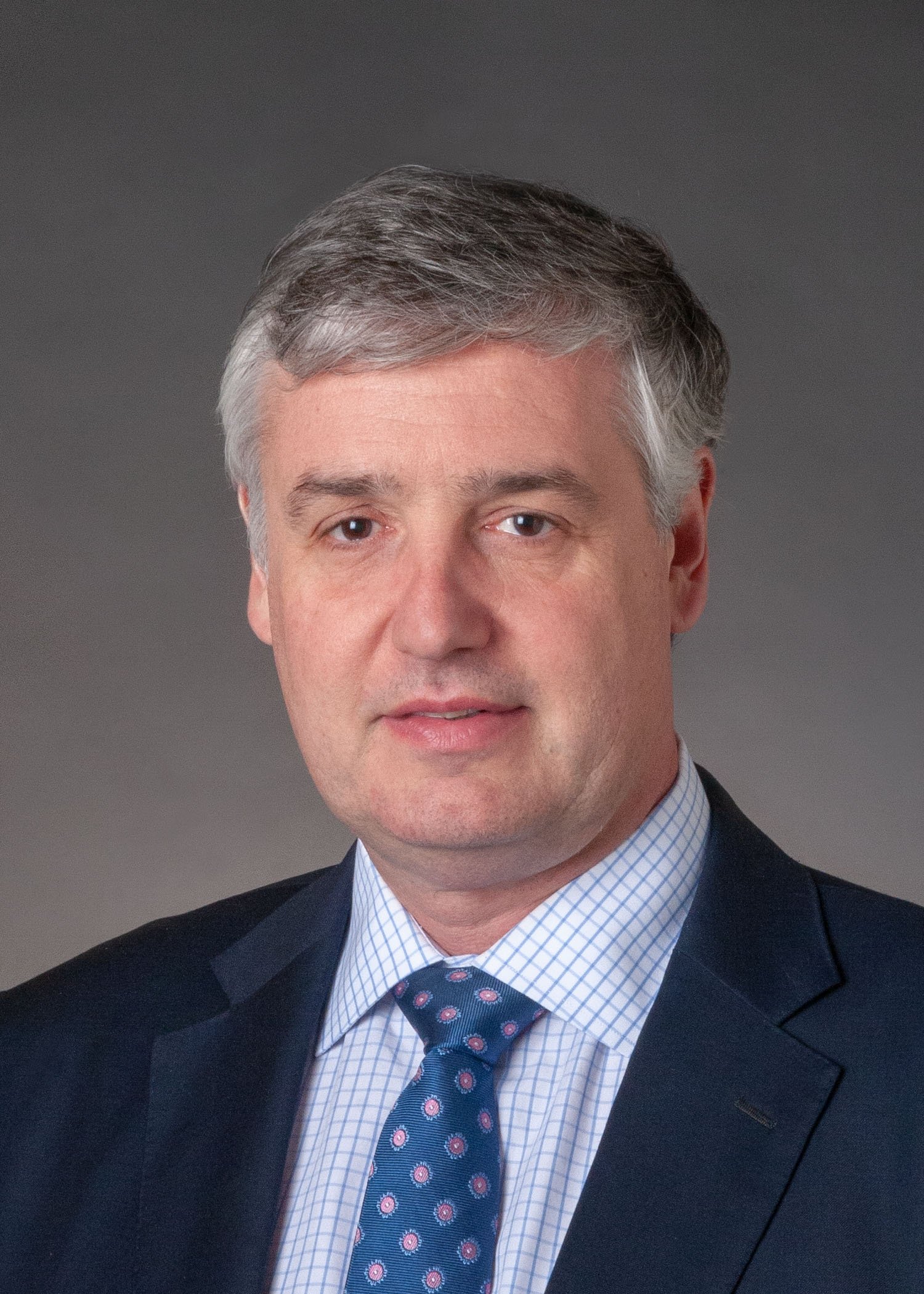
Eduardo, Chief Investment Officer, is responsible for directing the research, design and implementation of their investment strategies, providing oversight of the investment team and the firm’s marketing initiatives, and interacting with clients. Prior to Avantis Investors’ establishment in 2019, Eduardo was co-chief executive officer, co-chief investment officer and director at Dimensional Fund Advisors (DFA) until 2017.
While at DFA, Eduardo provided oversight across the investment, client service, marketing, and operational functions of DFA and oversaw their day to day operations, directed the engineering and execution of investment portfolios and was involved in the design, development and delivery of research that informed the firm's investment approach as well as its application through portfolio management and trading. Eduardo earned a Ph.D. degree in aeronautics from the California Institute of Technology, an MSc degree in engineering from Brown University, and a Diploma de Honor in civil engineering from the Universidad de Buenos Aires. Eduardo is a Trustee of the California Institute of Technology. He is the recipient of the William F. Ballhaus Prize from the California Institute of Technology for outstanding Doctoral Dissertation in Aeronautics and the Ernest E. Sechler Memorial Award for his teaching and research efforts.
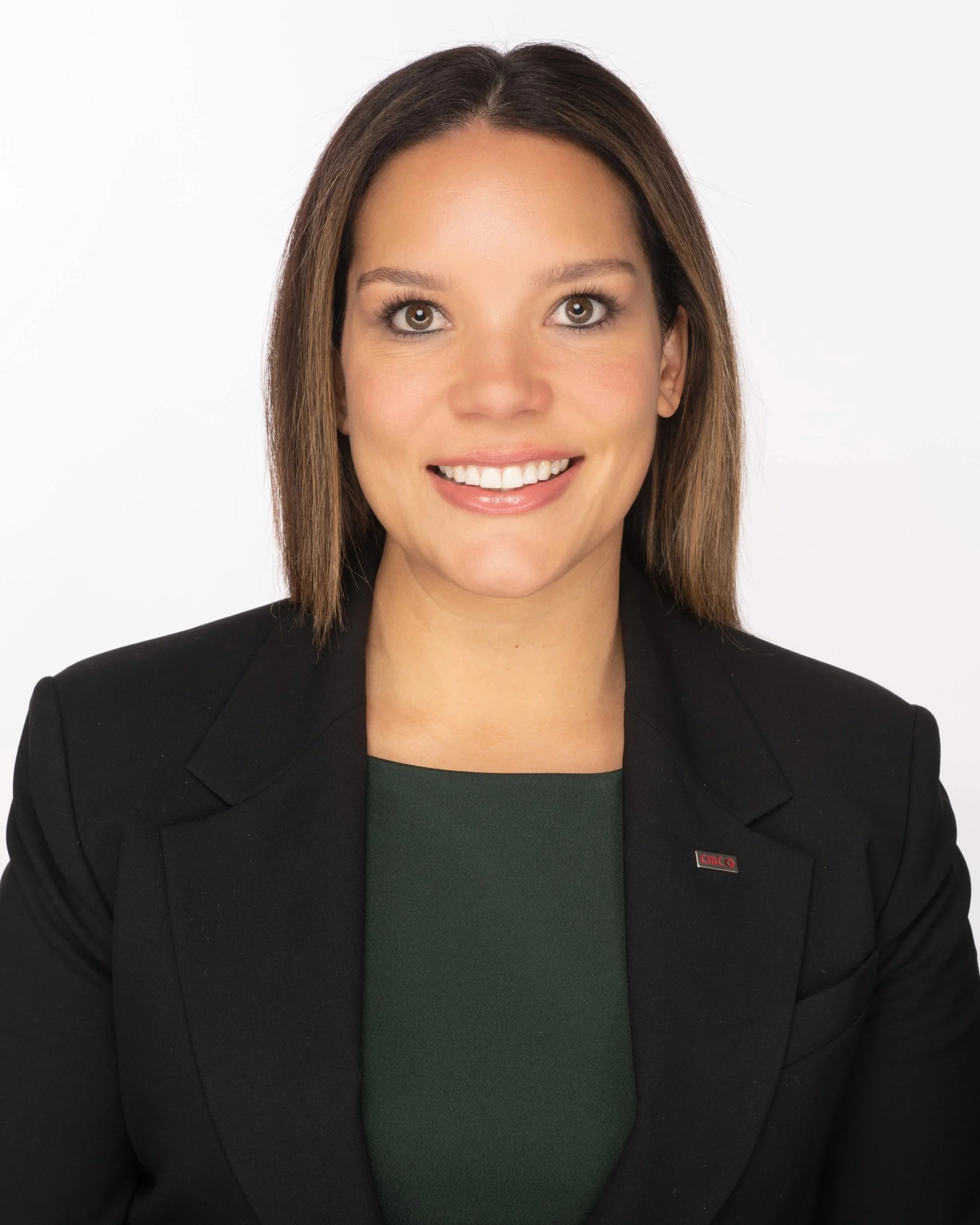
Caitlin Ebanks is Director, Exchange Traded Funds at CIBC Global Asset Management, a leading global asset manager with over $255 billion in assets. She specializes in the Canadian ETF ecosystem, focusing on client education and enhancing the overall client experience. Caitlin is responsible for expanding the ETF business at CIBC through collaboration with both internal teams and external partners. With experience serving advisors, institutions, and direct investors, she understands the unique investment needs across client segments.
Caitlin began her financial services career in 2011 and, before joining CIBC in 2025, held roles in institutional sales and relationship management, providing a range of investment solutions to Canadian pensions, endowments, foundations, and family offices. She also spent over a decade at Canada’s two largest ETF providers, supporting CIRO Advisors and dealer head offices. Caitlin is Co-Head of Events and Education at Women in ETFs Canada and holds a BA from York University.
What if factor investing in Canada became as simple—and affordable—as buying a single ETF?
In this episode, we are joined by Eduardo Repetto, CIO of Avantis Investors, and Caitlin Ebanks, Director of ETF Strategy at CIBC, to unpack the long-awaited launch of Avantis ETFs in Canada. This conversation explores how a partnership built on client-first principles and fee discipline is bringing sophisticated, evidence-based investing strategies to Canadian investors in a dramatically more accessible way.
We dive into the structure and philosophy behind the new ETF lineup, including how Avantis applies factor tilts, why implementation details like direct security ownership and low turnover matter, and how the new asset allocation ETF (CAGE) could simplify portfolio construction for DIY investors. Eduardo also shares insights into Avantis’ research process, expected premiums, and the realities of tracking error, while Caitlin explains how CIBC is positioning these products within the Canadian ETF landscape.
This episode is a deep dive into the evolution of factor investing—covering product design, pricing, portfolio construction, and the broader shift toward low-cost, transparent investment solutions.
Key Points From This Episode:
(0:00:00) Introduction to the episode and the significance of Avantis launching ETFs in Canada.
(0:00:42) Why this launch marks a major step forward in accessibility for Canadian factor investors.
(0:02:52) Lower fees and simplified implementation remove key barriers to factor investing.
(0:04:55) Background on Eduardo Repetto and Caitlin Ebanks.
(0:08:12) Avantis surpasses $125B AUM and the drivers behind its rapid growth.
(0:10:20) How the Avantis–CIBC partnership came together and aligned on client-first pricing.
(0:13:04) CIBC’s ETF strategy and rationale for partnering with Avantis.
(0:14:49) Overview of the Avantis ETF lineup launching in Canada.
(0:19:33) Fee structure, competitiveness, and expected MER approach.
(0:21:25) Eliminating operational cost uncertainty from investor fees.
(0:23:20) “Gas station sushi” and maintaining product quality.
(0:25:08) Why ETFs were chosen over mutual funds as the primary vehicle.
(0:28:29) Roles of Avantis and CIBC in managing and operating the ETFs.
(0:29:32) Direct security ownership vs. ETF-of-ETF structures and tax implications.
(0:31:23) Construction of the CAGE asset allocation ETF and its factor tilts.
(0:33:46) Expected outperformance (1.5–2%) and tracking error (3–4%) ranges.
(0:35:26) Transparency challenges and regulatory considerations in Canada.
(0:37:26) How CACE differs from the TSX through profitability and valuation tilts.
(0:40:13) Low turnover and tax efficiency considerations.
(0:42:05) Long-term commitment to the ETF lineup and viability concerns.
(0:43:44) Ongoing research and potential improvements to factor implementation.
(0:46:07) Current research focus: improving profitability forecasting.
(0:48:30) What excites Caitlin and Eduardo most about the launch.
(0:50:41) Why CAGE could transform how Canadians implement factor investing.
Read The Transcript:
Ben Felix: This is the Rational Reminder Podcast, a weekly reality check on sensible investing and financial decision-making from two Canadians. We're hosted by me, Benjamin Felix, Chief Investment Officer, and Cameron Passmore, Chief Executive Officer at PWL Capital.
Cameron Passmore: And welcome to episode 401. And Ben, the evolution continues. And this week we were joined by a guest that a lot of listeners will know, Eduardo Repetto of Avantis.
We're talking about the launch of the Avantis ETFs in Canada and the evolution certainly is continuing. We talked about that in the episode. I think it is an exciting time for investors in Canada.
Ben Felix: This is something that we've been asking Eduardo about since this is his third time, I believe, as a guest on the podcast. We've asked him every time, when are you guys going to come to Canada? And they launched UCITS products for European investors first.
They've launched Australia, I think Eduardo mentioned as well, and now they're finally launching products in Canada in partnership with CIBC ETFs, which is pretty cool. And they talk about, Caitlin from CIBC and Eduardo talk a little bit about the sort of genesis of that partnership and the things that they had to agree on and did agree on for this whole thing to work from both of their perspectives. It's a super exciting time where we built some, I mean, Frankenstein's not quite the right term, but we hacked together some factor tilted model portfolios years ago.
It's the history of this podcast where we were talking about dimensional funds, which we use extensively at PWL. And we would talk about factor tilts and small cap value and premiums and multi-factor asset pricing and all that kind of stuff. And we got feedback from listeners saying, basically, are you guys just trying to do a sales pitch by talking about this stuff?
Because we can't invest this way on our own. So why don't you stop talking about it? We had responded by saying, we're not going to stop talking about it, but what we will do is create some models that you can use to invest in a way that's somewhat similar.
And to do that, we used Avantis ETFs, small cap value ETFs, which were US listed at the time. So we ended up with these, I mean, not terribly complicated, but relatively complicated model portfolios where we could say, okay, here, now you DIY investor, who's listening to this podcast, you can invest the way that we talk about. But it was fairly complex and required US listed ETFs and currency conversion and all that kind of stuff.
And so the fact that now Avantis has launched Canadian listed products, which hold securities directly, as we talk about with Caitlin and Eduardo in the episode, I think is really exciting. Just that piece, the fact that they're Canadian listed and hold securities directly, but then they're also launching an asset allocation product, which as listeners know, have seen such great adoption in Canada, just makes this whole idea of factor investing as accessible as market cap, at least for equities.
Cameron Passmore: And affordable.
Ben Felix:And affordable, yeah. Super, super low fees. As you said, Cameron, it's a great continued evolution of access to really smart investing for Canadians.
And it really takes away, you know, in the past, we've talked about factor investing. One of the potential drawbacks is added complexity. And now at least from an implementation perspective, that barrier is gone.
There's still other things like tracking error and stuff like that, that you've got to deal with. But the implementation piece, like this is now as easy as investing in XEQT or VEQT or whatever other equity asset allocation ETF. Anyway, very exciting development.
And it was really nice to have Caitlin Ebanks, director of ETF strategy at CIBC, along with Eduardo Repetto on the podcast to talk about really some of the nitty gritty details of the products. How CIBC is thinking about this lineup in Canada. Like I know one of the concerns from people that I've been talking to about this, similar to when Avantis launched in the US, is that these things need a lot of scale to be viable.
And so people worry about the products closing down. We had some interesting discussion around that. Exciting development for Canada.
And this was a really interesting conversation with the people behind it.
Cameron Passmore: Beautiful. Anything else to add?
Ben Felix: Listeners probably know who Eduardo is, but I will just mention he's the Chief Investment Officer of Avantis Investors. He's responsible for directing the research, design and implementation of their investment strategies, and providing oversight of the investment team and the firm's marketing activities, and also interacting with clients. He's doing a bit of everything over at Avantis.
And of course, prior to Avantis being established in 2019, Eduardo was the Co-Chief Executive Officer, Co-Chief Investment Officer, and Director at Dimensional Fund Advisors up until 2017. So he's deeply ingrained in the factor investing world.
Cameron Passmore: And Caitlin Ebanks is the Director of ETF Strategy for CIBC. Before that, she was at BlackRock and also BMO on the ETF site. So she has tremendous experience in ETF space.
Ben Felix: Very cool. Well, we hope listeners enjoy this conversation. And like we've said multiple times, I think this is an exciting time for Canadian investors.
I did just want to say a couple of things before we go to the conversation with Caitlin and Eduardo. One is that the emerging markets product for Canada will not be launched by the time that this episode is released. There's still a few things that they're working on with a couple of the markets.
So they didn't have a date for when it will be launched, but they're actively working out. It's coming soon, pending certain approvals in different countries. But as of the date that this episode is released, it's highly unlikely that it will be live yet.
I also want to mention that we gave a pretty glowing review of Avantis here. We think that they do a great job and always have. We don't have any financial relationship with them though.
Just to be clear, we're not being paid by them to sing their praises. We've been talking about their products since 2019 when they first launched. That's just because we think that they're doing interesting work.
They're doing a good job creating good quality, low cost products that are not gas station sushi, but we have zero financial relationship with them. I just wanted to make sure that that was clear. I also want to mention that during the conversation, Eduardo does talk about expected premiums over a market cap weighted portfolio, just in talking about what should we expect these tilts to produce.
I just want to make sure it's clear to listeners that when we're talking about expected premiums, that's like a model based expected return based on some combination of future expectations and what has happened in the past. When Eduardo talks about that type of a performance, it's an expected premium, but there's going to be a lot of noise around that realized outcome. We've seen that with factor tilted portfolios in the US and in Canada over time where even if the expected premiums are positive, there can be extended periods of time where the realized premium is negative.
Just to be clear, Eduardo is not saying you should expect a 2% return premium every year. That's an expected return and there's going to be in real life a lot of noise around that estimate, including the potential for many years of under performance.
Cameron Passmore: Absolutely. Spot on, Ben.
Ben Felix: I've got one more quick disclosure for you guys because we're talking a lot about specific investment products today. From time to time, including today, we talk about various funds that may be available in the US or in Canada.
We do not consider our discussions to be anything more than an opinion and we want to remind anyone who might be considering investing in one of these funds after listening to our show to carefully consider the investment objectives, risks, charges, and expenses of the funds before investing. A prospectus and or the summary prospectus should be available on the issuer's website from your financial professional or by contacting the issuer directly. You should read those documents carefully before investing.
It's important to make sure any funds you choose to invest in align with your goals and risk tolerances. Now let's go ahead to our conversation with Caitlin Ebanks and Eduardo Repetto. Eduardo Repetto and Caitlin Ebanks, welcome to the Rational Reminder Podcast.
Caitlin Ebanks: Thank you for having us.
Eduardo Repetto: Thank you for having us. Yeah, it's a pleasure. It's a pleasure to see you guys again.
Ben Felix: Yeah, good to see you as always, Eduardo. Caitlin, nice to have you on the podcast for the first time.
Caitlin Ebanks: Thank you.
Ben Felix: So, Eduardo, Advantis has passed $125 billion in AUM, which it's got to be some kind of record for a brand that's only six or seven years old. Why do you think these products are getting so much traction?
Eduardo Repetto: Yeah, six and a Half years. That's impressive. I remember when we spoke the first time.
We're extremely thankful to all the people that trusted us. We started with no money, very little volume. You don't know what it is being sitting in the trade index of ETF in the market.
I've seen no volume. Suddenly you see 100 shares and you look around and say, who was that? Because you say, who's making that trade?
And one day we couldn't find who was making the trade and was the wife of a friend. So now it's impressive. But look, when we started, and I think I mentioned before, I always think analogies, trying to learn from businesses and analogies.
And imagine that you are starting a business like a restaurant. You want it to be full. What are you going to do?
You're going to try to have very good food, very good service, and also low fees, low prices. So for us, it's the same, to say it's a business. I mean, it's a service business.
And so we said, look, we need to have good strategy. And that's something that is a must. And we started with what we thought it was amazingly good strategies.
We said, we need to have good service and that's great. And we are going to have low fees and we have cutting edge technology to develop the strategies. You're very careful when you manage it.
It should be good. The problem is that people don't know. You have no track record.
I said, how can I know that you're going to be managing them right and whatnot? And there were tons of fearmongers out there with alarms. Oh, they don't have enough people.
We don't have armies of unnecessary employees for me. And so some people trust us on day one without knowing that we could do it. They like the strategies.
They were hopeful that we were going to deliver. But that hope, that trust, we are extremely thankful. And today we deliver.
$825 billion is just a measure of success that we are delivering. That's what we care. We're delivering to our clients.
We're delivering to all the people that trust us. And we're very happy about that.
Cameron Passmore: So I'm curious, Eduardo, how did you decide to partner with CIBC to launch your Avantis products in Canada?
Eduardo Repetto: I called you, Cameron, and you didn't answer. So I said, who can I call now? And it was a tough one.
No, no. We have been speaking with CIBC from day one. So we spoke with CIBC for the first time around six years ago, I think in 2019.
And we explained everything that we were doing. We explained all our philosophy. We explained everything.
But we didn't have track record. And so the conversation kind of died off. But around a year ago, they picked up again.
And I guess that CIBC liked what we were doing, what we described to them. But then the main issue that they have is that they need a little bit more track record to trust what we're doing. They saw the growth, they saw the reputation, they saw the name.
Part of our name recognition comes from you guys having us here. And so a year ago, we started picking up in the conversations, and we decided to do it together. I know that we have flow from Canada, even though we are not selling in Canada, the US-based ETF.
But we see customer records, and we have flow from Canada. And we know that there is interest there. You guys told me that also.
But Canada is a huge country. You have from one place in one corner to another corner. It's a huge country with a lot of people.
We have anti-scam service. And remember, service is part of the offering all the time. And so CIBC has the reach.
It's a very trusted company. We know them for a long time. And so we look at each other and say, let's do it together.
The problem that you have when two companies are offering a product at the end of the day is that the finance departments of both companies say, I want to make so many basis points. And the other company says, I want to make so many basis points. And you add both, and you finish with 3.5%. I don't know what number you end. And that's bad. But the beauty is that on day one, we were very clear, both sides about that. This is what we should charge to be fair to the investor.
And we will deal with the finance departments telling them, we have to live within this expense ratio, both of us, because if not, we don't have an offering. That's it. Let's not waste time.
That's a framework that many times is very difficult to do. And we were able to. We were very lucky that we were able because both companies are very client-focused.
And so that's how we came to market. And we have been working for a year trying to get this up and running. And the cordiality, the client focus is there.
And the reaction of people out there, you know, in Canada, it was in Montreal, Ottawa, now in Toronto. And some of our colleagues have been in other places in Canada together with the CIBC folks. And the reaction has been extremely good.
We're very happy. So I hope we can really provide an amazing service together to the Canadian investors.
Caitlin Ebanks: And from our perspective at CIBC, as Eduardo mentioned, everything that we do is with the client focus. So when we looked to build out our ETF shelf, because we are a little bit late to the ETF game in Canada as well. We've had ETF since 2019, but we're really now starting to make that splash.
We started with portfolio construction. So every product on our shelf has a spot in a portfolio. We started by switching our beta strategies to MSCI and to FTSE.
So institutional quality benchmarks, we leverage our existing active capabilities. But then there were some opportunities for us to bring in specialty managers. And that's where Avantis came in.
Incredibly well-respected, very, very good at what they do, very transparent as well in their offering. So if you are building a portfolio, what you want is for your manager to do what they say that they're going to do. And they've proven that they've done that.
So from our perspective, we're super excited to bring these to market to the Canadian investor in Canadian dollars.
Ben Felix: Yeah, it's cool to hear how that all came together between the two organizations.
Eduardo Repetto: Look, I'm old, so I've been through this many times. When two organizations are trying to bring something to market, it's difficult to agree on pricing because everyone wants a lot of basis points at the end of the day. But there is no room if you want to be competitive and you want to be fair. And it was great. If you sold that one, I'm sure you can sell anything.
Ben Felix: We've talked for years now, Eduardo, about you guys potentially coming to Canada. And that was always one of the concerns that if you were going to partner with somebody, you were worried about the fees coming in too high and you just wouldn't launch the products in that case. So it's great that you guys were able to find a partnership where everybody agreed on low fees.
Can you guys talk about what strategies you have launched and will be launching in Canada?
Eduardo Repetto: And the beauty that you know this strategy is probably better than me because you are so analytical and look at this in great detail. Some of the strategies are basically the same strategy that we have in the United States. It's a different wrapper.
It's a Canadian wrapper instead of being a US wrapper. For example, we have a US equity strategy. I think that the ticker is CAUS.
It's very, very similar to AVUS. The benchmark is Russell 3000. And that's a product that I'm very, very proud of because if I tell you we launched that one, AVUS, six and a Half years ago, it underweighs large growth in general and underweighs large growth.
It is more specific, but in general terms, underweighs large growth. Large growth over the last six years and a Half has outperformed the Russell 3000 by three and a Half percent. So you say, Eduardo, you underweight the large growth, large growth outperformed the Russell 3000 by three and a Half percent.
You are eating dust. You are behind the benchmark for sure. No, it's ahead.
So that's the way they were approaching investment and reduce the weights of those companies and find other opportunities. Other companies that have higher expected returns are more than compensating for that underweight. So it's amazing.
So that's one of the US equities. That's up and running. It's listed already.
We are going to have an immersion market equity that is the same as AVEM. You know AVEM. Today, AVEM is the largest non-index strategy in the United States ETF.
It has seen tremendous following. I always thought about AVUV as a cold following. AVEM has also its cold following.
It has outperformed the benchmark around two percent a year and basically following the same approach that AVUS but applied to immersion markets. AVUV, you know that very well. I remember the survey that you did about going to an island.
So our international small value. And so we're bringing AVUV also to Canada. The ticker is going to be CAUV.
And we are bringing also, well, AVUV is live. CAUV is live. And then we're bringing CALV.
So the large value version of AVUV. So in the US we have AVLV, our US large value strategy. It also has done tremendously well.
Not only we manage ETF, we manage a fund, we have significant money in supervisory business also in the US in large value, not only in small value. Very big following. And we're bringing global small value that is going to be listed tomorrow, Friday.
That's the same as thinking about AVUV plus AVDV together. If someone wants in one-stop shop, global small value, that is what we're providing there. Now, we're in Canada.
And in the US people think about international developed markets as EFI plus Canada all together. Since we're in Canada, we have to split it apart. So we're going to have an EFI product that is going to be also live on Friday, tomorrow.
And that EFI product is going to be the same as AVDV, but without Canada. And then we're going to have Canada in isolation that is already up and running. It's CACE, it's our Canadian equity strategy.
Now, all these are kind of targeting US, international emerging, Canada, small caps, large caps, volume. Now we're going to have like a fund of funds, a global equity strategy. That is an ETF of ETF, like a fund of funds.
It's an asset allocation, like a fund of funds, but an ETF of ETF. That is our global equity strategy. That's going to come to market next week.
And it's going to invest in our Canadian equity, US equity, international equity, emerging equities, and an extra juice there by having a globally small value. So that's an asset allocation, all in equities. And in the future, we'll have more products.
We probably have balanced strategies of not only equity, but also mixed fixed income. But we're listening. We're listening to people like you.
We're listening to tons of Canadian advisors that are saying, what about that? What about that? We are in the job of providing services.
If we can provide a good service, a good fee, we will do it. You know that in the US we started with only five. Now we have like 35 different ETFs in usage.
So we started with three, now we have six. And so we're in the job of helping advisors help their clients. So we're listening.
Ben Felix: It's a pretty similar lineup to what's in the US except stripping out Canada from the international component, which makes a ton of sense. And then creating a Canada specific equity product, which similarly makes a ton of sense. That's awesome.
Cameron Passmore: Now you both talked about fees before and having to be competitive, but how competitive will the fees be with comparable products in our Canadian marketplace?
Eduardo Repetto: You have the fees because some of the products are live and the other ones have already filed the registrations. So they are slightly more expensive than the US product. There is a slightly higher cost here in Canada than in the US So it's slightly higher expensive, but I'd like the Canadian equity and Caitlin, please correct me if I'm saying anything wrong. You would have the numbers more in your head than me. But if you think about the Canadian equity and the US equity, I think it is 19 basis points in management fee. So the fees are very competitive in the US For example, the US equity is 15. So it's slightly more. They have a slightly higher cost, but I think that they're very competitive. We can give you a whole table of all the expense ratios across all of them.
And we're always listening. Now, at the end of the day, as I say, we have to be sure to provide something that is interesting to clients. And part of being interesting is having the right level of fees.
Ben Felix: Caitlin, we know what the management fees are. We can see those in the prospectus. So I think like all the nerds that listen to this podcast already know what the management fees are.
But something that I've seen come up as a concern is that we don't know what the management expense ratio is yet, which is going to include the op cost, the operational costs of the ETFs and the taxes and all that kind of stuff. Do we have a sense or do you have a sense of what the MERs are going to be for these funds?
Caitlin Ebanks: Yeah. So we expect the MERs to be just management fee times taxes. So times 1.13, the operating fees we are removing. The other thing I would say on this in terms of fees is we are trying to be incredibly competitive on fees and pricing. There could be if the ETF owns another ETF, there could be the MER of that third party ETF coming through. If we own a CIBC ETF, we will take that out. So it won't show up there in the MER. So where possible, we'll try and use a CIBC ETF.
Eduardo Repetto: It's very important what Caitlin said. And we do the same in the United States. Some people give you management fee and then you have operating expenses and the operating expenses are floating.
So if the manager does a horrible job negotiating with the custodian, the manager doesn't suffer, the investor suffers. That in the US we say, that's a no, no, no. If I do a good job negotiating with the custodian or a bad job negotiating with the custodian, that shouldn't really affect the life of the end investor.
I hope I do a good job because I get paid a reasonable amount of money. But if I do a bad job, bad on me. I get paid less and the investor is basically not exposed to that. So I'm very glad that CIBC adopted the same philosophy.
Ben Felix: That's really good to hear. Because I know in the Rational Reminder community where these products have been discussed, there's been a lot of wait and see because we don't know what the MERs are going to be and they could be a lot higher. But the way that you guys described how you're approaching that, I think is going to be very reassuring to a lot of people.
Caitlin Ebanks: And just a reminder too, that the MER won't be published until after a year as well. It needs audited financial statements before being audited.
Ben Felix: Yeah, that's exactly it. So people are aware of that and they're like, well, let's wait and see what the MER ends up being after the first year. I think you guys have probably calmed a lot of people's nerves on that topic.
Cameron Passmore: Eduardo, you said you've been around a long time. I've been around a long time too. And this whole fee discussion is such a refreshing time compared to when I started where there was low fee awareness, but there used to be marketing fees.
It would be five times what your total fee is, something like that. It's just an amazing time for an investor these days to get incredible, affordable exposure.
Eduardo Repetto: Look, it's impressive. I don't know what happened. I think the transparency for sure and people's awareness and then advisors just going out there and being fiduciaries, all that probably created a huge push to people being more transparent.
The moment that you're more transparent and the fees are in your face and you have to be more competitive. And so that's great.
Ben Felix: So Eduardo, I've got to ask, you created this term "gas station sushi." It became a very famous term, at least within our podcast community. I've got to ask, will these ETFs be gas station sushi?
Eduardo Repetto: Why will I sell a gas station sushi? You know, that term has become bigger than itself. I was reading in, I think in the Wall Street Journal, some politician is speaking and he used the term gas station sushi.
I say, must be a Rational Reminder person. I don't know who that person is. And it was not speaking about investment.
It was speaking about something completely different. No, no, no, no gas station sushi. Don't worry, man.
If we have gas station sushi, we don't have a business. One caveat. One advisor stopped me once and said, look, there is a gas station.
I think it is in Pennsylvania. The sushi is good. I've never been there, but he claimed that, so I believe him.
So maybe gas station sushi from every station, but that one.
Ben Felix: You've been on tour in Canada, Eduardo. Have you had any gas station sushi?
Eduardo Repetto: No, man. The food in Canada is amazing. Look, I was in Montreal and Montreal is well known for the amazing cuisine.
Toronto has also unbelievable cuisine. There are things in Toronto that you cannot find in L.A. and they are better. I was in Ottawa.
I also have a great meal. In the past, I've been in Vancouver and Asian food and seafood in Vancouver and it's second to none. I was in Tofino one.
I remember this little restaurant. Oh my God. It was amazing.
I like to eat. Let me be clear. But I was told other places that I haven't been.
For example, I haven't been ever in Quebec City and I was told that Quebec City has a couple of places that are unbelievable. Winnipeg and Edmonton, the steaks supposedly are very good, but for me, steaks is hard bar because I'm from Argentina. I like a steak, but no, Canada has very good food, man.
Cameron Passmore: So Eduardo, can you talk about the decision to launch ETFs as opposed to mutual funds in Canada?
Eduardo Repetto: The first thing that we always worry when we launch a strategy is the strategy. Do we like the strategy? Is this a good strategy?
We don't want them then say, oh, that's cheap sushi. We want to be sure that the strategy is right. Then we worry about the wrapper because inside the wrapper, you can put any kind of strategy.
Any strategy can be in any wrapper. The first decision was to have the strategy that we thought that were very good for Canadian investors. Then we said, okay, we need to put it in a shape.
And so we decided to launch at least first in ETF. And why is that? So ETF, I think about ETF and mutual funds as ETF, the vehicle of the future.
So I think a little bit of payphones, Ben doesn't know what a payphone is because he's too young, but you come around me, we have used plenty of those putting coins. So I think a little bit about mutual funds as a payphone. So if I have to go first on one thing, I would go to think to launch whatever I think that is the best vehicle that is available there.
The ETF provides a lot of protections for shareholders that are like in the mutual fund, you get blindsided with cash flows. In the ETF, you never get blindsided by cash flows. I like that for fairness to the investor.
Now I'm not precluding having funds. Look, we are a service and some people really need funds instead of ETF. And so if the money is there, CIBC is more than willing to go and launch funds.
You know that in the US we have funds. We also have ETFs and we have funds. Now we're launching CITs, that is a different vehicle for retirement funds in the United States that are getting a lot of pressures from ETF on one side and CITs on the other.
If you see the history of the funds, for example, I have seen net outflows, CITs like tremendous inflow. That's telling you something, the market is deciding around that. But there are some people that have needs for funds.
In Canada, some people need the funds, they will tell us and we'll do the right thing. Caitlin, you may want to speak about this from the CIBC point of view.
Caitlin Ebanks: We completely agree. We're listening. If there's a demand for mutual funds, we're open to future launches as well. This is just the beginning for us. We started with eight and we'll see what the market wants.
Ben Felix: I did grow up with payphones for the record. My first cell phone, my parents bought me because I didn't have quarters to call them from the payphone. They finally decided that was okay. They got worried about me, so they bought me my first cell phone. I'm not that young.
Eduardo Repetto: Okay, okay.
Caitlin Ebanks: Ben, I do want to just jump in here as well on the fee conversation around mutual funds versus ETFs as well and just assure everybody that when CIBC launches an ETF with an equivalent mutual fund, either existing or the other way around, launches a fund version of an ETF, we price them both the same fee-based. Your fee-based mutual fund is going to be priced the same as your ETF. It wouldn't be us launching mutual funds to make higher margins or anything. It would be priced the same.
Ben Felix: Yeah, that makes sense.
Eduardo Repetto: That's the same as we do in the US. Look at that. You see, that's what I'm telling you.
Start speaking with the CIBC and say, oh man, these guys are thinking so similar to us, so I'm very proud of that.
Ben Felix: Another question that I know came up a lot when the Rational Reminder community started discussing Avantis coming to Canada was who's actually going to manage the implementation of these Canadian listed products? What specifically is Avantis doing and what is CIBC doing?
Eduardo Repetto: We can get a little bit technical. The funds of the ETF are CIBC-sponsored ETF, but the manager is Avantis. So the same portfolio managers that you know are the portfolio manager managing these strategies.
Now, in the case of ETF, you have other functions, capital markets, for example. In any fund, you have a bunch of other services like accounting, custom, all that is CIBC and Caitlin can speak about that. But the portfolio managers, the guys making decisions, they might be sending the trades. Even the guys trading are our guys.
Caitlin Ebanks: So from CIBC's perspective, we're responsible for the ETF itself in the sense that we're doing the reporting, the operational, the controls, continuous monitoring, making sure that we are staying within Canadian regulatory guidelines. Again, like the capital markets, reconciliation, like all of that.
Cameron Passmore: And here's another question I know the nerds want asked. Will the Canadian listed funds hold the securities directly or hold US listed ETFs?
Eduardo Repetto: Whenever we do something, we're always thinking about what's the right thing for the investor, because if you don't do the right thing, you're not going to grow them. No one will buy them. And so these ETF hold the securities directly with one exception.
So we're buying securities in the US, in Canada. We're going to be buying securities in the emerging market when it's up and everything. With one exception.
What's the exception? The fund of funds, CAGE. So the global equities, that's a fund of funds.
Buy the other Canadian based ETF. We're not buying US based ETF here at all. When I mentioned before, these strategies are what you have seen in the US translated to Canada with some exceptions. We have exceptions because we need to separate Canada from EFI and whatnot. That's what that meant. It's like we're buying the same approach to buy the underlying security.
No, the fund of funds is different. CAGE is different because it's an asset allocation fund. It buys the other ETFs.
Ben Felix: It buys the other ETFs, but because the other ETFs hold securities directly, the tax efficiency of buying the Canadian listed ETFs is great. It's less common now, but for many years, it was very common for emerging markets products, for example, to have a Canadian listed ETF that just held a US listed ETF. But as you guys know, that comes with some potentially meaningful tax inefficiency.
Eduardo Repetto: In other words, speaking about Canada, but look at UCITS. In UCITS, when we launch the UCITS, we have our emerging markets UCITS and buy securities. It goes out there and buys securities.
The one here will be the same. In UCITS, we have a small value, it goes and buys securities. It's the same approach.
We do it slightly differently in Australia for some very good reasons for Australian investors, but I think it is more advantageous for an investor structure that we have that buying securities, but for the rest of the markets, we always try to do whatever we think is the best for an investor.
Ben Felix: One of the products that I'm most excited about is the all equity asset allocation ETF that you mentioned, the fund of funds. Can you talk about how aggressive the factor tilts will be in that fund relative to market cap weights?
Eduardo Repetto: Let me describe more or less what the asset allocation will be. That fund of funds is coming next week. It's 70% in Canadian equities.
And what it's going to buy? CACE. And then the rest is basically market cap weights for the rest of the markets.
So the US comes around 40% EFI and emerging markets a little bit less. And then on top of that has an 8% allocation to global small value. So the tilt is the tilt of our core like strategies with an extra tilt to small value.
That allows us to provide, in our opinion, significant value added. And the most interesting thing is how we're tilting. You can tilt in different ways.
If I tilt over things that don't have higher expected returns, I'm increasing tracking error and increasing cost for no benefit. So if I tilt over cheap sushi, yeah, you pay more, you have all the things, but you don't have the benefits. So you have the tracking error, you have the extra rates, but you don't have the benefits in expected returns.
So the way we're tilting is really an efficient way in order to increase expected returns. While we increase in tracking error, but very efficiently.
Ben Felix: Yeah, we do have some questions about tracking error too, but just on the geographic allocations. So you mentioned that they're going to follow market cap weights. Is that market cap weights as of today?
Eduardo Repetto: Outside Canada. Canada, 30%.
Ben Felix: Yeah. So excluding Canada, are those market cap weights as of today, or is it going to consistently follow market cap weights over time?
Eduardo Repetto: Follow.
Ben Felix: Okay. That's good.
Eduardo Repetto: Unless you have a reason to have some kind of fixed light weight, nothing to tell you, let's not float. And so the idea is floating. Even if you have a fixed weight to Canada, let's suppose that tomorrow, Canada becomes the largest market in the world.
30% may be underweight in Canada at that point. So you say, hey, we cannot have 30%. We may have to have 50.
So even when you have a fixed weight, you have to keep an eye, but becoming more fixed, the rest, you're better off floating.
Ben Felix: When you look across the asset allocation ETFs that are available in Canada, some of them are floating market cap weights, and some of them are fixed weights. I like what you guys are doing with the floating market cap weights.
Cameron Passmore: So I'm curious, Eduardo, how much outperformance and tracking error is it reasonable to expect from CAGE relative to a market cap weighted, but geographically matched ETF?
Eduardo Repetto: That's a great question. So it's good that you say geographically matched, because if not, you have a lot of tracking error, even for the same. So that's good.
So with the value, it will be 1.52%. And the tracking error is around 3, 4%. So I'm giving you ranges. I can give you a specific number to compute this, but ranges is better because this is not exact science.
And in a market move, and you have a little bit at 150 and 200 basis points a year, you know that we have been managing these strategies. We have been managing Canadian equities inside our US ETF. We have been managing EFI.
We have been managing US. We have managed more. So we have a pretty good idea of how this will behave.
We put it together for the last six and a Half year track record in those. So we have a pretty good idea how that would behave. And these numbers are reasonable.
Ben Felix: Tilts in Canada in general have been pretty nice in recent history. Caitlin, Avantis in the US publishes a monthly ETF field guide that has the equity composition of each fund.
And I know that our listeners find that really, really useful just to see what's going on under the hood with these ETFs. Will Avantis or CIBC be publishing something like that for these Canadian listed ETFs?
Caitlin Ebanks: So this question keeps coming up. So we definitely understand the value of this piece, and we are doing our very best to take all the pieces that Avantis has as collateral and Canadianize them, but also work within Canadian regulators as well. So there are some restrictions in terms of reporting, especially while we're in the first year.
So those are just considerations that we are making, but the bones will be there for sure, and more to come.
Eduardo Repetto: I had a meeting this morning with an advisor here in Toronto, and that certainly was brought up. And he also wanted to have access to the podcast by Hal. I know you, Cameron, know Hal very well, and you went too because you have him here.
And so he said, oh, can I have access to the Hal podcast? Anyone can have access because it's in Apple, in the Apple Store. We certainly do webinars with those guys, Hal, Meir Statman, all our other people.
Look, we're here to help advisors. If we can help advisors, the end investor is better off. If the advisor doesn't need help, that's okay.
But if the advisor say, these guys can help me bring in this field guy or bring in behavioral finance experts or any other kind of experts, we are here to help. And ACAVC is very focused on that.
Ben Felix: I like what you guys and Hal are doing with that podcast. I think Hal's been on this podcast three times, and I was actually on your podcast once, Eduardo, with Hal. I was the guest.
Eduardo Repetto: I know. And Hal is great, Meir is amazing. So the advisor that we speak today is a big follower of Meir. And so I said, look, I want to try to get a couple of books signed by Meir and Hal and send them over because he knows all the books.
And I said, okay, maybe I can do that.
Caitlin Ebanks: I think it's important as well for us to make the distinction that in Canada, there are some rules with what we can brand for advisor use versus what we can brand for investor end use as well. So our goal is to be transparent and honest and open in our communication, but then also to make sure that we're meeting the investor where they are, who they are. So you may see similar pieces, but they're directed at different audiences from our perspective as well.
Cameron Passmore: Just for clarity, that's Hal Hershfield that we've been talking about. And yeah, he's been a guest a number of times and as a good friend, as Meir was also a guest. Great interview.
So Eduardo, CACE, the Canadian equity offering is quite unique in the Canadian ETF market. Can you share how its average characteristics compare with the TSX index?
Eduardo Repetto: Basically, relative to the Canadian market, shifting weight from companies that have bad profitability and very high price relative to the adjustable value. So if a company has high, low discount rates in the price of a company with low profitability and high relative price relative to the adjustable value, that company has lower expected returns. So we're going to underweight those companies in large caps and mid caps.
In small caps, we may completely exclude those companies because it doesn't produce too much tracking error and they have horrible returns. So underweighting companies with lower expected returns, so that is being shifted towards companies that have higher profitability, higher adjusted divided by price or low price despite the high profitability, what is an indication of higher expected returns. And that overweight is higher in mid and small cap companies where the premiums are higher because the valuations have more dispersion.
And so similar to what you have AVUS, AVBE, AVBN in the United States, the strategy is basically the same, just underweight companies with lower expected returns because you identify with the low profitability and very low book-to-price and overweight companies with high profitability, high book-to-price in particular in small and mid caps where the premiums are much higher. It's unique. The amount of shift you have is around 15% underweight and 15% overweight.
The shift from red to green, and most of your audience know what I mean, red to green. Red is a company that has low profitability, low book-to-market, and green is high profitability, high book-to-market. The shift is underweight, the rates around 15% and overweight, the company with higher expected return by 15%.
So it's still tracking error sensitive. You have to think about two and a half, 3% tracking error, but you have good value added. And that's what you have seen in all our core strategies in the US
Ben Felix: Yeah, it's so good. And it really is a unique product in Canada. When we did our model portfolios back in 2019, when we used your US listed ETFs, we were trying to give our listeners, because people are listening to this podcast, hearing us talk about factor investing, but they had no way to implement it in their portfolio. So we did our models back in 2019 to give them an approximation of what we do, but we had no option for a factor tilted Canadian equity ETF. And still to this day, there's not really not a whole lot out there.
Eduardo Repetto: No, no, no. Did you say yes? CACE is live. CACE is live.
Ben Felix: Right. Other than CACE, but yeah, you're really the only game in town for a high quality factor tilted Canadian equity ETFs. It's a very cool development for the Canadian market.
How is turnover, noting that there are potentially differences in the structures in Canada and the US, how will turnover in the funds be managed to minimize capital gains distributions?
Eduardo Repetto: All our strategies have very low turnover. We work on valuations at the end of the day. So you have low turnover and we're very cognizant of costs.
So let's suppose that you say I'm going to, and this is an example, if I'm going to pick up one basis point of excess expected return, I'm not going to spend five basis points in trading costs. That's just kind of done. So immediately when you are thinking in valuations and you're taking into account a trading cost and all kinds of implementation costs beyond trading, you say, okay, your turnover is going to be low.
So the most aggressive strategy for turnover for us, probably small value, tend to have around 25% turnover a year. So it's relatively low turnover. You think about that, 25% turnover a year is around 10 basis points a day of turnover.
It's 250 trading days a year. So it's a very small number. If you look for the core like strategy, that's even lower, way lower.
So the amount of trading that you need to do to keep the strategy skewed to their objectives is not too much. That's a huge advantage whenever you're dealing with taxes, huge advantages. And in particular, when you have cash flows, because when you have cash flows, you can fill the gaps with the cash flows in a growing strategy.
You can say, well, this security I bought moved away. Now I have another one to buy. You have a cash flow, you don't have to raise the money.
So considering cash flows, considering the low turnover, we think that we have something that is very, very interesting, even for taxable investors. It's important to take all this into account. I'm not a big fan of a strategy should be high turnover.
Someone may have an amazing strategy who has turnover, that's fine. But we don't do those things.
Cameron Passmore: Caitlin, roughly how much AUM do you think one of these Canadian ETFs needs to remain open and viable in the long run?
Caitlin Ebanks: We're super committed to this suite. If we weren't and we were just testing the waters, we would have launched one or two, but we launched a suite of eight, including new products that aren't available anywhere else. So we don't have a dollar amount, but we are committed.
We know that these are going to be successful. So we don't have a dollar amount because we're not worried about it, if that makes sense. Maybe a little overconfident, but we've seen the success and Avantis does what they say.
They've had consistent returns. The process works. And we're confident that Canadian investors are looking for a way to invest more tax efficiently in this suite.
Eduardo Repetto: This question is a very valid question because when we launched our ETF in the United States, and you guys may remember, it's end of September 2019. So we were getting that question. We were getting that question every day.
And on top of that, competitors were saying, oh, they have no money, they will shut down tomorrow. And so not only we are getting the question because of valid concerns as a fiduciary, you have also because they were being fed by information that was trying to create more uncertainty. And you see the story.
We have good products, we have good service, we have low fees, and we think that the people out there are clever. If we get something that is good, a good price, a good fee, a good service, those guys out there that are clever, they will take advantage. And that's what we want them to do, to take advantage and use this as much as they can, if that's good for them.
And we think that it is. So we're very confident.
Ben Felix: Eduardo, just thinking more generally about Avantis, you were last on in 2024. Have there been any enhancements to the Avantis approach to portfolio implementation since last time we talked?
Eduardo Repetto: Yeah, we're going to speak about a couple of things that we touch here and there. I always think about enhancements. Sometimes we speak with some people, and that's not you, by the way, that says they want you to make a change every quarter.
It's common, in some kind of consultants want you to make a change every quarter. If you make a change every quarter, it means that the last quarter something was wrong. If things were right, why are you going to change every quarter?
And the beauty of what we have done is it was thought very well from day one. And so the bar to make changes is very, very high. It still is not perfect.
I'm never going to claim that we're perfect. Even if we make a hundred more changes, it's not going to be perfect. Perfection is not achievable.
You want to strive to get there, but the bar is high. So we can make some tweaks in our momentum filters. We have touched a couple of markets because of accounting rules.
We have changed our measure of profitability, but most of the things are similar. The tweaks in momentum, some have happened and some more will happen that are already planned. But the biggest, biggest thing that we know that needs work because perfection is not there is the measure of profitability.
Because you know that we're using the last 12 months. We need this future. Who cares how much money the company is going to make in the future?
And using the measures that we have, have information over the future and future returns. But if you tell me how to predict the future, that's why perfection is not achievable. We never do perfect, but maybe there are ways to have a better proxy for future profitability.
And that's something that we're always looking at. Maybe there is information that is available now. Maybe it's information that may not be available now, but may be available in the future.
And so we're always looking and trying. We have played with certain things. Some things were already promising, and then you test them enough that they say, okay, it's not working.
But we have a hope. We think that we're always testing new things. And we think there are a couple of things that may work, but look, I wouldn't be surprised if we say later it doesn't work.
That's the horrible life of a researcher. A researcher is full of hope and full of frustration. And it's a horrible life for the researcher.
You say, oh man, I'm excited. This is great. And then boom, someone just punches you and says, oh, it doesn't work. You have to have nerves of steel and perseverance like no other.
Cameron Passmore: So what's the most hopeful research that you're looking at implementing now?
Eduardo Repetto: Well, implementing now, we have a couple of things on momentum that we're doing. But the most hopeful research is trying to be able to have a better prediction of profitability in the future. Profitability growth, if you want to think about it.
So we are quite good at predicting level. But the derivatives of the level, the variations of the level, is there anything that gives us a hint or indication? And we have something that we tested a lot.
But I don't think that it's producing the benefit that we should see. So there is something that is not working. But that's the frustration life.
Ben Felix: I do have one more question about CAGE. So we talked about the geographic allocations. How are the factor tilts decided? The thought behind the question is, will the factor tilts change over time for any reason?
Eduardo Repetto: Okay. This is a portfolio that is more tilted than the core strategy. So you look at our AVDE in the US, AVEM, and AVUS.
Here is CACE, that is the Canadian equities, CAUS, the US equity, CADE, the EFI, and CAEM, the emerging markets. So it's those tilts plus an extra one towards global small value. And value-defined, that's not cheap sushi, our way of doing it.
And so we think it has quite a lot of tilt. I'm not telling you that that's a perfect amount of tilt. There is no perfect.
There is a risk tolerance for investors or someone more, someone less, for personal reasons or behavioral reasons or whatnot. So we feel comfortable with that. It may come the case that there is a set of investors that want way less and way more.
And so we have two set of clienteles. And if that's the case, we may have to have more than one. And here we are.
We're listening. Remember, I always say, we're in the service business. And so if I provide a service and no one is interested, I don't have a service.
So if there are one set of clientele and all the world is the same, okay, I have a service. If there are two set of clienteles and I want to service both, I may need two things. So we're listening.
We're listening to what people want. We know, for example, that we will have to have balance strategies. We know that.
Now the question is, what kind of balance strategy? How much fixed income on equity? Because I cannot have 10 balance strategies.
It doesn't make any sense. So I'm trying to say, what do I need? And we'll see.
Ben Felix: I can tell you guys are both excited about this launch. I would love to hear from each of you. What are you most excited about?
Caitlin Ebanks: I am super excited about emerging markets, to be honest. I think that the alpha that it's driven in the US, the fact that it is the largest actively managed emerging market ETF in the world, and we're bringing a Canadian version that holds the underlying directly. Again, Ben, like you mentioned, there are quite a few EM ETFs in Canada that still wrap a US listed.
Again, two layers of withholding tax there. I think that this is an incredibly differentiated strategy in an incredibly tricky market to navigate for investors.
Eduardo Repetto: I'm a little bit older. And as you can notice, I have three kids. And someone asked me, which one of your kids you like?
I like all of them for different reasons. And I really like them a lot. So you say, what strategy I love?
I love all of them. If not, we were not going to have them. I think that each strategy that we launch has a purpose.
And all of them together help an advisor achieve an asset allocation. Like CAGE, it's an asset allocation. All equities, later we have balance.
But it serves an asset allocation that, in our opinion, is much better than just a market cap weighting index that doesn't consider expected return, the higher the price, the higher the weight. We can provide something that is more meaningful for advisors and for the investor that is knowledgeable, can deal with tracking error and whatnot. So I'm very excited to be able to bring that to Canada.
You mentioned before that I was telling you, I would love to be in Canada, but I don't know if we are going to be able to do it at a reasonable fee. And if we're not able to do it at a reasonable fee, we're not going to do it. Because doing a bad job is not a good idea for anyone.
And so I'm very, very excited to be back in Canada. I have great experience in Canada. One of the beautiful things of Canada is that people speak different languages, you know, French.
And so I never feel like, damn, they might have the accent. Many people have an accent no matter what language you are. So I'm one more of the crowd.
No, I really enjoy being in Canada. It's a pleasure interacting with Canadian advisors. And so I'm really, really excited to be back here with something that hopefully is of great use to all the investors.
Caitlin Ebanks: Ben and Cameron, I'd love to hear what you're most excited about too.
Ben Felix: Canadians have really embraced the asset allocation ETFs. And there's even subreddits. There's almost these like cult followings of specific tickers.
Like there's a subreddit called Just Buy XEQT. I think there's another one called Just Buy VEQT, which are all equity tickers from Vanguard and BlackRock. So I think CAGE is a really, really exciting addition to the Canadian market where when I'm talking about how PWL invests and how I think about investing, I can point people to a single ETF, just like they could with a market cap weighted globally diversified equity asset allocation ETF.
I'm really excited about that. I do think it's going to have a big impact on the Canadian market. I know the people that listen to our podcast are going to be super excited because historically, if they wanted to invest like we do, but doing it themselves, they had to do this kind of complicated thing, mashing up US listed and Canadian ETFs.
They had to hold multiple ETFs. They had to do currency conversion themselves. So all that goes away with a product like CAGE.
So that's by far what I'm most excited about.
Cameron Passmore: Yeah, and I look at the big arc of the industry. I think it's great that we're making such great progress on, as I said earlier, lower cost, very effective, efficient, targeted, intelligent tools that actually capture some of the research that's been going on, as we all know, for 60 plus years in this space of financial economics. So I think that's all great for the Canadian public and having it coming from a bank, I think that's also good progress.
So that's what makes me excited about this evolution and the evolution continues, right? I think Canada's historically been slower in this evolution and it's nice to see some change.
Eduardo Repetto: I love it. One thing for you, Ben or Cameron, next time that you have one of these events, I want to show up. You guys have been so great and you're listening so great, not only in the US, also in Europe and in Canada.
I want to go. I want to have a beer with all of them. So let me know.
Ben Felix: We'll do it. We were going to do a bunch of meetups this year. It was the original plan, but we decided not to do any. I don't think. We've just been so busy. But next time we do a meetup, we will absolutely invite you. It'll make a big splash. Lots of people will want to come to that.
Caitlin Ebanks: I'm in.
Eduardo Repetto: We can do one in LA. Everyone comes to LA, man. January or February in LA, man. Who does?
Ben Felix: I like it. Awesome.
Eduardo Repetto: Thank you, guys. Thank you very much.
Ben Felix: Great to see you both.
Caitlin Ebanks: Thank you very much.
Ben Felix: Yeah. Thank you guys. Really appreciate you coming back on the podcast.
Thanks. Thanks, guys.
Disclaimer:
Portfolio management and brokerage services in Canada are offered exclusively by PWL Capital, Inc. (“PWL Capital”) which is regulated by the Canadian Investment Regulatory Organization (CIRO) and is a member of the Canadian Investor Protection Fund (CIPF). Investment advisory services in the United States of America are offered exclusively by OneDigital Investment Advisors LLC (“OneDigital”). OneDigital and PWL Capital are affiliated entities, and they mostly get on really well with each other. However, each company has financial responsibility for only its own products and services.
Nothing herein constitutes an offer or solicitation to buy or sell any security. Occasionally we tell you not to buy crappy investments in the first place, but that’s not the same thing as telling you to sell them.
This communication is distributed for informational purposes only; the information contained herein has been derived from sources believed to be “truthy,” but not necessarily accurate. We really do try, but we can’t make any guarantees. Even if nothing we say is fundamentally wrong, it might not be the whole story.
Furthermore, nothing herein should be construed as investment, tax or legal advice. Even though we call the podcast “your weekly reality check on sensible investing and financial decision making,” you should not rely on us when making actual decisions, only hypothetical ones.
Different types of investments and investment strategies have varying degrees of risk and are not suitable for all investors. You should consult with a professional adviser to see how the information contained herein may apply to your individual circumstances. It might not apply at all. Honestly, you can probably ignore most of it.
All market indices discussed are unmanaged, do not incur management fees, and cannot be invested in directly. Which is a shame, because it would be awesome if you could.
All investing involves risk of loss: including loss of money, loss of sleep, loss of hair, and loss of reputation. Nothing herein should be construed as a guarantee of any specific outcome or profit.
Past performance is not indicative of or a guarantee of future results. If it were, it would be much easier to be a Leafs fan.
All statements and opinions presented herein are those of the individual hosts and/or guests, are current only as of this communication’s original publication date. No one should be surprised if they have all since recanted. Neither OneDigital nor PWL Capital has any obligation to provide revised statements and/or opinions in the event of changed circumstances.
Is there an error in the transcript? Let us know! Email us at info@rationalreminder.ca.
Be sure to add the episode number for reference
Participate in our Community Discussion about this Episode:
Links From Today’s Episode:
Stay Safe From Scams - https://pwlcapital.com/stay-safe-online/
Rational Reminder on iTunes — https://itunes.apple.com/ca/podcast/the-rational-reminder-podcast/id1426530582.
Rational Reminder on Instagram — https://www.instagram.com/rationalreminder/
Rational Reminder on YouTube — https://www.youtube.com/channel/
Benjamin Felix — https://pwlcapital.com/our-team/
Benjamin on X — https://x.com/benjaminwfelix
Benjamin on LinkedIn — https://www.linkedin.com/in/benjaminwfelix/
Cameron Passmore — https://pwlcapital.com/our-team/
Cameron on X — https://x.com/CameronPassmore