
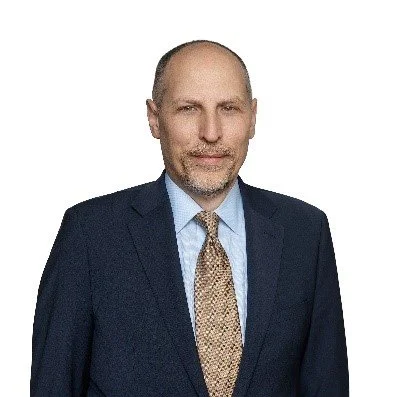
Morley Conn has over thirty years of experience in sales and trading roles across Foreign Exchange, Money Markets and Equities. He is responsible for sales and strategy in ETF Services at Scotiabank Global Banking and Markets. Morley has an MBA from the University of Windsor, a BA from York University and is a CFA and CMT. Morley recently joined the board of the Canadian Security Traders Association and is a past member of the Institutional Equity Traders Association board.
In this episode, we are joined by Morley Conn, Director of Sales and Strategy, ETF Services at Scotia Global Banking and Markets, for a deep dive into the mechanics of the ETF ecosystem. With more than 30 years of experience across equities, foreign exchange, and money markets, Morley pulls back the curtain on the creation and redemption process, ETF liquidity, block trading, market making, and the often-overlooked infrastructure that allows ETFs to trade efficiently every day.
We explore how authorized participants and market makers facilitate liquidity, why ETF liquidity is driven by the underlying holdings rather than trading volume, and how large institutional ETF trades are executed. Morley also explains the differences between Canadian and U.S. ETF markets, discusses common misconceptions investors have about ETF trading, and shares practical advice for retail investors seeking better execution. This conversation offers a rare look at the operational machinery behind one of the most important innovations in modern investing.
Key Points From This Episode:
(0:04) Introduction to Morley Conn and his role in ETF market making.
(4:29) The key participants in the ETF ecosystem: issuers, custodians, market makers, advisors, and dealers.
(5:53) What market makers and authorized participants actually do.
(7:03) How ETF creation and redemption works and why it matters for liquidity.
(10:58) How ETF portfolio management differs from traditional mutual fund management.
(12:44) Why ETF trading volume often greatly exceeds primary-market creations and redemptions.
(13:35) The capital gains refund mechanism and its relationship to ETF trading activity.
(16:04) What happens when ETF market prices diverge from net asset value (NAV).
(18:24) Lessons from the March 2020 bond ETF dislocations and what they revealed about market pricing.
(19:16) How market makers price ETFs when underlying securities are illiquid or difficult to value.
(20:38) Managing ETF market-making risk when underlying markets are closed.
(21:35) The major factors that influence ETF bid-ask spreads.
(23:26) Why market makers prioritize trading volume and investor experience over wide spreads.
(26:45) How large ETF block trades are executed and hedged behind the scenes.
(29:26) Why ETF liquidity is determined by the underlying holdings rather than visible trading volume.
(30:43) The difference between NAV trades and at-risk trades.
(32:46) How market makers contribute to the development of new ETF products.
(34:20) Best practices for retail investors when trading ETFs.
(37:34) Factors that determine when block trades make sense.
(38:46) Why pricing ETF blocks is both an art and a science.
(43:14) What happens when an ETF is shut down and how investors are affected.
(46:22) The balance between retail and institutional participation in the Canadian ETF market.
(48:27) How institutions and retail investors use ETFs differently.
(51:23) Key differences between Canadian and U.S. ETF markets.
(54:56) ETF tax efficiency in Canada versus the United States.
(56:23) Common misconceptions investors have about ETF liquidity and assets under management.
(1:00:13) How CRM3 total cost reporting could influence ETF adoption in Canada.
Read The Transcript:
Ben Felix: This is the Rational Reminder Podcast, a weekly reality check on sensible investing and financial decision-making from two Canadians. We're hosted by me, Benjamin Felix, Chief Investment Officer and Cameron Passmore, Chief Executive Officer at PWL Capital.
Cameron Passmore: Welcome to episode 413 and Ben, I got to thank you because you brought me back to and I can remember the dinners. I think I've talked about this in episodes years ago, but when we first discovered ETFs back in the mid-90s and to understand how they work because understanding how mutual fund works is very straightforward. Understanding how an ETF works and how much goes on behind the scenes is so fascinating, but so head-scratching.
So, if you imagine 30 years ago or so where none of this made any sense when you're explaining, we're like creation, redemption, but how does this happen? I was in New York just after 9-11 happened and happened to get a tour of the Amex, the American Stock Exchange floor and we were watching traders on the floor doing these arbitrage trades to close the gap with NAB and all of a sudden, things started making sense. Of course, it all got rationalized into the NYSE I think since then, but it's just such an unbelievable mechanism and today's guest Morley Conn did a great job explaining so many things that happened behind the scenes and again, it just brought me back 30 years. It's just wild.
Ben Felix: Morley, he's got over 30 years of experience in sales and trading roles across foreign exchange, money markets and equities. Right now, he's responsible for sales and strategy in ETF services at Scotia Bank Global Banking and Markets. So, we talk about ETF market makers.
He is working in that capacity. He's working at Scotia in the market making function. He's got an MBA from the University of Windsor and a BA from York University.
He's also a CFA charter holder and a CMT. He recently joined the board of the Canadian Security Traders Association and is a past member of the Institutional Equity Traders Association board. He knows a lot about what goes on behind the scenes in terms of how an ETF actually functions and all the work that goes into it that people don't tend to see or think about.
He listens to the podcast. We chatted with that a little bit during the recording and he reached out and was like, hey, you guys have done so much great content, but you've never done like a really deep dive on how ETFs work and the Canadian ETF market in particular, which has some pretty meaningful differences relative to the US market. We went deep on all that stuff.
Cameron Passmore: He does a good job explaining it and it's complicated. I thought it was interesting how he talked about not just the science and the math and the programming, but also the art and the risk taking. It's a lot more to it than you think.
I think we all take it for granted, but it's an incredible tool. It's done an incredible job of getting people engaged in personal investing. It's also done a great job of reducing costs, creating liquidity.
It's just an amazing creation. Yeah, it really is. Good to go.
Let's go to our conversation with Morley Conn.
Ben Felix: Morley Kahn, welcome to the Rational Reminder Podcast.
Morley Conn: Thank you, Ben. Thanks, Cameron. It's a real honor to be here.
I'm a longstanding viewer and listener of the podcast and the caliber of guests that you've had on here really makes it a true honor to be on the show. In honor of being on the show, guys, I actually cooked up some ETF slop in your honor. It's got some really healthy single stock ETFs in it.
We've got some levered ETFs, some thematics, because I know, Ben, you love the taste of thematics. We even have some buffered ETFs in there as well. Perhaps after our conversation, we can enjoy some ETF slop together.
Ben Felix: I've got to ask, Morley, is there any Scotia ETF slop in that bucket?
Morley Conn: Of course not. Of course there's none. I am an equal opportunist, but there's no Scotia slop in that concoction that I've made today.
Ben Felix: Glad to hear it. Okay. To jump into the questions we have for you, can you talk about who the players are that are involved with creating and managing an ETF?
Morley Conn: The ETF is created by the asset managers. These are also referred to as the ETF issuers. They will conceive of new ideas to bring to market, and then they will lead with those, and they will, of course, then work with their portfolio managers who will then manage those baskets of securities.
Could be stocks, commodities, bonds, what have you. And then the next natural player is going to be the custodian, guys. The custodian is responsible for the movement of funds in and out of the ETF, and the custodian, because they have access to those positions in the ETF, will provide, and we'll talk a little bit more about this afterwards, will provide authorized participants, the market makers, with updated portfolio positions so that the market makers can properly calculate what the net asset value is and price properly the ETFs. And then, of course, as well, you've got the investment advisors, and then you have the investment dealers themselves who are going to be out there marketing the product to the investing public.
Ben Felix: What is each one of them actually doing? The investment dealers, I think people understand they're selling the product. The investment manager, the ETF issuer, I think people generally get that.
What are the other players doing?
Morley Conn: The market maker, who's also in Canada known as the authorized participant, in some markets in the world, guys, those can be separate, but the market maker will put bids and offers out in the marketplace on the ETF. So we'll be out there continuously buying and selling the various ETFs that are in the marketplace. And in Canada, often the market maker and the authorized participants are the same entity, same institution.
And so the authorized participants, they will do what's called the creation-redemption process, which is a really important integral part of the ETF trading process. That is what balances the arbitrage. And we'll talk more, hopefully we'll get into a little bit more detail in and around that through this discussion.
Cameron Passmore: I find this so fascinating, Marley. This brings me back 30 years when we first discovered ETFs as they came to market. And having these exact same questions is just such a fascinating and interesting how this all happens.
So let's be more precise on this. How is an ETF unit created and redeemed? Because it's such an important part of an ETF.
Morley Conn: To get into how ETFs are created and redeemed, let's talk a little bit first about the various liquidity channels in the marketplace. There's secondary and then there's primary. The first tier of trading and liquidity would be literally on the exchange board between buyers and sellers of the product.
That interaction can also be market makers, the authorized participants with the public as well. But it's that sort of transacting. The second secondary level of liquidity that you will see is authorized participants, dealers trading their inventories with the public as well.
So that will add another tier. The first tier being buyers and sellers meeting together on the board. And then these market makers of ETFs, ourselves included, will run inventories of various ETFs that we are involved with, particularly if we are deemed the designated broker.
The designated broker is the ETF market maker who will have provided the original financing, seeding capital for that ETF to start issuing on the stock exchange. So we'll be out there both buying and selling, showing reasonably tight markets for that ETF. Our interactions with the market are another secondary level of liquidity.
So if we load up on a particular ETF, we're long, we've bought a lot of the product, we might be on the board offering out that product and selling in the marketplace. The third level of liquidity is what's known as primary. Now that can be a situation where, and this is a little bit of the stopgap or the lever, the stress valve for the marketplace, when there's more buyers or there's more sellers, we as the market makers can go to the issuer as authorized participants and get more units issued into the marketplace.
How do we do this? If I was to sell, I didn't own 100,000 shares of a particular ETF and I had a buyer of 100,000, I would sell that product to that investor and I would hedge myself off with a basket of the underlying of that ETF. At the end of the day, I would go to the ETF issuer and say, ETF issuer, I need 100,000 of your ETF units.
This is new issue that the ETF issuer will issue to me into the marketplace. I in turn will exchange that basket of stocks that I have bought to hedge my position with the ETF issuer. There's two types of exchanges that the market makers can do with an ETF issuer, guys.
There is exchange in kind, which is exchanging the underlying securities that make up the ETF. Then there's also a cash exchange, where instead of providing them with the ETF securities, I give them cash, which the buyer gave to me, exchanged to me, and then the issuer will go out and buy those securities. There's a few different ways that the creation redemption process will occur.
Ben Felix: I don't know if I knew about the, where you would sell ETF units, hedge your position, and then get new shares created at the end of the day. Makes sense. You mentioned the two different mechanisms, the in kind and cash.
How is the creation and redemption process related to how the underlying ETF portfolio is actually managed?
Morley Conn: The portfolio managers, because the ETFs will trade intraday, the portfolio managers need to be up on the liquidity requirements in the baskets, in the various ETFs that they manage. It's definitely a different portfolio management experience than you would see in a traditional mutual fund. They need to make sure that they have sufficient cash intraday to cover off the various flows of funds that they're going to see.
That can be very active for more liquid actively traded ETFs, guys.
Cameron Passmore: Are there other differences from typical mutual fund portfolio management, other than the cash balances?
Morley Conn: With ETFs, you can trade intraday, or you can also trade end of day. With the ETF though, as well, guys, is that those secondary flows that I mentioned that occur on the board, they can occur and you can have so much trade intraday on an ETF that it doesn't actually lead to a creation requirement, a creation or a redemption requirement in the fund. Because there's the ability to trade in the market all day, the portfolio managers might not even be impacted by that.
Whereas with a mutual fund, you don't have that offset. So you might have a net equal buyer and seller on a mutual fund, but it's a lot less likely.
Ben Felix: Yeah, that's interesting. So if people are pulling money out of mutual funds, it's not typically being offset by people putting money in.
Morley Conn: Correct.
Ben Felix: So it's hitting the portfolio management process more directly. But with ETFs, you can have a whole bunch of people trading their units with each other and not having to go directly to the primary market. There's no new shares being created.
They're just being passed around people who are trading with each other.
Morley Conn: Correct. In the US markets, you'll see trading of 20 to 30 times. That's the run and gun cowboy wild west.
You'll have 20 to 30 times the volume of ETF trading than you will see in primary net inflow or outflow for that matter. It's usually been inflow in these markets, but it's net inflow that you will see. Canada is a little more tame and it's closer to somewhere between six to ten times, but you definitely see a lot more trade in the market in these funds than you do see in net new issuance.
Ben Felix: Okay. So there's more activity happening in the secondary market. How does that affect the ability of ETFs to use the capital gains refund mechanism?
Maybe you can touch on what that is.
Morley Conn: The capital gains refund mechanism is a refund. Well, let's get back to the fact that both in Canada, ETFs are issued out of a mutual fund trust. So we're actually very similar outside of some of the components, the fact that they trade intraday on an exchange and there are, because of the creation redemption process, they are different than mutual funds.
They are issued both as mutual fund trusts. And so from a tax standpoint, if a holder, or if the issuer is required to sell because of redemptions, some stocks or other securities in the fund and recognize some sort of capital gain, that redemption, that sale is going to impact not only the investor that's selling, but it has potential to impact all of the holders of the and the capital gain refund. In Canada, that's used to mitigate some of this for the holders, the existing holders of the fund.
So they're not hit as severely as they otherwise would be. But the secondary trade that occurs is a really important part of avoiding even having to trip and recognize capital gains in the fund. Now, if there's enough trade in the market, and market makers are involved in that trade and are involved in, like if we were to buy a sufficient amount, there was a net flow out of a particular ETF.
And we as the market maker, we're buying a lot. At some point, if we hit what are referred to as the prescribed number of units, the number of units that you can redeem as a market maker, you can redeem to the issuer, that will potentially lead to a capital gain event for holders of the ETF. But before that occurs, the secondary trade that occurs between buyer and seller will avoid some of that possible capital gain.
Ben Felix: So there's probably less capital gain refund mechanism available because there's less primary market transactions, but there's also probably less capital gains being realized inside the ETF because so much of the activity is happening on the secondary market in the first place. Yes, exactly.
Cameron Passmore: What happens when an ETF's net asset value or NAV diverges from its market price?
Morley Conn: Well, because we have the creation redemption process, the market makers, the authorized participants are going to be out there providing bids and offers on the various securities. If an ETF trades too far outside of the value, if it's trading too below its net asset value, market makers are going to be buying that security. And in the reverse, they're going to be selling it if it's trading above net asset value, fair value, and they're going to be hedging themselves with securities the other way.
You do see dislocations in the market that occur from time to time, guys. March 2020, you had major dislocation in some fixed income ETFs across North America. Now, what happened then during the COVID crisis panic, the underlying cash markets, interestingly enough, the credit markets froze up.
And so you weren't even able to trade much in those markets. The ETF market surprisingly provided a lot more liquidity during that time. So that frozen cash market was kind of static and markets weren't really moving when at the same time the ETF market was truly moving.
So there was some thoughts and opinion that those ETFs were trading at certain points at 30% discounts to where the quoted market was in the cash market. But the cash market wasn't trading anywhere near as much volume, both in Canada and the US, as was the ETF market. So the true representation at that point in time was the ETF market.
So that 30% discount to NAV is kind of questionable. And I don't think that that really did exist. If the cash market was trading as actively, that would have been a narrower spread.
But the market makers and even other participants in the market will come in if there's ever arbitrage opportunities pricing to be had in the ETF space.
Ben Felix: In that case, it sounds like they might not have been actually doing much because there probably wasn't an arbitrage there.
Morley Conn: There was if you trade it small, but there certainly wasn't given the size that was going through the ETF market at that time.
Ben Felix: Yeah. We had a guest years ago. We were talking about ETFs and they explained it as ETFs being an additional pricing vector for illiquid assets.
This illiquid assets not being priced by the market, but in the ETF wrapper, it is. And so that you might see those big discounts now, but to your point, that's probably just a better representation of the actual price rather than a big discount.
Morley Conn: And there's a lot of competitive market makers continuously posting through automated trading prices in ETFs all the time, guys. And so you don't see huge arbitrage opportunities day in, day out. From time to time, there are dislocations in the market and events do occur.
Those are small little windows in time.
Ben Felix: How does the ETF block pricing work when there are illiquid or infrequently priced underlying assets?
Morley Conn: My market making desk is constantly working and looking to find new proxies, new price and reference points and new relationships on various ETFs that they trade. Whether it's futures, whether it's US markets or other asset classes, they're always looking for additional price points and tools that they can use to hedge their exposure. So proxies are a really important part.
And what they'll be looking as well to do is look for correlations, historical correlations in these assets so they have more tools available to trade various ETFs, particularly if they're less liquid, less active. And so that's an important part of what we're constantly looking for. And those can be in all sorts of different markets.
I hear some in the US market will also trade credit default swap indices, which are broad-based credit indices against their ETF positions to hedge themselves. It's a constant battle that we're looking to solve. So that's definitely an important part of trading, especially when it comes to more less liquid ETFs.
Cameron Passmore: Maybe just dig into that a bit. So how does the authorized participant actually manage its risk when that underlying is illiquid or trading even on a closed market?
Morley Conn: When it's closed, we will widen spreads. We will definitely have to widen spreads when the risk is at a heightened levels. And we will still quote, there's been situations very recently I can think about when Europe was closed, but we've had a client wanting to move a large block of ETFs that had a European equity exposure in it.
We will look to, if the US market is open as well, we'll look to US comparable ETF proxies that are also trading EFI underlying ETFs. So that can be a key tool for us to use, but pricing will adjust because we are taking on balance sheet risk, Cameron, when we're pricing up large blocks during times when the underlying liquidity of that market is not where it normally is.
Ben Felix: Can you talk more about what determines how wide the bid-ask spread on an ETF is?
Morley Conn: Well, one factor that in the wideness of an ETF spread that I did mention before about the redemption and issuance credit redeem process, you have what's called a CAF, a cash adjustment factor. So when we trade and exchange cash instead of securities, the issuer is going to take that cash and go out into the marketplace and buy those securities. If it's in some less liquid or foreign market, they are going to charge this capital adjustment factor.
And we embed that, it's usually anywhere between 5 and 25 basis points, guys, but we will embed that in our models in the ETF pricing. And so it will be reflected in the pricing in the marketplace because we are going to be charged it by the issuer. And so we have to charge it to the market.
You will see many products, many securities do not have a CAF, this capital adjustment factor, but you do have it on some products from time to time. So that will widen the bid offer spread. Time of day will widen the bid-offer spread.
Volatility in the market will also drive it. Also the number of market makers that are quoting the offer on a particular security. So there's a number of different factors that will drive that bid-offer spread.
Activity as well in the underlying. And we can get even more into that. It's a lot of the liquidity of ETFs is as much driven by the underlying securities than it is anything about the ETF.
The ETF itself is just a wrapper. The underlying securities are what drive that liquidity.
Ben Felix: Is a wider spread good for the market maker? Is there a profit in a wider spread?
Morley Conn: Not really. Because I can tell you this, the wider spread products are not trading as much. We mentioned before the roles of the various players in the ETFs.
The issuers, the ETF issuers, the asset managers will often have a capital markets, an ETF capital markets desk. We are going to that desk and communicating with that desk when it comes to creation redeem. That desk is also out there looking at all of the trades that occur in their products.
And they are watching as well the bid-offer spread in their products. They want that spread obviously to be as tight as possible. They want the ETF issuers investment experience to be as positive as possible so that they keep coming back as repeat buyers.
So they have an interest in that spread being as tight as possible. The market makers also have a real interest in making sure that our ETF investors experience is as good as possible. That's why arbitrage is not it's talked about that drives the creation redeem process.
But arbitrage is not what market makers are out there looking to capitalize on and bid-offer spread alone. It's to trade as much as possible with ETF investors because that's how we're going to make our money. The commissions and the bid-offer spread.
If spreads are wide investors aren't going to trade as much. So the tighter the spreads are the better off their experience is going to be and our experience as well. You know guys we joke that as market makers we want the investors to turn their portfolio over four times a day.
Well that would be great more commissions more bid-offer spread whereas the issuers want them to trade once a year. They just want to keep those funds under management as long as possible. But really I joke because what we all really want to do is ensure a positive experience for investors.
Ben Felix: The market makers making money off of commissions and a little bit off spreads is that what I heard?
Morley Conn: A little bit but I can tell you this for every trade we do it's so competitive for every trade that we do where there might be a little we're often losing as well. It's a very competitive marketplace as well and you guys can see also on so many of the ETF pairs particularly the more traded ones it's one two cents wide. So that is certainly not driving our P&L.
It is the commissions that we do earn from our institutional clients and also as well is the overall relationship that we have with many of these asset managers these ETF issuers that we work with. The ETF ecosystem is it's a low margin business. It's a very low margin business but it ties through because it covers so many different asset classes and these asset managers are quite large.
It ties through to many other aspects of the business.
Cameron Passmore: So how does the authorized participants arbitrage activity affect market depth when people are placing really large trades?
Morley Conn: When we have a large trade to do, our market makers need to gauge where they can hedge that position, where they can get out of that, get off, if they're buying, for example, or even selling for that matter, where can they offset that risk position on an intraday basis? And so that they can ensure that they're hedged off so that at the end of the day, when they meet, if we're going to do some primary issuance and we're going to be meeting the issuer for a nav trade on the close to offset our positions, we're in a position to be hedged. And if there's an intraday market movement, we'll be able to manage that.
And the market is so competitive as well, Cameron. When you are asked to trade on blocks, if you were going to be trying to arm these large institutions, you're not going to do another trade with that institution the next time they're looking to trade because there's just too many other banks that will do that trade on the cup, on the where fair value of that product should be. Now, also as well, Cameron, we need to take into consideration that a seller comes in on a large block of product.
We need to take into consideration, there's where the visible market is at that point. It could be if it's an actively traded ETF, a few pennies, a penny wide. But if we're looking to move a million shares of an ETF, we need to take into consideration as market makers where we're going to be able to clear the stock or bonds that we're going to need to sell on the other side.
That takes experience. It takes losing money, Cameron. So I can tell you this, as a trader, I've been in this business 30 years.
You don't learn from your winning trades, Cameron. You only learn from your losing trades. It's a rite of passage in this market in ETFs, in particular as a market maker that you're going to lose at some point, a six figure, mid six figure P and L.
And that's just part of the rite of passage of learning how to properly price blocks. As well, every different product will have a different trading personality. So gold ETFs will trade differently than REITs or for that matter energy or broader market.
And so an ETF market maker over time will learn where they can move set amount of risk so that they can protect themselves and hedge themselves off on an ETF transaction.
Ben Felix: If I understand correctly, from the perspective of someone placing a large ETF trade, there's a lot of stuff going on in the background that makes it so that even if you look at the market data and it doesn't look like you could trade that much, there's a whole lot of machinery going on behind the scenes to make it so that you actually can place really large trades without a whole lot of friction. Does that sound right?
Morley Conn: That is very accurate, which was often why we will quote large blocks. We will refer to the current market, but we will price that basket or that basket of underlying stocks that are linked to that ETF at some sort of spread over the current price. That could be in basis points.
That could be in sense. But that is very, very standard fair in ETF market making. And that is correct because the liquidity when all is said and done is driven by the underlying components of the ETF, not that visible ETF quote that you see on the stock exchange board.
Ben Felix: Yeah, that makes sense. You mentioned a nav trade. Can you talk about maybe what that is and what the difference is between a nav trade and an at-risk trade?
Morley Conn: Certainly. An at-risk trade will be an intraday type of trade that will do with retail investors and or institutions. There are some very large retail investors out there as well, guys.
So we will see large flow from our advisor front as well. But it's an at-risk trade that needs to be done with the immediacy of the market because they want certainty of execution. Maybe they have a view on the market that particular day.
Maybe it's just driven by the sheer need to get the trade done. It could be a view. With the net asset value trade. That's an agreement where we will exchange.
We will trade with the client at the closing price based on the net asset value of that fund. It's all of the component parts in their percentages in that ETF. We will meet at a price that is the closing price, net asset value, fair value.
So if they're a buyer or seller, we will execute at the closing price. It's just a very, very different. It's almost more like your traditional mutual fund type trade.
But there are definitely some investors out there in the marketplace that are more comfortable doing net asset value trades and make that a standard fair for their transactions.
Ben Felix: So this is like if we needed to buy whatever a million dollars or 10 million dollars of some ETF, an at-risk trade, is that just like going to the market and buying it?
Morley Conn: Yeah, exactly.
Ben Felix: Okay. And then an at-trade is a closing price.
Morley Conn: It would be the closing market price.
Ben Felix: And is that like we're calling you up and saying, hey, we want to do an at-trade?
Morley Conn: That's right. Very standard fair.
Ben Felix: Interesting, okay.
Morley Conn: And it's your risk and it's also our risk as the dealer on the other side of the trade, it will be our risk on a risk trade.
Cameron Passmore: So what involvement do market makers have with new ETF products?
Morley Conn: Since we're in constant conversation and contact with the asset managers, the ETF issuers, and as well, we are speaking to all swaths of investors, from investment advisor to institutions, we're hearing what investors want and need and are looking for that might not be out there in the marketplace right now. Like some of this ETF slop that you guys love so much, kidding aside. So a number of products actually have developed and grown that originated from conversations with market makers and then ETF issuers took them up on some of these ideas and did bring products to market.
I must confess that there's definitely been, some of the leverage products have been in that category, guys. That has definitely been the case. And as well, some of the cover call products have also come out of some of those sorts of conversations.
Inevitably, though, it's what we are hearing, what investors would like to see.
Ben Felix: One of the cool things about ETFs is that you can take covered calls as one example, a relatively complex strategy to implement on your own. And you can put it in a product and it becomes super easy as much as I don't think people should be investing in covered call products. If you were so inclined to do so, having it in an ETF is pretty incredible.
Cameron Passmore: It really is.
Ben Felix: We talked about average trades and nab trades. We talked about block trading and ETF pricing and all that kind of stuff.
When you think about retail investors, what do you think they need to be aware of and thinking about when they're going to their discount broker account and trading ETF units?
Morley Conn: Oh my goodness. Investors need to definitely take into consideration when the markets are on holiday. And it sounds so simple, guys.
But when the US market is on holiday, you should not be trading Canadian market ETFs who underlie the US market. It makes sense, but investors still do it. The same applies to Europe.
Same applies to Remembrance Day when the Canadian bond market is closed. Just stay away. Those are better days.
You want the best and most efficient price discovery in whatever security you're trading. So don't do it on days when markets are in holiday mode. Because you're going to get a holiday mode price.
I also would stay away from the first 20 to 30 minutes of the market opening. And I would also stay away from the 20 to 30 minute close. These are messier periods of time.
In particular, that opening is when market makers are still trying to figure out where these ETFs are with all their various underlying securities. And pricing can be all over the place. You could maybe get a deal, but you more often than not will not.
And so you are better off to let the dust settle. Market opens 9.30. Look at the market 10 o'clock afterwards. And so those are definitely factors that people should take into consideration.
Ben Felix: Can a retail investor place a nav trade if they wanted to?
Morley Conn: Investment advisors certainly could. It would be a little bit more challenging for a DIY. Do it yourself, investor, direct investor.
We place that trade. Don't know if it's impossible, but technically right now, I think it would be a bit of a challenge. We certainly do them for investment advisors.
One of our biggest clients is our investment advisor network guys. So we speak to them, provide them with a lot of trading advice and guidance on best execution practices. And see them as a very important partner to what we're trying to achieve, which is great.
Ben Felix: It makes a lot of sense. When you talk about not trading when a market is closed, which of course intuitively makes a lot of sense, is the bigger risk day that you're going to get a wide spread or just you're going to get noisy pricing of the underlying noisy pricing for sure, most definitely.
Morley Conn: On holiday days, you do see less players in the marketplace. There is definitely a liquidity factor as well to take into consideration. There's just less prices out there.
There's less participants. I think that it's not as much the spread as just a really bad fill. And there's been some famous ones in the past that have occurred and they've been in sizable trade.
So there's been some lessons learned about that type of trade. It's not just also retail investors that need to be careful of that. There's been institutions that have borne the brunt of that as well.
Cameron Passmore: So here's the best execution practice question for you. When does it make sense to place a block trade order for an ETF?
Morley Conn: I'm going to give just a lame answer, but it completely depends on what you are looking to achieve. What is the goal? What are you looking to achieve with that trade?
Cameron, is it the immediacy because you think that the market's going to rally that particular day? Is it a risk reduction trade that is occurring and you need to get off that exposure as quickly as possible? Is it the need to transact before a central bank decision occurs at either a 10 o'clock at Bank of Canada or into the afternoon with the Fed?
It completely depends on what the drivers are of the portfolio manager's decision-making process and its traders for that matter. You know what, as well? There's a lot of quantitative trade that occurs, systematic trade that will go through the market.
So it can be driven by levels as well, technical levels, breakouts. There's a lot of that type of activity that occurs in the ETF market. So technical levels, systematic, a lot of drivers for where blocks will trade.
Ben Felix: How do the ETF blocks actually get priced?
Morley Conn: With great difficulty. I'm kidding. It goes back to, where do I think I can hedge my exposure?
And for most decently sized trades, it's not going to be too far off of where the current market quote is. But if it's a larger trade in some sort of sector ETF, for example, or a more esoteric bond ETF, the market makers really need to think, where am I going to get the offset? What is it going to cost me?
And it's really an art and a science. The market making of ETFs is an art and science. There are tools that market makers will use that will give them indications to know what the depth looks like of a given basket of stocks and how far down you think or how high up you think you're going to have to go with you or a certain percentage of the market volume.
Those don't help you in non-exchange traded products though, guys. And so those will help. It goes back to experience pricing, a lot of block trades and knowing where you think you're going to be able to hedge that risk.
Another factor is market tone on the day. Is it a positive day? Do you think it's going to be difficult to get your hedges in?
Or is it a negative day and it's going to be difficult to find buyers of the underlying securities? That sort of tone, it's only sitting on a desk and seeing and experiencing it for a prolonged period of time, you'll really get a sense of how to price and how to trade it.
Ben Felix: We've been talking about block trades, but can you maybe just for listeners' sake describe what a block trade actually is and now that's different from other types of trades?
Morley Conn: The term block trade is pretty wide anyways because it depends on the underlying market. Like I have a screen set up that any trade in theory, a million dollars or more is considered kind of a block trade, but a million dollar trade, a million dollars worth of trade in something like a trade underlying the TSX60 or 300 or the S&P 500 for that matter. That's nothing.
Like block trades would be in the hundreds of millions, like sizable trade that would be very challenging to trade would be hundreds of millions of dollars worth of trade. But in theory, a trade in excess of a million dollars could be considered a block, but as mentioned, trades of that size in very active ETFs are not a big deal. It's only more sizable, but it's going to depend
There's going to be some types of ETFs where $10 million is going to be a very significant move moving 10 million worth of those securities, whereas in more active big indices, as mentioned, it's going to be a lot larger. But we use the gauge of a million dollars, but it really does vary from ticker to ticker.
Ben Felix: Really does just speak to the TF structure though, right? Where it's like, if people wanted to trade those underlying, you're basically talking about how hard it is to do it well and get good prices on the securities. But when someone's trading an ETF unit, they're just buying the unit and you guys basically are doing all the hard work behind the scenes.
Morley Conn: Yes, there's a lot of work that goes behind the scenes. Each of the banks for our market making ETF, market making operations, we have teams of developers that support our models. So we get, as mentioned from the custodians, we will get the inventory, the portfolio basket view of various ETFs in the morning.
And then we will input those, update our models that our developers work on to price all of these different ETFs. So there's a lot that goes into it. There is a huge infrastructure.
It's a very challenging business because the margins are tight, very competitive pricing, and yet there's a big capital outlay in both tech and people that's required.
Cameron Passmore: So if an ETF gets closed down, what happens to the assets inside the ETF?
Morley Conn: It does happen from time to time. And there's a few ways that it can happen. One, closing of an ETF does happen when an issuer just deems that a product quite frankly has been unsuccessful.
And they just want to close it down. The size of the Canadian ETF markets 850 billion right now. We've got about almost 1900 tickers.
The U.S. market is 14.7 trillion with the T. They've got around 5,000 tickers.
Cameron Passmore: Wow.
Morley Conn: We have too many tickers in Canada. Yes, we do. So what issuers will do is they will close and cancel out products that don't get critical mass.
And it's unfortunately not done enough. Issuers will leave products outstanding, but to close them out to your question, to close them out, it's a pretty straightforward process. It's literally a few weeks time.
It'll be press released. And the issuer, if there's any liabilities outstanding, those will need to be repaid. Any lending, if there's leverage involved.
And then the net assets will all be returned to the ETF investors. I can tell you that we are seeing some issuers cancel and close out products with a little bit more regularity these days, which is actually, I think, really positive. I think that an ETF that fails is not a negative for the market, for the business, for the issuer.
I think it just proves and shows that we're going to innovate. And innovation should not be deemed in a negative light. It should be seen as positive because that's how we get new products.
We meet new needs of investors. And I think it shouldn't be deemed in the negative light that it has in the past. I showed that as well, camera, that another reason why a ETF might get closed down is if the actual the issuer was to go into receivership.
There was one that occurred in the market in Canada in the last few years. And when the ETF issue were unfortunately went into bankruptcy, it ended up taking eight to nine months before, well, first off, the ETFs all halted. And it took eight to nine months before the ETF investors got back their funds and they did not get back their full funds.
Obviously, in most situations, normal situations where it's not driven by a bankruptcy, you're going to get your full funds. But in that situation was very unusual. It rarely happens.
ETF investors certainly did not get 100 pennies on the dollar.
Ben Felix: I know the story you're talking about. That was a crazy one. What percentage of ETF flows are retail versus institutional?
Morley Conn: In Canada, it's about 65% retail trade. 65 to 70% is easily retail trade. Retail drives the trade.
You do have those large trades that happen from time to time, but retail is all over this market. This is actually kind of interesting, guys, in the sense that in the US, it's somewhere around the same, somewhere between 65, 70%. But in that retail number, the RIAs are included.
Now, I don't know about you, but some of these RIAs that registered investment advisors are monsters. They're as big as institutions and they're about 35% of the market. So if you take the IRAs out and include them, it's more like almost, I don't know, are they institutions or are they not institutions?
They run billions of dollars. I would argue that in the US, it's probably about two-thirds institutional if you include the RIAs as institutions. So it is definitely a different market down there than it is up here.
Cameron Passmore: And what types of institutions are using ETFs?
Morley Conn: Everyone, it runs the gamut from multi-asset, balanced, fun type asset managers and all the banks have them. They are actually some of the largest users of ETFs in the marketplace. Hedge funds use them.
A lot of actually, believe it or not, guys, active single security investors will use ETFs as well. I'll get into that a little bit soon. Hedge funds use them, pension funds certainly use them.
I would say every walk and type of investor, institutional investor, is using ETFs in some sort of way in the marketplace, for sure.
Ben Felix: How does the activity in the ETF market between retail and institutional differ, like in the way that they're trading them?
Morley Conn: The retail will use ETFs as the component part to their portfolio strategy. It is the core. So once someone adopts ETFs, and I can't say this across the board, but I would say it's a general rule that we see.
Once they start using ETFs as their core strategy, it becomes slowly over time. It becomes the full strategy and they'll use it for almost everything. And then not everyone does that, but it certainly is more used in that way.
Whereas I would say institutions, there's a lot more tools that they have at their disposal. They'll use total return swaps. They will use futures.
They're going to use all sorts of other different structures to invest. So the ETF is just one component that they will use to invest in markets. There are institutions that will look at the cost between putting on total return swaps versus futures versus having on ETFs, putting ETFs as their exposure.
They will look at the cost for these various tools, and they will decide which one they want to allocate to. A really anecdotal, interesting point of guys in the last little while, last few weeks ahead of all of these big AI related and SpaceX IPOs, the cost of synthetic index type exposure has gone sky high through the roof. Why?
Because there's a lot of funding, pre-funding that's being asked for by institutions, by all sorts of different financial service companies in the marketplace. There's a lot of borrowing that's being done right now to get various index exposures and to get exposure to some of these new IPOs. And so the cost of synthetic benchmark, money market spreads of 45 like CDOR or in the US SOFR plus 45 to 50 up to 100 basis points over.
The total return swaps, just so that I'm not throwing jargon here, these total return swaps are how investors, large institutional investors will get equity index exposure without putting out cash. What they'll do is they will buy a swap and they will get a return on an index and in return, they will pay for that by paying some spread above a funding rate. So that's just one tool that they will use in lieu of ETFs.
So lots of different tools at their disposal.
Cameron Passmore: So you touched on this, but how are the Canadian and US ETF markets different?
Morley Conn: It's really interesting. We talked about before how retail is so prevalent in the Canadian space. The Canadian market is somewhere, actively managed products are somewhere between 25 and 30 percent of the Canadian market.
Whereas in the US market, they're only about eight to not even 10 percent. And that's that 14th, 7 trillion market. That's where all the activity has been in the last little while or an inordinate amount of the activity in the US market.
But traditionally, the US market, because it was also as well, it's institutional bent, investors in the US market were really looking traditionally for beta exposure. They were looking for market pure market index exposure. Whereas in Canada, because we have so many more retail investors, they're looking as well for actively managed alternatives.
And even though these are actively managed funds, they are still more attractively priced than traditional mutual funds of a comparable ilk. And so that is one very big difference between the US and Canada. I already alluded to it already, but the amount of trade in the US market is just insane.
It is such a capitalist cowboy market. There are so many different strategies being utilized. The liquidity is truly amazing.
Whereas the Canadian market is still developing from that standpoint. As well, another difference is because they're such a big RIA component to the US ETF market, that sophisticated group of investors looks to the ETF market to buy a lot of derivative based ETF products. Yes, Ben, these are buffer type products.
Believe it or not, they are actually buying. There is a lot more interest in derivative based products in the US market than there is right now in the Canadian market. I would say that from a simplicity standpoint, because the Canadian market is as retail focused as it is, I think that the education involved with some of these derivative strategies is keeping investors from those products to date.
But let's not oversell the retail investor. They are keeping up to speed and they are getting involved in more products over time that do have sophistication. So I just think it's a matter of time before we do start to see more derivative based strategies grow in the Canadian market.
And perhaps that means that yes, we are going to have more ETF slop. It's just a matter of what investors are looking for over time as their tastes change and they become more sophisticated in some of what they're looking to achieve.
Ben Felix: We've got the slop regardless. We've got tons of structured products in Canada, so it's either going to be structured products directly from the bank or it's going to be a buffer ETF, but the products exist either way. It's just different ways to access them.
Morley Conn: There is different wrappers. The ETF one just seems to be becoming more popular over time. Yeah.
Ben Felix: How does the tax efficiency of ETFs in Canada differ from that of the US?
Morley Conn: ETFs in the US are more advantageous for investors down there. Yes. There is a bigger difference between utilizing ETFs and ETFs are more attractive vis-a-vis mutual funds in the US from a tax standpoint.
In Canada, ETFs, because of some of the secondary trade that we mentioned before, they do have some tax advantages that aren't available to mutual funds, but they're not quite as attractive in comparison to mutual funds as US ETFs are. In the US market, ETF holders do not have to be concerned with absorbing the capital gains of other holders of their funds. That capital gain pinpointed will be isolated to that investor, whereas, yes, up here in Canada, if you own an ETF and you aren't transacting, there is still the possibility, even though we have the capital gains refund, there is the possibility that you will still be impacted from a tax standpoint, if transactions do occur in the fund and you aren't involved in them.
That is a big difference between the two jurisdictions.
Cameron Passmore: What are some of the most common misconceptions about ETFs that you see?
Morley Conn: One of the biggest ones is, and this is institutions as well that will do this, is that they'll look at the assets under management, and if they're not, for example, a billion, they won't have interest in investing, whereas that's not reflective at all. It's the underlying securities getting back to that. The underlying securities are the true arbiter of the liquidity of that ETF at any point in time, and so even institutions will air on that.
But one factor as well, Cameron, for institutions as many want to own an ETF that they'll want to own the ETF, so if they want some sort of critical mass position of 50 to 100 million, they do want to see more AUM. That is a legitimate factor, but just the fact that an ETF, the size or the amount of trade that's occurring, liquidity at any point in time is no true indicator to how much truly we can trade in that ETF. A lot of misconceptions occur around that, and then Cameron, I have to admit to you, one of the biggest misconceptions that I was guilty of, when I originally heard the high yield bond funds, bond ETFs were coming to the marketplace, I said, this will never fly.
This was back in like 2000, circa 2006, 2009 sort of era. I thought, okay, you've got a less liquid over-the-counter bond, and you're going to package it into a listed security. This will never fly.
This will not work. We come into the first dust up, first market type sell-off or very, very unfavorable market conditions. This won't fly.
I could not have been more wrong, guys, because through every disaster scenario, and we've had many disaster scenarios, every time the market has gone through difficult times, we have seen more liquidity come into both high yield bond funds and as well ETFs in general. It has truly amazed me, and I could not have been more wrong. So even today, when we look at what's going on the private credit, private equity side, and there's been a few ETFs that have tried to introduce on a lower percentage level, albeit of 15%, which is what the SEC allows them to do, but they've introduced some private credit to the ETFs.
Those ETFs have not been a smashing success. It's been a tough tape for private credit in general with some of the very well-pronounced bankruptcies of private credit companies. I think that it's going to take time to develop, but just like I thought that there was no way that high yield could ever do this.
I don't think we can discount that down the road, private credit will also make its way into ETFs in a more significant way. It's not now. The liquidity isn't there.
The innovation and technology to trade those securities is not quite where it needs to be, but I'm not going to say definitively that it's a done deal, that it's not going to happen in the future, because I was so wrong in the past when it came to opining how well these ETFs would do.
Ben Felix: How do you think CRM3 total cost reporting, which in Canada is a new disclosure regime where financial advisors have to show all of the fees, including fund fees in dollar terms to their clients each year?
Morley Conn: How do you think that'll affect relationship model phase three, that the Canadian Securities Administrator, they're a collective of all of the Securities Commissions, the Provincial Securities Commissions, and they put together rules and consultation that then eventually becomes binding law by the Securities Commissions, just to give some background here. The Canadian Securities Administrator, along with CRO, has implemented this total cost reporting as part of the client relationship model. And it's to increase disclosure around cost link to ETFs to all ETFs issued in the market.
And interestingly enough, this total cost reporting is going to go into place by 2027, so issuers and the market is working on it right now, it's going to be very favorable to ETFs. And we've already actually seen some of that occur. Why?
Because now mutual funds, alt funds, and ETFs are going to have to provide additional disclosure, full disclosure on all their costs. If you are using leverage, you need to reflect that cost. If you are using swap facilities, you need to give all of your other sundry costs that your fund is enduring, including performance related fees.
So those funds that are underperforming and are high costs are at risk of seeing investors through IAs in particular, sell down those positions and move more into lower cost alternatives. In particular, of course, lower cost alternatives is what the ETF market is all about. And so this is definitely a tailwind for the ETF industry.
The huge spike we've seen in ETF activity and flows this year inflows into the market. Last year, guys, we saw about 125 billion in inflows into the ETF market. And we're on pace now at the end of May around 88, 85 billion.
We're on pace to get to like 200 billion. And I think some of that flow is driven by some IAs moving out of high cost products and into lower cost products, hence the ETF market. I've had conversations with IAs where this is definitely occurring.
They're very sensitive to it. So it is truly a reality.
Cameron Passmore: Final question for you, Morley, and this has been fun. How do you define success in your life? Oh my goodness.
Morley Conn: This is your classic question.
Cameron Passmore: Classic.
Morley Conn: Yes, classic question.
As I think I mentioned, guys, I've been in this business 30 years. I've loved it. The investment business is so challenging.
It's so interesting. I've had the great opportunity to work with just such intelligent clients, colleagues, and yes, even competitors. And yet as good as this business is, we're just always working towards the next goal, next achievement.
And that's great. That's capitalism. That's business.
But there's never enough. Every year, it's more and more. And so I think we need to gauge success outside of just this business alone.
And we need to really work on those sources outside of this business alone. And that's family. That's friends.
It's hobbies and interests. You will find true satisfaction and achievement in those and you will find enough. Whereas in this business, as good as it is, there will never be enough.
There is more return to be had. There is more ETF adoption to occur. There is more of everything.
And so you will never find true satisfaction from this business alone. You need to find it in your personal life. As mentioned through family, friends, hobbies, it can be religion.
It can be many different walks. You will find your success in those parts of your lives. For me, that is where I will find my true success and where I will find enough.
And it's also the opportunity to, in those parts of my life, to give and to give more than I get. And that's how I'm going to find my true satisfaction in life.
Cameron Passmore: Really nice answer.
Ben Felix: It's been a great conversation, Marley. We really appreciate you coming on and shedding some light on how the ETF market in Canada works. Yeah, for bringing the nice soup.
Morley Conn: My pleasure, guys. And now let's enjoy some slop together.
Cameron Passmore: This is the first prop I think we found on this show. Thanks for joining us. It was really fun.
Morley Conn: I really enjoyed it to you guys.
Cameron Passmore: Great to meet you.
Morley Conn: Thank you.
Cameron Passmore: Yeah, that was great, Morley. Thanks a lot.
Morley Conn: Take care. Cheers.
Disclaimer:
Portfolio management and brokerage services in Canada are offered exclusively by PWL Capital, Inc. (“PWL Capital”) which is regulated by the Canadian Investment Regulatory Organization (CIRO) and is a member of the Canadian Investor Protection Fund (CIPF). Investment advisory services in the United States of America are offered exclusively by OneDigital Investment Advisors LLC (“OneDigital”). OneDigital and PWL Capital are affiliated entities, and they mostly get on really well with each other. However, each company has financial responsibility for only its own products and services.
Nothing herein constitutes an offer or solicitation to buy or sell any security. Occasionally we tell you not to buy crappy investments in the first place, but that’s not the same thing as telling you to sell them.
This communication is distributed for informational purposes only; the information contained herein has been derived from sources believed to be “truthy,” but not necessarily accurate. We really do try, but we can’t make any guarantees. Even if nothing we say is fundamentally wrong, it might not be the whole story.
Furthermore, nothing herein should be construed as investment, tax or legal advice. Even though we call the podcast “your weekly reality check on sensible investing and financial decision making,” you should not rely on us when making actual decisions, only hypothetical ones.
Different types of investments and investment strategies have varying degrees of risk and are not suitable for all investors. You should consult with a professional adviser to see how the information contained herein may apply to your individual circumstances. It might not apply at all. Honestly, you can probably ignore most of it.
All market indices discussed are unmanaged, do not incur management fees, and cannot be invested in directly. Which is a shame, because it would be awesome if you could.
All investing involves risk of loss: including loss of money, loss of sleep, loss of hair, and loss of reputation. Nothing herein should be construed as a guarantee of any specific outcome or profit.
Past performance is not indicative of or a guarantee of future results. If it were, it would be much easier to be a Leafs fan.
All statements and opinions presented herein are those of the individual hosts and/or guests, are current only as of this communication’s original publication date. No one should be surprised if they have all since recanted. Neither OneDigital nor PWL Capital has any obligation to provide revised statements and/or opinions in the event of changed circumstances.
Is there an error in the transcript? Let us know! Email us at info@rationalreminder.ca.
Be sure to add the episode number for reference.
Participate in our Community Discussion about this Episode:
https://community.rationalreminder.ca/t/how-canadian-etfs-actually-work-413-morley-conn/42443
Links From Today’s Episode:
Stay Safe From Scams — https://pwlcapital.com/stay-safe-online/
Rational Reminder on Apple Podcasts — https://itunes.apple.com/ca/podcast/the-rational-reminder-podcast/id1426530582.
Rational Reminder on Spotify —https://open.spotify.com/show/6RHWTH9iW7hdnA7eAg7ukO?si=fe7f60349b584026
Rational Reminder on Instagram — https://www.instagram.com/rationalreminder/
Rational Reminder on YouTube — https://www.youtube.com/channel/
Benjamin Felix — https://pwlcapital.com/our-team/
Benjamin on X — https://x.com/benjaminfelix
Benjamin on LinkedIn — https://www.linkedin.com/in/benjaminwfelix/