
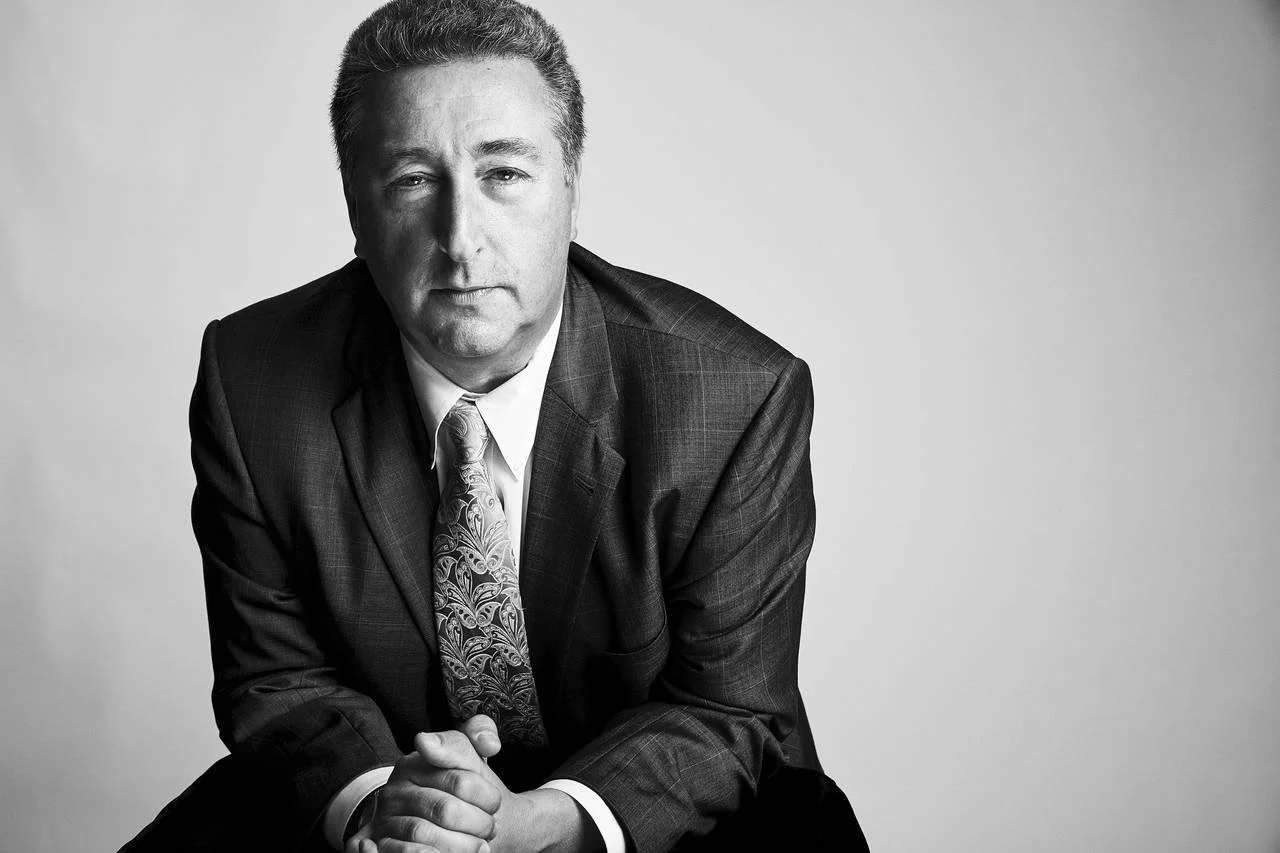
Barry Ritholtz has spent his career at the intersection of behavioral finance and data analytics. He is Chief Investment Officer/Chairman of Ritholtz Wealth Management (RWM) managing over $7.7 billion in assets. RWM was named ETF Advisor of the Year, Financial Times Top 300 Advisors, Barron's Top 100 firms, and one of America’s fastest-growing RIAs. The “Blogfather” has been called one of the “25 Most Dangerous People in Financial Media,”
he hosts Masters in Business, Bloomberg Radio’s popular podcast (100+ million streams/downloads). He has been publishing at Bloomberg and BusinessWeek since 2013; He was personal finance columnist for The Washington Post from 2011-2016.
He is the author of two award-winning prior books: "How Not to Invest: The ideas, numbers, and behaviors that destroy wealth―and how to avoid them" and “Bailout Nation: How Greed and Easy Money Corrupted Wall Street and Shook the World Economy.” (2009).
Barry Ritholtz returns to the Rational Reminder podcast to discuss the biggest mistakes investors make—and why avoiding them may matter more than finding the next great investment. Drawing on decades of experience in markets, wealth management, and financial media, Barry explains why forecasting consistently fails, how investors can distinguish good advice from noise, and why humility, probabilistic thinking, and disciplined behavior are among the most valuable investing skills.
Throughout the conversation, Barry shares lessons from his new book, How Not to Invest, covering everything from media consumption and behavioral biases to index investing, portfolio concentration, market cycles, and choosing a financial advisor. He explains why experts are often better at providing context than making predictions, why social media amplifies poor financial advice, and how investors can build processes that help them stay disciplined through uncertainty. The discussion blends academic research, practical experience, and memorable stories into a comprehensive guide for becoming a better long-term investor.
Key Points From This Episode:
(0:04) Cameron and Ben welcome Barry Ritholtz back to the podcast and discuss his new book, How Not to Invest.
(4:12) Why successful billionaires often make poor economic forecasters and how the halo effect leads people to overestimate expertise.
(6:39) Why Wall Street professionals are generally poor at forecasting future market returns despite their domain expertise.
(7:42) What experts are actually good at: providing context, historical perspective, and nuanced analysis rather than predicting the future.
(8:47) Barry's checklist for identifying bad financial advice, including emotional appeals, false certainty, and conflicts of interest.
(10:35) How social media algorithms reward outrage and overconfidence instead of thoughtful investing.
(11:21) Why 24/7 financial news encourages unnecessary action that often hurts long-term investment returns.
(12:17) Why long-term investors are often better off ignoring financial news altogether.
(13:52) How short-form financial content on platforms like TikTok encourages misinformation and poor investing decisions.
(15:22) Gell-Mann Amnesia and why investors should remain skeptical even of trusted news sources.
(18:00) How reading books, consuming long-form content, and building a trusted information network improves decision making.
(20:21) Barry's definition of investing as making probabilistic decisions with imperfect information in an unknowable world.
(22:55) How successful investors focus on controlling savings, asset allocation, discipline, and behavior instead of unpredictable events.
(24:52) Why recognizing the limits of your own knowledge is one of investing's greatest advantages.
(26:30) How experience, losses, and continuous learning help investors become more self-aware.
(27:16) Three ideas that heavily influence Barry's investment philosophy: Sturgeon's Law, George Box's models, and William Goldman's "Nobody knows anything."
(30:18) Whether artificial intelligence changes Sturgeon's Law that "90% of everything is crap."
(31:46) Three forms of economic innumeracy that lead investors astray: denominator blindness, survivorship bias, and misunderstanding compounding.
(36:04) Why understanding secular bull and bear markets is useful psychologically—but not as a timing strategy.
(39:12) Why investors should understand market cycles without attempting to trade around them.
(40:44) What stock valuations can—and cannot—tell investors about future returns.
(42:18) How investors should respond to wars, pandemics, and other major external events.
(45:53) The biggest investing lessons from the COVID-19 market crash and why personal experience often differs from market performance.
(49:04) Why index investing remains one of the most reliable approaches to long-term wealth creation.
(50:44) Why every market forecast should be expressed probabilistically rather than with certainty.
(52:06) The lies traders tell themselves and why disciplined risk management separates successful professionals.
(56:11) What active investors need if they hope to consistently outperform.
(57:24) The biggest behavioral mistakes investors make, including lack of planning, excessive concentration, and ignoring taxes.
(59:43) Why concentrated stock positions become dangerous—even after creating substantial wealth.
(1:02:33) How sudden wealth and large financial windfalls frequently lead to costly mistakes.
(1:05:14) How to identify trustworthy financial advisors by evaluating their process, temperament, and communication.
(1:07:27) Why advisors who consistently communicate their thinking help investors avoid emotional mistakes.
(1:09:26) Barry's practical blueprint for becoming a better long-term investor: create a plan, invest consistently, define the purpose of money, and build around a diversified index portfolio.
Read The Transcript:
Ben Felix: This is the Rational Reminder Podcast, a weekly reality check on sensible investing and financial decision-making from two Canadians. We're hosted by me, Benjamin Felix, Chief Investment Officer, and Cameron Passmore, Chief Executive Officer at PWL Capital.
Cameron Passmore: Welcome to episode 421. And Ben, it was almost seven years ago that you and I packed up our backpacks full of the recording gear and went off to New York City to interview Barry Ritholtz. Of course, back then, you could only interview guests face-to-face.
So we reached out to Barry. We knew Barry through conferences and just by reputation, and he was kind enough to welcome us into his New York City office, and we recorded an interview with him. That was episode 57 back in August of 2019.
So the pod was just a year old at that point, and we got a chance to meet Barry, and today we welcome Barry Ritholtz back to the pod to talk about his most recent book, How Not to Invest. Now, Barry's been around a long time, founder of Ritholtz Wealth Management, which is a very well-known, pretty high profile, certainly from their media and content that they create out of New York City, but they're now a national firm. And we got to know a bunch of their team over the years. We've had his partner, Josh Brown's been on a couple of times, I believe.
Ben Felix: Nick Maggiulli's been on, Ben Carlson's been on.
Cameron Passmore: Nick Maggiulli, Ben Carlson. Good group of people. Barry's always so gracious and generous with us. We've seen him at many conferences.
He's always super friendly and interesting and good guy. Kudos to get him back on the pod, Ben.
Ben Felix: You said he was welcoming when we went to his office back then. He was super supportive too. We recorded with Barry, but they also let us use a space in their office to record another interview with somebody else in New York City that we had lined up.
So that was very cool. We've remained pretty close with those guys over the years, just sharing ideas back and forth and keeping in touch.
Cameron Passmore: He also made the introduction to Prof G Scott Galloway. That's how we got Scott on.
Ben Felix: That's right. Very cool. Barry doesn't need much of an introduction.
His track record and online presence speak for themselves. He did graduate from Stony Brook University with a degree in political science and a minor in philosophy. Did graduate studies at Yeshiva University's Benjamin N.
Cardozo School of Law and became a lawyer. A neat part of Barry's background. Then he created The Big Picture, which is his very popular blog.
He also hosts the Masters in Business podcast from Bloomberg, which has been a huge success. He does a ton of writing in various publications. If you're in this industry, or even consuming content in this space, even if you're a DIY investor trying to learn about this stuff and you don't know who Barry is, I'd be surprised.
Cameron Passmore: We were inspired way back when.
Ben Felix: 100%.
Cameron Passmore: Listening to Animal Spirits, that was colleagues Michael Batnik and Ben Carlson. We're like, these two guys talk and we could be two guys talking back in 2018.
Ben Felix: That's right. We were both listening to Animal Spirits and we said exactly that. We could probably talk to each other with a microphone.
Barry's book, How Not to Invest, it's a thick book. I read the whole thing cover to cover. Lots of good stuff in there though.
This conversation feels very organic and I don't think it feels like we're talking about a book, but the questions that we asked are really inspired by the content of the book. I'm glad I read the book. It was a good read.
Lots of good nuggets in there. A combination of references to academic research and also Barry's experience. Lots of good stories.
Cameron Passmore: His experience is incredible. He gives a couple of stories. Some people from Masters in Business and the people he's interviewed on that podcast are phenomenal.
He's been communicating in this space for so long. He's got such energy and character and storytelling. It's quite something.
Ben Felix: Tons of good stuff. Make sure you listen to the end to hear whether Barry thinks you should buy a new car or not. I loved his answer to that question and the whole discussion that followed.
Cameron Passmore: All right. Good to go, Ben?
Ben Felix: Yeah. Let's go ahead to our episode with Barry Ritholtz. Barry Ritholtz, welcome back to the Rational Reminder Podcast.
Barry Ritholtz: Thank you so much for having me.
Ben Felix: All right, Barry, what happens when billionaires go on TV to make economic forecasts?
Barry Ritholtz: They tend to do two things. Some are very similar to what other forecasters do, and some are very different. The thing they do that's similar is they talk their book like everybody else does.
Hey, I own these assets and I'm very enthusiastic about it. There's nothing wrong with that. The bias is there.
You can't help it. But the things they do that are different is first, they're pretty unqualified to, forget even economic forecasts. Most of the time, they're not really qualified to do a deep dive into whatever they're talking about.
But what makes this so dangerous is what we call the halo effect, which is when people see someone who's really successful in one specific sphere. Hey, we apply a halo to everything they do, and we imagine that that success is the same in everything else they touch. Spoiler alert, they're not all that successful elsewhere.
They're really good at what they're really good at. Like everybody else, they have no idea what the future holds.
Ben Felix: We obviously see that all the time on business news. How well does this phenomenon extend to other domains like film and music?
Barry Ritholtz: It's really fascinating in the creative arts because not only are you exercising as somebody working for a film company, greenlighting a movie or a recording studio, and you have to greenlight a new artist, you might know a lot about that space. But films are great because you're effectively making a prediction as to where will the public's taste be five years from now. If we say go today, it's five years or so before this hits theaters.
Even if you do a small, little indie film, it's still two to three years. Tastes change really rapidly. And what we've seen in this space is that people have a deep expertise in understanding their field, but what they don't really have much of an expertise in is forecasting what's going to happen next.
I like to think of the formula in this space as forecasting ends up to be some combination of skill plus outside events plus random luck. And that's what determines outcomes. So yes, skill is helpful, but it's only a small part of the total equation.
Cameron Passmore: Speaking of forecasting, Barry, you've been on and around Wall Street for decades. How well do you think experts forecast future stock market returns?
Barry Ritholtz: As long as they're not trading on inside information about when the Venezuela assault is going to happen or when the bombs will start dropping in Iran, I'm not talking about inside information being used to make bets in prediction markets. Just general predictions. Wall Streeters are terrible at that.
They have a lot of valuable skills. They focus on understanding their space. They can provide some insight and context, but confidently predicting the future is not what they do best.
I like to channel John Kenneth Galbraith, who said, there are two kinds of forecasters, those who don't know and those who don't know they don't know. And that sums it up perfectly.
Ben Felix: You touched on a couple of things there, Barry. You gave great cases for where experts are not useful in making forecasts in a bunch of different domains. What are experts useful for?
Barry Ritholtz: A lot of things. People who have a very specific domain expertise are really good at explaining what is happening in that space and why the best people in specific areas have done the data analysis. They've done the deep dive into history.
They know what has occurred in the past. They know what was the result of a random situation or what's more normal. They know all the players, the old guard, the new entrants.
They know everybody's track records and the ability to provide context and color and nuance that comes from immersing yourself in that sort of area for years or decades is really helpful. The best example of this is, hey, your cardiologist can tell you exactly how healthy your heart is. They can't say you're going to have a heart attack on this date.
If you keep that in mind, you want someone to be able to tell you, hey, how's my portfolio look? Not, hey, but in October, we're going to have a crash.
Cameron Passmore: What tells can people look for to spot bad advice?
Barry Ritholtz: Some of them are more obvious than others. The most obvious one is an appeal to emotion. If they're trying to frighten you or get your greed button pushed, if they want your FOMO juices to flow, it's an obvious tell, anything with a sense of urgency.
We just talked about a crash. Hey, the market's about to crash in September is a giant red flag. That is not an insight.
The best advice tends to be both humble and probabilistic. In other words, hey, I don't really know for sure what happens, but here's how I see the various outcomes and the odds around each. We tend to see bad advice sounding very self-confident and very specific, but it's always useful if you're looking for a tell, follow the money.
What's in it for them? What are they getting paid to do? Are they just talking their book?
Another way to think about this is what I call the three Ds, doubt, depth, and Dunning-Kruger. People who have no self-doubt probably are unaware of their own limits and their blind spots. Depth, you want people with a broad and deep well of experience and a good track record that's part of a repeatable process.
And then lastly, Dunning-Kruger is one of my favorite academic research papers about metacognition. This is more than overconfidence. It's how aware are you of the limits of your own skillset?
There's nothing more expensive from a novice investor than the sentence, hey, how hard can it be? That's the Dunning-Kruger effect at work.
Ben Felix: The scary thing is a lot of the ways you describe bad advice are also more attention grabbing than a lot of the characteristics of good advice.
Barry Ritholtz: If you're not paying attention, if you're not giving them your time and energy, why bother? And what's even worse today is that on social media and elsewhere, the algorithm rewards the more outrageous emotional pitches, the feed from pick your favorite cancer, Twitter, LinkedIn, Instagram, TikTok, go down the list. Outrage and excitement tends to feed right into what that algo is providing people.
Ben Felix: Yeah. I want to dig a little bit more into that. What role do you think that the 24/7 media, so that could be social media, but also, I mean, you can watch business news any time of the day as well. What role has that played in the dissemination of bad advice?
Barry Ritholtz: Sometimes a phrase gets so commonplace, we forget what it means. So there's a website called the Daily Beast and people tend to forget. I forgot what piece of literature that comes from a century ago.
But the news media is the daily beast that must be fed. There are always column inches to fill, newsletters and columns to write. Radio, TV, cable broadcasts have 24/7 that must constantly be filled.
But nonstop demand for your attention tends to be chronologically incompatible with what should be an investor's goal, which is allowing your portfolio to compound over years and decades. So there's this inherent conflict between the daily fire hose and, yeah, I'm saving for retirement in 30 years.
Cameron Passmore: So how useful do you think it is for investors to actually pay attention to the news?
Barry Ritholtz: If you want to be a good dinner party guest and have good cocktail party chatter, it's useful. If you're a professional trader, it's really important. But if you're a long-term investor, it's not only useless, it's a negative.
It can impair your returns because the media tends to urge you to action. We all have a bias towards action. History tells us most of our financial decisions that we make are not especially good.
And it turns out the fewer decisions we make, the better off we tend to be. So anything that is constantly pushing your enthusiasm, your excitement button and urging you don't just sit there, do something, tends to hurt your portfolio. Most people are better off.
Don't just do something, sit there, as opposed to what the media is urging. Don't just sit there, do something. By the way, Henry Bessembinder, who did a number of really great studies, had a piece out very recently where they looked at all the regular changes, rebalance, additions, subtractions to the S&P 500.
And talk about, don't just do something, sit there. It turns out if you just left it alone from inception and never touched it again, significant outperformance from everything that's been going on, which is really kind of hilarious when you stop and think about it.
Ben Felix: Yeah, those studies are super interesting. Specifically short form media like TikTok and Instagram, we're talking about whatever, 30 second to a minute long clips. How bad has that been specifically in the short form for investors?
Barry Ritholtz: The algos reward the loudest and most extreme voices. For sure, all of this stuff is kind of financial junk food. I'll give you two of my favorite takeaways from this.
The first is in the United States, the Internal Revenue Service had to issue a special 42 point press release debunking 42 separate things on TikTok and Instagram that if you followed them, not only were they wrong, some of them would cost you penalties and fines. Others would cost you a clawback and interest, and some of them will get your ass sent to jail. So that's how bad it is.
The IRS had to say that. But to me, the biggest takeaway comes from what all of our mothers told us. Never take candy from strangers.
You guys are old enough to remember when that was a thing. If you don't know who this person is that's giving you this advice, who are they? What's their track record?
What's their methodology? Do they have a temperament where they're not running around hair on fire every time something happens? To take advice from a, I love the expression, "rando" on social media, it's the financial equivalent of taking candy from a stranger.
You don't want to become financially roofied, but that's what social media is. It's junk food or worse.
Cameron Passmore: Wild. How does Gell-Mann Amnesia affect the way people perceive the news?
Barry Ritholtz: I love this concept that comes from Michael Crichton, where he tells a story of reading a story in a major newspaper where he was actually at the event, knew the players, knew what was actually going on. And the reporter got it completely wrong. Either they were standing in the wrong part of whatever the event was, or they just didn't have a good framework for understanding what was happening.
And so you read this and you say, oh, this is completely wrong. And then you turn the page and you believe whatever is on the next page. And I'm not saying that media is always wrong and everything's fallible.
It's that we just give way too much credit to an organization like a newspaper or a television channel. And we forget it's more than just a masthead of writers or producers and presenters. It's a collection of human beings.
And as we know, human beings are really fallible. So my advice to people about this is create your own list of people that you've vetted and tested out over the years and people that can become trusted voices for you and to demonstrate how much I practice what I preach. I listed my voices that I trust, but I always tell people, hey, that's my list and what works for me.
You've got to go make your own list. I'm not selling you my list. I'm not promoting my list.
You have to stop outsourcing your thinking to third parties and figure out who's trustworthy and who's not. But to bring it back to Gell-Mann Amnesia and Michael Crichton, it's very powerful noticing how wrong some of the headlines from yesterday or a year ago are. And that should just be a reminder. You got to take everything you read with a little bit of a grain of salt.
Ben Felix: And maybe just for the benefit of listeners, Gell-Mann Amnesia is the idea where if you see something that you have expertise in and realize that it's wrong, but then continue to ascribe credibility to the source despite knowing that one thing was wrong. That's the phenomenon.
Barry Ritholtz: Right. You go on to that reporter might've been wrong, but it's in the Washington Post and you either click to the next article or old school turn the page and you lose that credulity of, hey, does this person really know what they're talking about? For the most part, I think the media does a pretty good job of covering the news, but there's plenty of places where there's room for improvement.
And we just need to be a little skeptical about some outrageous claims. Extraordinary claims require extraordinary proof. And we often don't see that.
Ben Felix: What do you think are the best ways for people to make sure they're getting more signal and less noise from the media?
Barry Ritholtz: A couple of ways. The first thing is to lengthen your time horizon of your media consumption. Meaning tweets are the shortest term thing, Instagram and TikTok super short.
There is a mismatch between that timeline of now, now, now, and hey, I'm saving for 15 years for my kids college or 10 years to buy a house or 20, 30 years to retirement. These instantaneous hot takes, what does that have to do with how things are going to be 25 years ago? And the best way to demonstrate that is to look backwards and say, imagine Twitter existed 25 years ago.
What was being said in 2001 in short, snappy bursts that would have been meaningful to anybody? The answer is nothing. So be selective, create that own list of trusted sources.
And instead of focusing on short form tweets or what have you, or TikToks, read books, do the deep dive, become self-educated. My bias is I happen to like long form podcasts. I think you get so much more out of that than you do a headline or an op-ed or really short item that was just cranked out to feed the beast.
I keep being told reading is dead. I'll let you in on a secret. Reading for most of history was the province of the elites.
It's only in the past few hundred years that most people had learned to read. For a while it was the high priests and the royalty and the cabinet that had the ability to read. And the average person was illiterate.
So the fact that a lot of people aren't reading books is just sort of mean reversion in my mind, but it's a huge advantage. Is there a better bargain in the world that someone takes, I don't know, a thousand hours, 2000 hours and a lifetime of experience. You could buy it for $21.95. I mean, stop and think about that. What an enormous, like I get paid a ton of money to speak at conferences or instead of taking 40 minutes of me going like this and answering a Q and A, here's 2000 hours and 30 years of work for 20 bucks. That is the greatest bargain in the modern media world, modern information.
Cameron Passmore: Barry, what is investing?
Barry Ritholtz: My definition is investing is the art of using imperfect information to make probabilistic assessments about an inherently unknowable world. And if you break that down into component pieces, art tells us that it's not just a simple mathematical formula. I will tip my hat to the quants who use math to give themselves an edge.
But even that is not perfect. And it's recognizing that whatever information we have is imperfect, meaning it's incomplete. Sometimes it's inaccurate.
Sometimes it's out of context. And it's not about making binary forecasts up or down. It's about assessing things probabilistically, meaning what's the most likely outcome?
What's the least likely outcome? How is my portfolio teed up to survive this range of possible outcomes? And then lastly, it's recognizing the future is inherently unknown and for the most part, unknowable.
Every time we see people make these forecasts, here's why you have to own this because here's what's going to happen. The world intervenes. A year is simultaneously a short period of time in an investor's long-term horizon, but simultaneously a long enough period of time that random events occur so frequently that it derails even the most thoughtful forecast.
So nobody had in the December 2019 look ahead. No one had a global pandemic closing the economy. Oh, and by the way, the market's going to stream higher.
And the same thing before the invasion of Ukraine, before the Israel-Gaza war, before a handful of people were talking about the Fed has to raise, the Fed has to raise, the Fed has to raise in 21-22. And when the Fed finally raised 525 basis points, it really seemed to have caught people by surprise, which is kind of shocking because that was probably the most obvious change in central bank policy. And yet we still got it wrong.
So the challenge is recognizing how squishy and challenging this is. The people will tell you it's easy are selling you something. I also like to say investing is simple, but hard.
It's not easy, but it's simple. You just have to not get in your own way.
Ben Felix: Given all that, Barry, how do good investors think about the world?
Barry Ritholtz: Well, first you have to recognize the complexity and how many different factors and variables are all driving the world forward. That's number one. And second, the best investors take that, all those variables.
And we mentioned thinking probabilistically, it doesn't hurt to be a little humble and understand what you do and don't know. But then the step that I see so many people fail to make, the leap, and perhaps it's what's going on in mass media, television, print, whatever, is you have to focus on all the things that you can control. You can control your savings rate.
You can control your asset allocation. How much stocks do you have relative to bonds? You should be able to have some discipline and A, create a plan, but then B, have the discipline to stick with that plan.
And then lastly, you have to manage your own behavior. Every 5% drawdown, you can't run around with your hair on fire. And the flip side of that is you have to learn how to, maybe ignore is too strong a word, but you have to learn how to recognize all of the things you cannot control.
When the Fed is going to hike or cut? Who's going to win the next election? What's nonfarm payroll or GDP?
When is the war going to end? What's the inflation print going to be? What are these companies' earnings going to be this quarter?
By the way, that list of things that are totally out of your control and are mostly unpredictable, that seems to be the prime focus of print and broadcast media because it changes constantly. And when you have to fill column inches and 24/7, hey, all that stuff, it makes for great fodder. The problem is it's surprisingly not useful to investors.
Cameron Passmore: Which is why I've got this next question for you. Why is not knowing valuable as an investor?
Barry Ritholtz: I'm a car guy. Bear with me on a slightly long metaphor. I've taken every advanced driving class you can take.
Skip Barber and Lime Rock. I've been to Monticello Motor Park. I've done the Porsche Days here. I've gone to Sebring. I've done a BMW driving school. I've done all these things.
And all of these classes, they're marketed as high-performance racing schools. But the truth is, deep down inside, they're barely disguised defensive driving classes. And the heart of a defensive driving class is, hey, what are the limits of your own skills?
And what are the limits? What is the performance envelope of the car you're driving? The turning, stopping, accelerating, what is that framework?
You would be surprised when you know what your own limits are and you don't push beyond those. Hey, it turns out to be a really useful skill. And if you know the limits of your car, I'm not going to throw this giant, tall SUV into a turn at 70 miles an hour.
The big body-on-frame SUVs have an unusually high incident of single vehicle fatalities, typically a rollover, because someone did something that the car was not capable of doing. So knowing what you don't know, where the limits of your own skillsets are and your abilities are, that's really meaningful. In your portfolio, it's a money saver. And on the road, it's a life saver.
Ben Felix: It can be a hard skill to gain. How can people get better at admitting that they don't know stuff?
Barry Ritholtz: I mean, beyond just a little self-reflection and honesty, I think there are two ways. One is you can just age well and become wise as you get more and more experience and gray hairs. But if you don't want to wait that long, you can do what most people do and just lose a ton of in the market.
That sort of pricey tuition kind of helps you figure out, oh, I'm doing all this wrong. I better learn how to do this better. But those are the only two things I have found.
Warren Buffett and Charlie Munger will tell you. And if you are constantly reading books and learning, learning, learning along the way, I think that's implied in "age well and become wise."
Cameron Passmore: What are the best ideas that shape your own investment philosophy?
Barry Ritholtz: So many. Let me give you a few of my favorites. And all these come straight from the book. I love Sturgeon's Law.
He was a science fiction writer in the 50s and 60s. Critics always gave him grief about how bad so much science fiction is. And Ted Sturgeon responded, "90 percent of everything is crap."
That has since become known as Sturgeon's Law. And it's surprisingly informative as an insight into decision making and choice. And look at most of the mutual funds in the world.
Not good. SPACs, not good. Most of the stocks, not good.
Many, many bonds, not great. And that's just in finance. If you recognize, I called it Ritholtz's corollary, "90 percent of all financial products are crap," and credited Sturgeon.
But it's really the same thing. Most of this stuff isn't especially good for your portfolio. So start with that.
The second one is something you had asked about. The first question was about billionaires making economic prognostications. Everybody on Wall Street, everybody in finance and investing uses models.
And we kind of forget that. I'm going to quote statistics professor George Box. "All models are wrong, but some are useful."
And what that means is a model is just a depiction of the worlds mathematically. It's not a perfect depiction. It's not a three dimensional or four dimensional, if you include time, hologram that's identical to the universe.
It's a shadow. It's a model that tries to get at the key drivers. And we tend to confuse models with the real world.
Have you ever seen a bad backtest, a bad financial model on some new product? They're always great. Part of the reason models are so problematic is built into every model is the future is going to look like the past.
And so some of these models tend to work until the future changes. And as soon as it changes, the model stops working and people are perplexed. So that's the second one.
And then probably my favorite one comes from William Goldman, which is the first part of the book, which is, "nobody knows anything." Now, Goldman was using this to explain why Hollywood was so bad at picking movies. They greenlit all sorts of disasters.
They passed on Star Wars. They passed on Princess Bride for years. They passed on Raiders of the Lost Ark.
I love the John Wick story that here's like one of the biggest action stars in Hollywood. Keanu Reeves couldn't get the major studios to make John Wick. It's since become a two billion dollar franchise.
So you combine, "nobody knows anything about the future," with Sturgeon's law that "90% of everything is crap." And you could see why it is so difficult to beat the market consistently over long periods of time.
Ben Felix: Do you think Sturgeon's Law will survive AI or is more than 90% of everything going to be crap in the future?
Barry Ritholtz: I just read something this morning that Substack is including for free a AI detector. I think it's called Pangram that will let you know that the Substack you're reading is created by mediocre software lifting information from large language models. It's been pretty clear that there's a ton of slop.
And hey, I love using Claude for research. I use Notebook, which is by Google and Perplexity, which I use less and less these days and ChatGPT. It's great for research if you ask it to write something.
So I answered a whole run of questions myself and then I asked three different models to answer it. They did an okay job, but it's mostly unreadable garbage. And that's the problem with it.
To be fair, it's still a relatively young technology and it's going to get better and over time. The risk isn't doing a large language model on the English language. It's, hey, take everything Cameron has written over the past 20 years.
Now write an article with that background in that voice. I mean, that's not 20 years away. That's a year or two away.
Assuming you can't do it now, it's just pricey to build your own LLM. But this is an issue and it's "90% of everything is crap." I think that's timeless.
Ben Felix: What are the worst offenders of economic innumeracy that lead people to make bad decisions?
Barry Ritholtz: I kind of beat the drum on three. So one is denominator blindness. Just earlier, I saw an advertisement on TV for Shark Week.
It's the end of July and Shark Week is on TV. And that was a number of columns and a chapter in the book. Ever since Jaws, I was in, I think, junior high school when Jaws came out.
No one went on the beach. That's an example of denominator blindness is not what's the context for this? Wait, how many shark attacks are there a year?
Five. There's eight billion people in the world. The odds of you being attacked by a shark, even in the ocean, are so remotely slim as to be near zero.
But this is a classic case of appealing to emotion, loud excitement. It's a horrible who wants to get chomped in half and bleed to death. And the emotions around that are amazing.
P.S., we kill tens of millions of sharks per year as a species. They kill three or four of us. So it's not a fair fight.
Denominator blindness is one. Survivorship bias is another. I just wrote something earlier this week about a piece of research that is called the Failure Gap.
What is the Failure Gap? Well, generally, we don't see the things that fail before those that succeed. That's the survivorship bias for finance.
It kind of came about in the 90s with mutual fund returns. All the mutual fund companies were showing these great returns, funds that either went out of business or closed or got merged. Well, the bad data got pulled out.
That's survivorship bias. The modern version of that is the Failure Gap, which is you only see the successes on social media. You don't see all the things that crashed and burned.
I think they surveyed something like 32000 people about how difficult it was to do certain things. And the average person wildly overestimated the success rate. So the paper's authors reviewed over 30 life domains and determined that on average failure occurs about 61 percent of the time. When they surveyed all these people, they actually guessed that failure occurred 41 percent of the time. That was even true in hockey. How often do teams lose?
The number came in at 44 percent. And last I checked, there are no ties in the NHL. So forty 44 percent of the games kind of sounds a little off.
Maybe that was different back when there were ties. I don't know what the story is to that. But we tend to see these wildly successful things.
Hey, Hamilton is a giant moneymaker. I'm going to put money into this play. That's a terrible way to invest because you're seeing the winners and you're not seeing the losers.
The Wall Street Journal does this thing about all these big auctions. Here are the cars that have appreciated the most in value over the past 50 years. This Ferrari 275 is six million dollars.
And this Mercedes Gullwing from the 50s is two and a half million dollars. Hey, thanks for telling me who won the game once the game was over. But tell me what are the cars I should be buying and putting away for the next 50 years?
Oh, that's a little more complicated. That's a little more difficult, isn't it? They never disclose.
We have no idea which cars are going to be. So that's the second thing. And then the last thing is the last economic innumeracy point that even to myself, I'm still shocked at this and my own innumeracy around this is simply compounding.
Markets generate exponential returns, and that is simply foreign to our own experience in the real world. The real world is arithmetic. Hey, there's four trees over there and two dogs in the backyard and I have six chairs.
They don't compound on compound on compound. It's something that we just don't intuit. We're not really good at it.
The takeaway from just these three things are to be a successful investor, you don't have to be brilliant. We all just have to be less stupid.
Cameron Passmore: How useful is knowing whether we are in a bull or a bear market?
Barry Ritholtz: To me, it's a good psychological hack for a couple of reasons to know, hey, is this a bull market or a bear market? Meaning a bull market tends to be something that lasts 10 to 20 years, is characterized by expanding economic activity, rising wages, rising employment. And psychologically, investors tend to start out paying very little for each dollar of earnings.
And as the bull market progresses, they pay more and more for each dollar of earnings. In fact, from 1982 to 2000, as much as earnings have gone up over that period, the P multiple went up even more. We started at a 7 PE on the S&P 500.
We ended at a 32. And you do the math and it turns out about three quarters of the gains came not from improving profits and revenues, but multiple expansion, which is a psychological factor. So I want people to understand if we're in a bull or bear market.
And by the way, full caveat is we only know for sure in hindsight. But I want people to understand bull markets tend to run longer than you expect. The idea that you're going to dance in and out around the end of the bull market or the beginning of a bear market, I think you have to think really long term.
You must continue to invest persistently. My colleague, Nick Maggiulli, calls this, "just keep buying." And despite all the setbacks and drawdowns that are inevitable, P.S. alright, so I mentioned 1982 to 2000. If you go to the bear market before that 1966 to 1982, you essentially at the market go through a series of wild rallies. The Dow started at a thousand. Sixteen years later, Dow finished at a thousand in a period of very high inflation.
So in real terms, you lost about 75% of the value. But if you dollar cost average through that whole 16 year period, what ends up happening is you own stock all over the place. But when that 1982 bull market begins, you never get back down to those levels.
So your best buys and your worst buys are all far below the current price. That was a light bulb going off. Well, if I just keep buying throughout the whole bear market, 10, 15 years from now, I'm going to be happy I did.
So all right, let's do that. It's a hard thing to do, but it's incredibly powerful. And look at the most recent bear market, 2000 to 2013.
We hit a certain level. We didn't get over that till 2013. Everything you bought the day before Lehman collapsed, the day before the high in October 2007, the day after the low in March 2009, those all went up three, four or five X.
And so is it useful to know? Not really, if you're just going to keep buying, but it's a great psychological hack to recognize, hey, we only know these things in hindsight. Let's just keep buying the whole way through.
Ben Felix: Why should investors care about secular market cycles?
Barry Ritholtz: Well, a little bit of Solomonic wisdom is, "this too shall pass." You have to recognize that every bull cycle ends just as every bear cycle ends. And arguably we're late in this cycle, except for the fact that we had such a massive reset during the pandemic.
It's kind of hard to judge what's going on. And again, like I said earlier, these are best identified in hindsight. So all that said is I do a quarterly call for clients.
And one of the most common questions I get is, hey, is this a bubble? Is AI a bubble? Is technology a bubble?
And so I went through a whole bunch of data points. And one of the data points was you look at the four biggest companies in 2000 versus today, there's a shocking gap. Microsoft has a PE of 20 in 2000.
I think it was 50, something like that. NVIDIA's PE is back to where it was in 2019. You sometimes have to go to the data and figure out what's really going on here.
Should you care about secular cycles? Well, it's useful to think about it for context and for discussions, but you have to recognize every recession ends, every expansion ends, every bull market ends, every bear market ends. It's part and parcel with investing.
So you shouldn't be surprised by it and you shouldn't make dumb decisions because the cycle happens to be changing.
Cameron Passmore: How useful are stock market valuations to investment decisions?
Barry Ritholtz: So the most important thing valuation gives you is insight into future expected returns. When stocks are pricey, it tends to suggest that you're going to get below average future returns. And when stocks are really cheap, it tends to suggest that you're going to get above average returns.
But it's never a straight line and stocks were really cheap in, go back to 1977, 1978, the famous Business Week cover, the end of equities and stocks were cheap then. If you bought then, it took you three or four years before you started to be in the green. It's not really useful as a timing system.
We mentioned earlier, the cycle tends to start inexpensive and end pricey. But the most important thing to recognize with valuations is the very common error that we hear all the time, hey, stocks look pricey on a PE basis or on a CAPE ratio or on price to book or a dozen other measures. Hey, I shouldn't buy equities.
So that would have kept you out of US equities, I don't know, since 2015. That would kept you out of large cap growth for I don't know how many decades. You have to be aware that valuations are really a flexible snapshot when you should really be looking at the full moving picture.
Ben Felix: You mentioned the pandemic earlier. How should investors respond to externalities like that pandemic or a war?
Barry Ritholtz: History tells us that when you have these external events, war, terror attacks, pandemics, assassinations, a rogue tsunami taking out a nuclear plant in Japan, markets tend to wobble and then they just go about resuming their prior trend. So the Kennedy assassination, 9-11, markets were falling, 9-11 sent it spiking, falling, and then it just went back to doing what it was doing. Very often things like war, if they don't affect corporate revenues and profits, they don't have a really big impact.
I think people are genuinely surprised at what's going on with Iran not having that big of an impact even on the gas and oil market in part because, well, for the largest economy in the world, the US, we grow our own, so it's not a problem. For our trading partners, who are all pissed at us for sort of half-assing our way into this war, their costs are going up. The unintended consequence of this is twofold.
One, we are seeing a massive shift accelerating the move to non-carbon energy. We see it in China, we see it in Russia, we see it in Europe, and despite this administration's hostility to kind of green energy, this is rapidly accelerating. You can't stop the forces of progress and obviously, wait, free energy from the sun?
Why do I want to import oil from the worst, most dangerous, violence-prone area of the world when the sun is giving me essentially unlimited free energy? Especially if you're below the Arctic Circle and the closer you get to the equator, the more free energy you get. Markets wobble, they resume their prior trends, and many of these things that we're talking about, whether it's tsunami, war, terror, assassination, whatever, these are big emotional events, and very often, we have a tendency to emotionally react, and then when the emotion fades, we're left with our mistakes.
Ben Felix: So take a breath and just keep buying.
Barry Ritholtz: That's right. Trademark Nick Maggiulli.
Cameron Passmore: There you go. What effect do externalities have on secular market cycles?
Barry Ritholtz: Jeff Hirsch of Stock Trader's Almanac and his father, Yale, have written a series of papers on this over the years, going back to the 1970s, even back to Vietnam. History tends to suggest when there's a really big externality, I don't mean an assassination or even a terror attack, but a big war, we tend to see two things happen. We tend to see a massive response from governments around the world, which tends to lead to both a big inflation surge and a giant market rally.
We saw that in World War II, we saw that after Vietnam ended in the mid-'70s, and we saw something very similar with the pandemic in 2020 when COVID-19 ended. You had this massive fiscal stimulus, which was as a percentage of GDP, the largest US fiscal stimulus since World War II, big rally, a lot of inflation. We have such a small sample set that I wouldn't say bet the farm on this, but it's been pretty consistent over the decades.
Ben Felix: Since it's relatively recent and we all lived through it, what do you think were the biggest investment lessons from the COVID market crash, investment lessons?
Barry Ritholtz: I got the same question over and over and over again, and it sent me deep down a rabbit hole to research this. And it's like, I don't understand, market makes no sense, it's completely unhinged from reality. I look around me and everything is closing, these local retailers are closing, all these restaurants are going out of business.
And not just local, but look at the airlines and hotels, and there's a laundry list of companies that are just crashing and burning. But this is really a classic availability heuristic. We look around and see our personal real world experience, that's based on what we see in here, but markets aren't based on that, markets are market cap weighted.
And that incongruity really confused the hell out of people. So we ran the numbers, hey, all these companies going out of business, restaurants and retailers and travel and hotels. And I went through a list of all these different sectors, it was hundreds and hundreds and hundreds of companies.
And in the S&P 500, they ended up to about 6%, 6% of the total S&P 500. From the lows in March, market rallied about 69% through the rest of the year, the S&P 500 rallied 69%. How is that possible if everything's going out of business?
Well, everything wasn't going out of business. Apple was doing fine, Microsoft, Amazon, Target, Walmart, you go through all the companies that were large enough and agile enough to pivot and respond to what everybody needed, home deliveries. And you had Instacart and DocuSign and Peloton and things like that.
Now, some of these kind of spiked and crashed once we had a vaccine and were coming out of it. But a lot of them like, hey, everybody is using Netflix and we changed our TV habits. We're still using Netflix.
The pandemic, I was in Amazon, pretty much never even checked prices because they've been historically pretty good. Once Bezos left, that kind of changed. But the pandemic sent me to Target and Instacart and Walmart.
And now it's like, all right, I'm not just an Amazon junkie, now I'm everywhere. So I think recognizing that your personal experience and what drives the markets are two really different things. And if you don't understand that, of course, it's going to be confusing.
We continue to see the same thing today with AI. Hey, how can the market be going up if all of us are going to lose our jobs? Well, how do you know all of us are going to lose our jobs?
I wrote a post, I don't know, it was a year ago or so. Forget the Magnificent Seven. Look at the Magnificent 493.
What are the companies that are going to benefit from AI and become more productive, more efficient, more profitable? It's the same sort of experience as during the pandemic. Your personal experience, I'm concerned about my income and my job. And what's driving markets are two totally different things.
Cameron Passmore: Why does index investing make so much sense?
Barry Ritholtz: Well, I mentioned Hendrik Bessembinder at the Arizona School of Business, did some research, and he found that essentially all equity value is driven by 1% to 2% of stocks everywhere. It varies from region to region, country to country. But depending on where you are, it's either 1% or 2% of the outstanding stocks.
Starting out, what gives you the idea that you're going to beat those 100 to 1, or I'll be generous and say 50 to 1 odds? 50 to 1 are pretty long odds. If I said to you, all right, plane's going down, we have one parachute, the odds are 1 in 50 that we're going to get it, you're not happy with those odds.
On the other hand, if you index, the data tells us if you index over a decade or two, you end up in the top half of market performance. And if you go to 25, 30 years, you're in the top quartile. I don't want to say it's a sure thing, but sure as hell seems pretty close.
Again, Jack Bogle very famously said, everybody's chasing alpha, you can't get alpha if you don't at least start with beta. So starting with what the market gives you, hey, if you want to do some things around the edges of that, that's fine, but the Christmas tree should be the index. The ornaments and garland are all the other stink that you're going to put on it.
Maybe some of it does well, maybe some of it doesn't, but you got to at least anchor yourself with what the market's giving you.
Ben Felix: It's like Bogle's, "buy the haystack," don't look for the needle, just buy the haystack.
Barry Ritholtz: That's right. Perfect metaphor.
Ben Felix: What's the secret to making perfect market forecasts?
Barry Ritholtz: These are all terrible jokes. Every answer I've heard about this. So one is you could give a price or you can give a date, but never at the same time.
That's one. There was a Wall Street Journal article I love that said the secret for economists to making great predictions is to always declare a 40% chance that something will happen. So no matter what happens, if it doesn't happen, hey, I told you there was a less than 50% chance it was going to occur.
I got it right. And if it does happen, it's like, hey, I told you there was a real possibility that this could happen. You're never wrong.
It's amusing, but really the takeaway is always couch your discussions about the future in terms of probability. You never want to do price and date and you don't want to do a binary outcome. Either this happened or it didn't.
So if you say 50% chance of rain today, or even if you say 5% chance of rain today, hey, it rained. All right. So I told you there was a small chance.
That's what happened. It's a very helpful tool to think in terms of we don't know what the outcome is going to be, but we can war game a whole range of possibilities and put odds on what we think are most likely and least likely.
Cameron Passmore: What do traders lie to themselves about?
Barry Ritholtz: Everything. Pretty much everything. What they own, what their winners and losers were, what they sold at the top and bought at the bottom.
Really good traders are brutally honest with themselves. They have an investment thesis, they write down, they have a trading journal and they track everything they do when they think about it. Obviously, everything is in Excel, but they really understand the detail of their profit and loss.
Years ago as a strategist at a brokerage firm in early 2000s, and I used to constantly sit down with brokers who said, I don't understand why my performance is so poor. I own this stock that's doing great. I own that stock.
So I would go through their book and it's like, all right, so this stock is killing it. It's 2% of your portfolio, but your four biggest holdings are all in the crapper. The next 10 holdings are break even.
You're in and out, in and out, in and out all the time. You're constantly churning yourself. You're doing poorly because you're not trading successfully and you're not investing successfully.
The brokerage world that tends to be made up of traders, it's hard for them to tell themselves the truth about what's driving their returns because they would have to admit that their entire process is faulty. There are a handful of really good traders, professional traders, who have gotten this down to a science and they know it's, as much as I say, it's an art, their process is down to a science and they don't have to predict what happens next. They just have to manage their losses and allow the winners to take care of themselves.
It's really about risk management. It's about position sizing. Most people tend to buy a loser and keep doubling down.
People are genuinely shocked when they own something that's going up, professionals keep adding to the position. That's why trend and momentum is a real factor in the Fama-French world of academic factors that drive returns. It's counterintuitive.
It is a very specific set of skills. Most of us are not built for it.
Ben Felix: You touched on a little bit. I think a lot of people who trade or even just manage their own portfolios, even if they're not day trading, they just don't know what their returns are.
Barry Ritholtz: You would be shocked. So true. Every time I speak to people, it's funny, I started on a desk and it didn't take me a while to figure out who was full crap and who was telling the truth.
Over three decades, I could count on one hand the amount of times I top ticked on the way out and or bottom ticked on the way in. It just happens so infrequently, it's practically rare. There was a guy now on the desk and every day, whatever he was trading, he was out at the high print, he was in at the low of the day, statistically so improbable as to be impossible.
One of the guys I used to trade with, the head of the desk, one day said to him, that sort of commentary gets into people's heads. The head trader said, for a guy who's got an amazing trading track record, you sure do drive a shit box. And I was like, wow.
And the guys who were just very quietly trading all day and making money, you're trading flow for the company, you're trading certain stocks, you get to know things, get to develop a feel for the waves, the way things come and go. Most people are not built for this. A handful of people can survive this and there's no training.
They just throw you in the deep end of the pool and whoever doesn't drown, congratulations, you're a trader. It's always fascinating to look back and say, man, that person just very quietly built up a really nice pile of capital by consistently letting his winners go and just a vicious discipline for cutting losses. That's what traders are supposed to do.
That is not what investors are supposed to do.
Ben Felix: Maybe you just touched on it, but if someone does choose to pursue active management, what do they need to do to be successful?
Barry Ritholtz: I don't want to say it helps to be neuroatypical, but it helps to be neuroatypical. Some of the best traders I know are all either on the spectrum or ADHD or Asperger's or just autistic. It's just the ability to manage social influence and emotion.
The average person doesn't have, but hold that aside. If you weren't born with that gift, you have to start with an edge that is reproducible. Listen, there are 400,000 Bloomberg terminals out there.
We all get the Wall Street Journal headlines and the Washington Post headlines and the Financial Times. We all get that at the exact same time. There's no edge in the news that's already public.
We've learned it's really hard to get that insider trading edge outside of the world of prediction markets. Start with an edge that's reproducible. Have it be part of a process.
Have military-like discipline to managing your risk and be aware of your own blind spots and fallibility. That's just a start. There's a million other things beyond that.
Cameron Passmore: What are the biggest behavioral mistakes that investors make?
Barry Ritholtz: How much time do we have? I have a 378-page book that lists tons of them.
Let me give you a few of them. So many people just don't have a plan. They're just winging it.
People who don't know their own trading, wins or losses, there's no plan. There's no spreadsheet. That's number one.
Second, what's funny, I see a lot of the debate we were talking earlier about social media, the arguments on Twitter, on Fintwit about stuff, seems to be people misunderstanding each other's timelines. So for a long-term investor to be arguing with a trader who's got a three-hour timeline versus a three-decade, it's apples and oranges. And I'm always surprised at how many people, and I'm guilty of this also, don't understand their own needs, their own timelines, their own wants, and their own risk tolerance.
I think that we see a lot of excess concentration is a big behavioral issue that tends to come from sometimes it's founder's stock and sometimes it's low-cost basis inherited stock. Or you own anybody who I mentioned in the book buying Apple when the newfangled iPod came out. Anybody who bought Apple around then and held it, they're sitting on, it could be 70, 80, 90% of their portfolio.
They're kind of frozen because they don't want to make a mistake. Not understanding how to manage excessive concentration, not recognizing the impact, the drag of high fees. The biggest area we've noticed over the past decade has been, and this certainly is a, hey, a long bull market, a ton of capital gains.
Managing around those taxes, people have a tendency to just forget about that. And that's a huge, huge source of additional gains. And then I talk about throughout the book a lack of humility.
Wall Street is very much a fake it till you make it place. And people seem to, even once they've made it, they continue with that same attitude and persona. It is a surprisingly humbling industry and a little bit of humility will go a long way.
Ben Felix: You talked to a portfolio concentration just now. How dangerous is portfolio concentration in a single asset, like a single stock?
Barry Ritholtz: I don't know. Lehman, AIG, General Motors, General Electric. I mean, the list of companies that go belly up is huge.
Very often there's a story attached to it. Sometimes it's the founder's stock. If you're just, I won't mention the public company we manage, but client's a billionaire and 98% of his portfolio was tied up in his startup, which is now public for a couple of years.
And it's like, dude, the company is worth $50 billion. You're worth, I don't know, pick a number. I love to ask people, what's the difference between $1 billion and $2 billion?
And the answer is nothing. There's nothing you're going to do with $2 billion that you can't do with $1 billion. Whatever houses, jets, cars, art, whatever you want, your multi-generations are covered.
What we saw with General Electric was a very generous ESOP stock match. I want to say it was 15% or something. So you ended up with these people with 401ks that were 50, 60, 70% General Electric.
And then post-Jack Welch, by the way, the most overrated CEO in history, started at the beginning of the 1982 bull market, tapped out at 2000, left a stodgy old industrial with a 47 PE and a budding accounting scandal with GE Capital. And the guy who came in afterwards had to clean it up and got all the blame, but it was all Jack Welch. And so not only did he mislead everybody, he screwed tens of thousands of employees.
And I'm not counting the one that Neutron Jack fired because he left a ticking time bomb and it blew up their retirements. It's really a very sad story. Sometimes it's just dumb luck.
People end up with these giant concentrated positions. If you bought Nvidia or Bitcoin or Amazon 15 years ago and never sold it, well, now you have this giant outsized position and it's a challenge. People are afraid to sell it because they don't want to pay the capital gains.
This goes back to what I said earlier. There are many ways to manage it. Sometimes you just got to sell it and pay
Uncle Sam. I recall Cisco and Qualcomm in 1999 and lots and lots. I heard this over and over again. I don't want to pay the capital gains on this.
Well, let me tell you a surefire way to never pay capital gains tax. Don't have any gains. If you held Cisco from the peak in March 2000, it took you 25 years just to get back to breakeven.
It lost 93%. So concentrated positions are super, super dangerous.
Cameron Passmore: How can sudden cash windfalls go wrong?
Barry Ritholtz: It's the same thing as any other endeavor. If you don't have experience and knowledge with this, if you just throw yourself into this, you're going to make mistakes. If it's big piles of money, well, you're going to make expensive mistakes.
People are inexperienced with capital. You have to understand cash flow and accounting and taxes and yield. There's so many things.
We set up a succession plan in my firm. Over the next 10 years, I am doling out a healthy chunk of the equity in my firm. I was shocked at how complicated it was to suddenly now every January get a big capital gains windfall for the stock sale separate and apart from everything else I do.
I have to budget that. I have to set up, make sure that everything is super secure. Oh, I got to do quarterly payments to the IRS.
I just used to write it out of regular stuff. Now it's a whole different thing. Oh, I have different monthly expenses.
Now I got to move money from this custodian that has the highest money market yield because I'm not putting in anything with any risk because the IRS is very unhappy if you don't pay them. So every quarter and it's work. I've been doing this for 30 years.
So somebody who's 25 and suddenly ends up with 10 or $20 million, of course, they're going to overspend. They're not going to budget. They're going to be susceptible to every type of scam in the world.
That's before we get to the friends and family who all come around either looking for loans or looking, hey, I have this business idea. I need to get funded. Those are some of the big ways cash windfalls go wrong.
And let me just again, say again, Uncle Sam gets his cut regardless. So you have to make sure that you're really on top of this. And it's just a function of experience and practice and learning.
Again, you need a great team around you. The bigger the pile of money, the more expertise you need to deploy. You don't need a hundred people.
You need someone to help you with the taxes and the budgeting. So that's an accountant. You need some sort of an attorney to help you with your trusts and estates and who you're going to leave this money to when you shuffle off this mortal coil.
And then you just need to recognize, hey, time is on your side. You don't need to go out and buy a new house and a Lambo just because your company IPO'd. You can take a little time and be a little patient.
Ben Felix: If someone wants help or advice, but they're nervous after listening to this conversation about some of the sources of bad advice that's out there, how should they go about identifying good sources of advice?
Barry Ritholtz: I talked about putting together a media list. The same thing applies to people in the finance industry. Get a referral, get a reference, speak to people who have worked with these folks.
You want people with a track record, a process and a good temperament. We like at our shop to talk about organizational alpha, which means it's about so much more than the portfolio. It's about having a plan and discipline to stay with it.
It's about maintaining your own level of information. So you're not susceptible to all the nonsense that's out there. People who have the right temperament don't run around with their hair on fire every time something happens.
The same checklist for making good decisions about information sources applies to making good decisions about financial advice. I have been saying this for 30 years. Hey, you could do this yourself.
You just need a little discipline and some self-control and a plan. But if you don't want to do it yourself, there's lots of assistance you can get. There was a thing that people used to say a couple of decades ago.
We spend more time researching a vacation or a refrigerator than we do our own 401k or our own investment plan. So take the time and effort, interview a few people, have a conversation with people, make sure you're a good fit for them, and make sure they're a good fit for you. It's a two-way street.
What are there, like 400,000 advisors in the United States? And I know there's another six-figure amount in Canada. Find somebody that is personality-wise and process-wise, just somebody that is going to be your quarterback, your financial quarterback.
It's not hard, but it is complicated, and it requires a little time, effort, and work.
Ben Felix: Josh Brown wrote a post years ago. I don't remember exactly what he said, but it was something along the lines of he would never hire an advisor that didn't have a blog. He wanted to be able to read their ideas.
Now, we're all biased here because we all create content. How important do you think that is for someone to be able to assess the quality of an advisor before the fact?
Barry Ritholtz: Josh moved his blog to beehiiv, which is like Substack. So what he means is you want people who can articulate their perspective. Here's how we invest.
Here's why we invest this way. Here's our view on the world. Let's paraphrase what he said, what my partner said, and it's you want people who are good communicators who understand why they're doing what they're doing and can explain to you.
If you understand markets go up and down and that this is just normal because your advisor informed you of that, you're less likely to do something stupid. You're less likely to make a mistake. I love telling people, if you're at 30,000 feet and the engine flames out, that's probably too late to reach to the seat back in front of you and read that what to do in an emergency.
When you're on the ground, objective and unemotional, that's when you want to read that stuff. And so we take pains to tell people, hey, listen, this has been a great run. Like every bull market beforehand, like every economic expansion beforehand, this one will end one day.
I can't tell you if it's next Tuesday or 2032, but it will eventually end. You must be emotionally prepared for when that happens. And somebody who can communicate well is going to make for a very good advisor and somebody who, whether or not they type it up or podcast it or beehiiv or Substack it, you want someone who communicates in a way that you're comfortable with, that you find intelligent and informative and persuasive.
So whether it's a blog or some other mechanism, that's a really useful tool for you as an investor.
Cameron Passmore: We've talked a lot about what not to do. What are your top teachings for becoming a better investor?
Barry Ritholtz: You want me to just reveal the secrets here?
Cameron Passmore: Just the secrets.
Barry Ritholtz: It is the back end of a podcast, and this is where you can usually confess a murder and get away with it.
But let me reveal the secret. So start out with a plan, be consistent through time. I love the idea of dollar cost averaging.
As money comes in, pay yourself first, make sure you're paying your retirement first. There are all these different tiers of wealth. And as you work your way through the tiers, remember that money without purpose is meaningless and tends to disappear.
There's been a handful of people whose only goals were more, more, more. They have a tendency to blow up because money needs a purpose, whether it's Maslow's hierarchy of needs or saving for retirement, generational, your kid's college and their kid's college or philanthropy or whatever it is. When money has a purpose, we can align that purpose with the correct amount of risk you want to take.
Start with a core of a broad index, whether it's the S&P 500 or the Vanguard VUG, which just crossed a trillion dollars, is a little broader than the S&P 500. That's your core. If you think emerging markets are great or Japan is great or momentum is great, well, you can season that stew with those different things.
Or, hey, if you want to, one of the things I always tell people is, if you're really interested in stock, if you use stocks, if you like the game, if you like to trade, well, pull three to five percent of your liquid cash and that's your cowboy account and have at it, buy whatever the hell you want. I do a whole bunch of really dumb stuff on my cowboy account, but it serves a purpose of not letting my big, dumb lizard brain get in the way of my portfolio's compounding over time. I could give you more things like that, but that's the basics.
If you check most of those boxes and stay out of your own way, you'll be fine.
Ben Felix: Who should own bonds?
Barry Ritholtz: Not 20 and 30-year-olds, I could tell you that much.
I need to do more research into the 60-40 portfolio because 40 seems awfully high. If your investment horizon is half a century, why the hell do you want bonds? Now, the trade-off is, if you are equity-only, well, you're going to get the full volatility of markets.
The trade-off is, in order to get that 10% per year average return, you're going to have wild swings and drawdowns. One out of every four years, you're going to see a big whack. Markets dropped 5% twice a year, 10%.
I want to say two out of three years, and it's every four years you see a pretty big drawdown. If you can tolerate it in your 30s and 40s, be all equity. As you get closer to retirement, you start having a little bit of fixed income to offset the volatility of stocks.
When you hit retirement, you want to extend how long your assets last. If you're doing, let's just take 4% as a round number. If you're doing a drawdown, a distribution of 4% each year and the market's down, well, you're better taking that on the bond side than on the stock side.
Just generates a higher return not to sell when markets are low. Then I'm a big fan of people who hit their wealth target. They have a lot of capital.
They should recognize, hey, I won. I've won. I don't need to take all this risk.
I like to put a big slug of capital in tax-free munis and generate a tax-free income where, hey, you have $100 million. Here's $10 million that's going to throw off half a million or $400,000 tax-free. That should cover most of your expenses.
Let everything else just do its thing. People who are really wealthy should look at that. People who are young and have a long time horizon, I'm very comfortable going all equity.
Ben Felix: Nice. Me too. So far, you're a little bit ahead of me though in terms of the timeline.
We'll see how I evolve, I guess.
Barry Ritholtz: My job is to have gray hair.
Cameron Passmore: Barry, who should allocate to alternatives like hedge funds and private assets?
Barry Ritholtz: First of all, let me remind everybody of Ritholtz' Corollary to Sturgeon's Law. 90% of everything is crap and 90% of all financial products are crap. First, if you have access to the best hedge funds, venture capital funds, private credit, hey, absolutely.
If you get into D.E. Shaw, let me remind everybody that Renaissance Technologies' Medallion Fund, as soon as they had enough capital in place, they fired all their investors and said, nope, just enough returns for us and nobody else can have this. If you want to go into the biggest, best, top-performing funds like that, they tend to be institutional caliber. They tend to say, you need $500 million to talk to us.
Otherwise, there's 15,000 hedge funds. Jim Chanos, who very successfully ran Kynikos, which was a short fund, long short fund, said when he started out 40 years ago, there were less than 1,000 hedge funds and they all generated alpha. Goes today, there's 15,000 hedge funds and it's the same 1,000 hedge funds generating alpha.
If you could get into those, by all means, but for the most part, I'm not all that enthusiastic about the rush to private credit, especially for 401k or retirement plans. We've already seen that hit a speed bump. It was inevitable.
You just saw it coming. Every time an institutional product gets sold to retail investors, it's like, oh, so you're out of institutional buyers? You want to expand?
There's a lot going on. Now, I will say there are far more companies that are still private than there were 20 years ago. If you have a big enough pile of capital and you want exposure to that, and you have access to the, let's call it, I'll be generous and say, top quartile of private credit or private equity or venture capital or what have you, there's some diversification aspect to it that's positive.
Theoretically, the illiquidity premium should give you returns better than you get in the public market, but that all presumes you have access to the very best company. Years ago, I was like, nobody under no circumstance. Now, I'm like, all right, the right fund, the right investor, understanding that it's going to cost you more.
The liquid, as we keep learning, I always want to grab these people who are trying to take money out of, remember, BCRED had a headache, and then BREIT had an issue, and a few of these privates. Which part of illiquid seven-year lockup confused you? Was it the seven-year lockup part or the this-is-not-liquid part?
It's not complicated. If you want liquid, well, here are public markets, figure this out. It always cracks me up.
Ben Felix: Barry, in our online podcast community, there was a recent debate about whether or not people should buy new cars, whether that's a waste of money. Do you think people should buy new cars?
Barry Ritholtz: Absolutely not. Only the people who love their families enough to protect them with the latest, greatest safety technology should buy that. If your kids are assholes and you hate your wife, let them drive that shitbox with the 20-year-old airbags whose actuators probably aren't going to work.
I say that in jest, but years ago, I had Lee Cooperman on the podcast, famous hedge fund manager known as the hardest working hedge fund manager. He starts at four in the morning, he goes to 10 at night, and he's like 70, 75. He was bragging he's driving a 25-year-old Volkswagen Passat.
I said, why won't you just go buy a new car, Lee? You're a billionaire. You can afford it.
By the way, he's put up an amazing track record over 40 years. He's one of those few people that, hey, if I could put money into Lee's fund, I absolutely would. He's managing all the money for philanthropy.
He's part of The Giving Fund. He tells a hilarious story on the podcast about getting stuck with a check with Warren Buffett and Bill Gates. He had to pick up the check.
He's the poor guy at the table. Lee, why aren't you going to buy a new car? He said, well, all the money is going to charity, and I don't want to spend their money.
Hey, Lee, not for nothing, but that 25-year-old car, it doesn't have the seatbelt tensioners, the blind spot indicators, the collision avoidance. Those airbags ain't going to work. They're old, and they're done.
Don't you want all the latest, greatest technology just to keep you alive long enough so you can keep generating market-beating returns to give to your philanthropies? In the podcast, he laughed it off. A week later, I get an email.
Because of you, I just bought a new Lexus. I'm like, good. I told a story.
I'm driving in my wife's 2017 Panamera 4S. She's in the passenger side. We make a left, and the woman in a big truck behind us, I think she tried to hit the brake and instead accidentally hit the accelerator and plows into us. The car is absolutely totaled. We both walk away. I get a little chip in my tooth.
I go to the dentist to fix it. Turns out the dentist's office, we had the collision right in front of the office. The next day, I go and get it fixed.
She goes, how'd you chip the tooth? I said, car accident. My dentist says, you should have seen the accident outside our place.
We heard this kaboom. We looked out the window. This gray Porsche was just demolished, crushed. I said, yeah, that was us. Everybody walked away. The car was totaled.
If that was a 20-year-old car, we wouldn't likely be having this conversation. There was a great story about Kawhi Leonard, the NBA power forward. He signed a $103 million contract.
He's driving around in this 25-year-old SUV. This is what the spending scolds have done to us. Hey, it is reckless and irresponsible for you not to be protecting your knees and your wrists, which are the first thing that get damaged beyond a chipped tooth.
I was T-boned, but in a front-end collision, your knees, your ankles, your wrists, if you're a professional basketball player, those turn out to be important body parts. You're going to need those. It's reckless and irresponsible for Leonard or Cooperman to be driving around in these old cars that, listen, I have a bunch of old cars, but they're not my daily drivers.
I am very aware if I get into a 67 that or an 87 Porsche that the brakes aren't as good. There's no ABS. There's no airbags.
There's no blindside detection. You can't see a whole lot. You think you can.
The 'Vette, they didn't even bother with the passenger mirror. They couldn't be bothered, and it's a lap belt, and so not even a three-point belt. If your kids are assholes and you hate your spouse, let them drive the old car, but if you love your family, get them the latest, greatest protection. You won't regret it.
Ben Felix: Lease or buy?
Barry Ritholtz: It really depends. I've done both. For the most part, leasing is not the best deal because you are effectively purchasing the three most expensive years of a car's life.
My favorite purchase, I've done this a couple of times, is to buy a car as soon as it comes off of the lease. I have outside a BMW 2014 M6 convertible, six-speed, it's 600 horsepower, and yet it has crumple zones and ABS and airbags and a backup camera. I bought that off-lease, and I think I paid about half of MSRP.
I've had the car just about 10 years, so whoever leased it for the first three years paid the first 50%. I've had it for the next 10 years, and I think it's probably worth... That car isn't exactly collectible.
It's probably worth half of what I paid. I paid 25%. If you're looking to be fiscally prudent, that's a good approach.
The bigger question is, why does anyone want to own a car in a world of Waymos, Ubers, and robo-taxis? That's the bigger challenge coming up. I like old analog cars with stick shifts and no screens. That's my jam. That's what I like to own, but to each their own.
Cameron Passmore: Our final question, Barry, and we typically ask people how they define success in their lives, but you answered that when you were with us seven years ago in episode 57.
Barry Ritholtz: Wow.
Cameron Passmore: I know. It's crazy. Given the content of your book, how do you define success in your investment portfolio?
Barry Ritholtz: To me, financial success means freedom, opportunity, and optionality. I want to be able to create meaningful value for myself and my family. I want to reduce the stress of money.
I've been poor when I was younger, and I'm more comfortable today. The worst part of being poor is just the endless stress associated with Maslow's hierarchy of needs and not having enough money to cover your bills. I'm not talking about buying nice cars, or watches, or vacations, or houses, or whatever.
Just to pay the food, the rent, the insurance, the this, the that. Once you get past that, you need to recognize that there is a declining marginal utility for each additional dollar you earn. Eventually, you plateau as you earn more and more money.
Yeah, there's always a guy with a bigger boat is the old expression. There's always somebody who made more than you. Here's an expression I didn't put in the book.
I'll throw in the next book if I ever do a sequel. "Comparison is the thief of joy." Again, this is part of the reason why social media is such a cancer.
If you're always looking at everything else and comparing yourself to other people, if you want to feel really bad about yourself, look at your house and go on Zillow and look at what's for sale in the nice neighborhood closer to the water or closer to downtown. My wife's dad built a place out in the Hamptons in 1961, a tiny 800-square-foot, three-bedroom, one-bath place, but it was always great. We dropped off the dogs and the bags.
We went to the beach. We ended up eventually buying our own place, but the process of hunting down a vacation property, you would be aghast that houses go for $40 million, $50 million, $60 million. I don't mean that's what they're asking.
On Zillow, you can switch that little indicator and say, show me what's sold. It's ungodly the amount of things sold for ridiculous amounts of money. I think anybody who's in that game, there's always someone with a bigger yacht.
You're always going to be disappointed. Instead, focus on creating value for yourself, for your family. Increase your freedom to do whatever you want.
Reduce your stress and recognize life is short. The biggest challenge we have with clients who have hit their numbers and begun the decumulation phase is getting them to spend the money. Hey, you've spent your whole life working and saving.
It's really hard to make that pivot happen. Whether that means giving your inheritance to your kids now while you're alive to see them enjoy it or just creating a structure that allows you to reduce your stress and not worry about things, that's all anyone could ask out of their portfolio.
Ben Felix: Great answer.
Cameron Passmore: Great to see you, Barry. Thanks for coming on again.
Barry Ritholtz: My pleasure. Thank you so much for having me back. Let's do this again in 15 years when the next book comes out.
Ben Felix: Awesome. Thanks, Barry.
Disclaimer:
Portfolio management and brokerage services in Canada are offered exclusively by PWL Capital, Inc. (“PWL Capital”) which is regulated by the Canadian Investment Regulatory Organization (CIRO) and is a member of the Canadian Investor Protection Fund (CIPF). Investment advisory services in the United States of America are offered exclusively by OneDigital Investment Advisors LLC (“OneDigital”). OneDigital and PWL Capital are affiliated entities, and they mostly get on really well with each other. However, each company has financial responsibility for only its own products and services.
Nothing herein constitutes an offer or solicitation to buy or sell any security. Occasionally we tell you not to buy crappy investments in the first place, but that’s not the same thing as telling you to sell them.
This communication is distributed for informational purposes only; the information contained herein has been derived from sources believed to be “truthy,” but not necessarily accurate. We really do try, but we can’t make any guarantees. Even if nothing we say is fundamentally wrong, it might not be the whole story.
Furthermore, nothing herein should be construed as investment, tax or legal advice. Even though we call the podcast “your weekly reality check on sensible investing and financial decision making,” you should not rely on us when making actual decisions, only hypothetical ones.
Different types of investments and investment strategies have varying degrees of risk and are not suitable for all investors. You should consult with a professional adviser to see how the information contained herein may apply to your individual circumstances. It might not apply at all. Honestly, you can probably ignore most of it.
All market indices discussed are unmanaged, do not incur management fees, and cannot be invested in directly. Which is a shame, because it would be awesome if you could.
All investing involves risk of loss: including loss of money, loss of sleep, loss of hair, and loss of reputation. Nothing herein should be construed as a guarantee of any specific outcome or profit.
Past performance is not indicative of or a guarantee of future results. If it were, it would be much easier to be a Leafs fan.
All statements and opinions presented herein are those of the individual hosts and/or guests, are current only as of this communication’s original publication date. No one should be surprised if they have all since recanted. Neither OneDigital nor PWL Capital has any obligation to provide revised statements and/or opinions in the event of changed circumstances.
Is there an error in the transcript? Let us know! Email us at info@rationalreminder.ca.
Be sure to add the episode number for reference.
Participate in our Community Discussion about this Episode:
https://community.rationalreminder.ca/t/barry-ritholtz-90-of-financial-products-are-crap-421/42930
Papers From Today’s Episode:
https://zbib.org/25febdbe98a14c1dae51cd3044cfb8b6
Links From Today’s Episode:
Stay Safe From Scams — https://pwlcapital.com/stay-safe-online/
Rational Reminder on Apple Podcasts — https://itunes.apple.com/ca/podcast/the-rational-reminder-podcast/id1426530582.
Rational Reminder on Spotify —https://open.spotify.com/show/6RHWTH9iW7hdnA7eAg7ukO?si=fe7f60349b584026
Rational Reminder on Instagram — https://www.instagram.com/rationalreminder/
Rational Reminder on YouTube — https://www.youtube.com/channel/
Benjamin Felix — https://pwlcapital.com/our-team/
Benjamin on X — https://x.com/benjaminfelix
Benjamin on LinkedIn — https://www.linkedin.com/in/benjaminwfelix/
Barry on LinkedIn — https://www.linkedin.com/in/ritholtz/